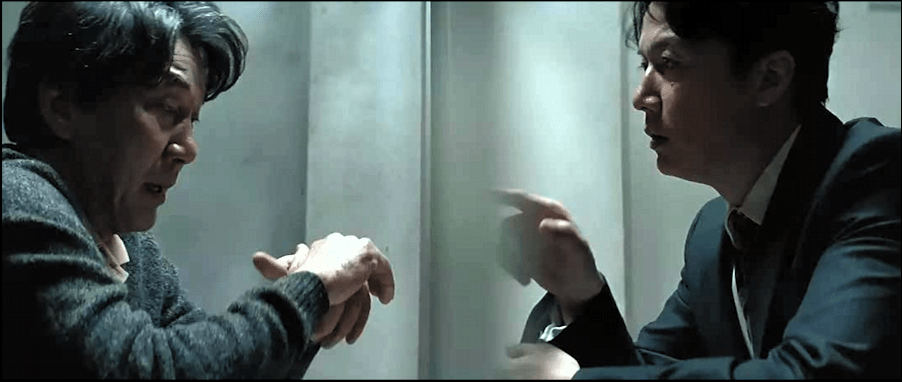
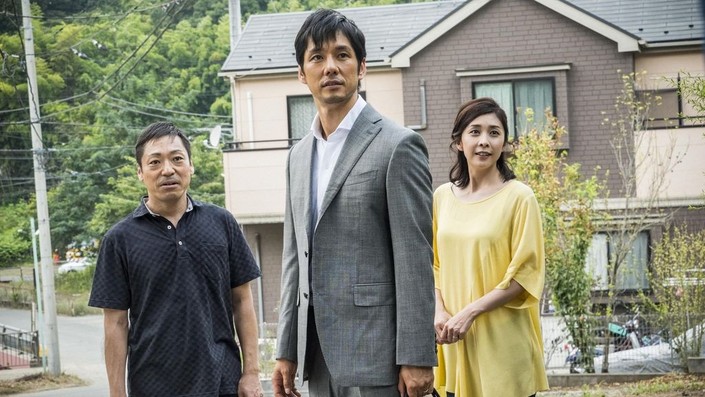
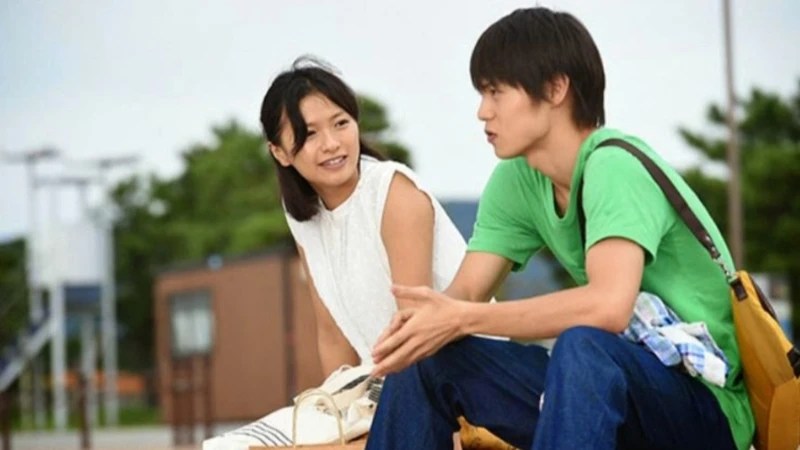
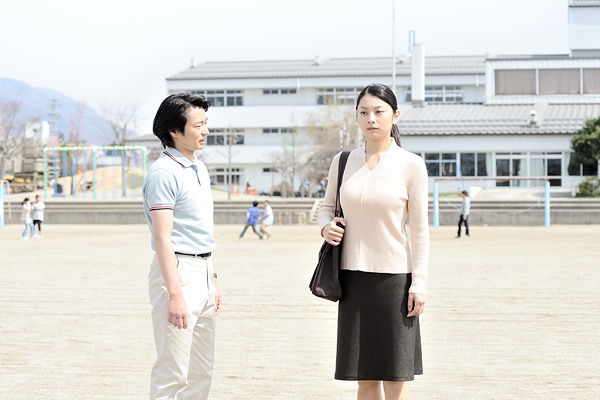
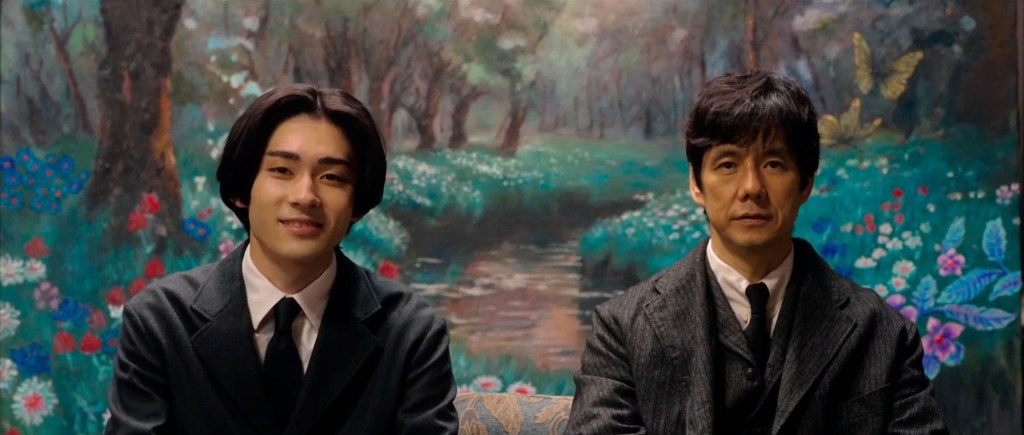
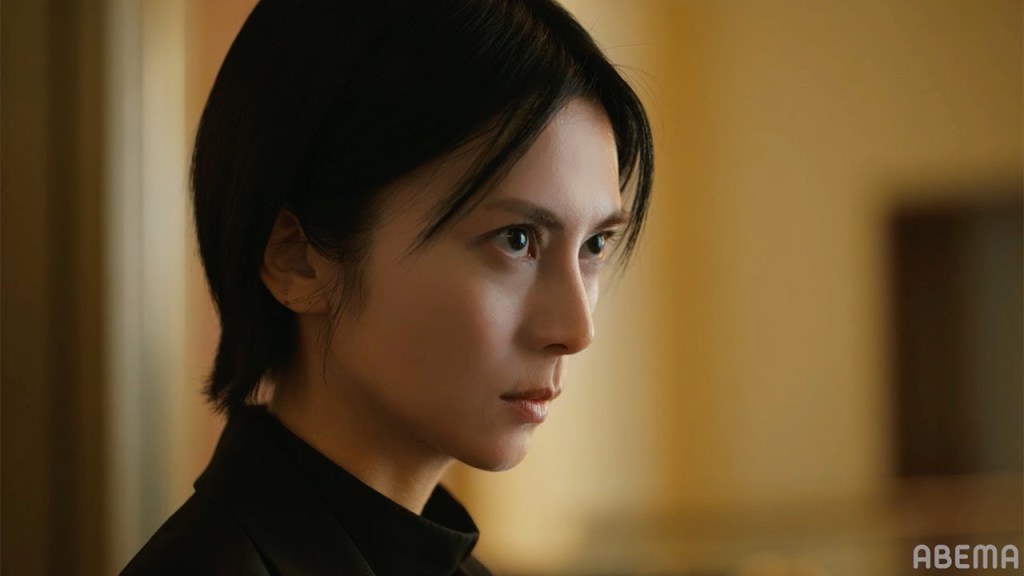
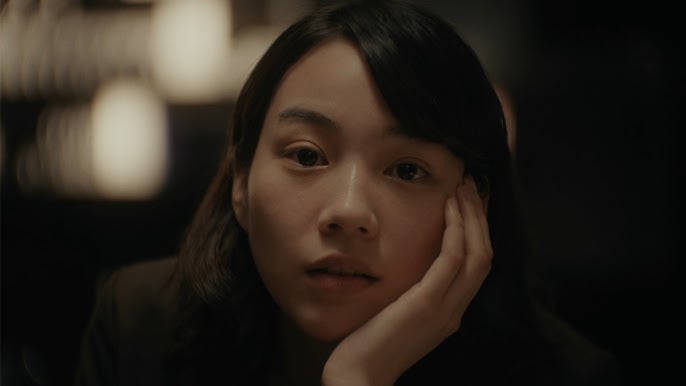
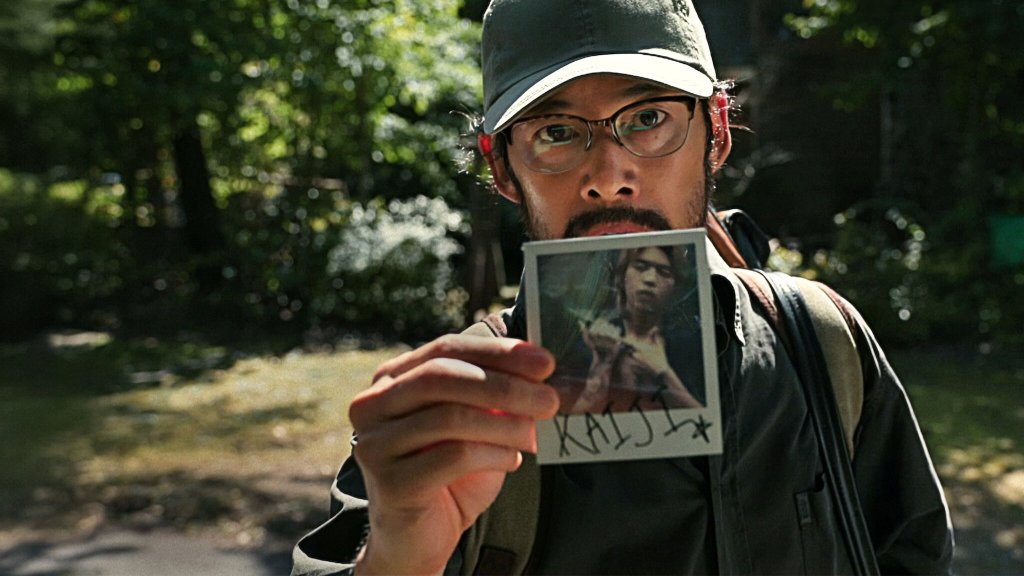
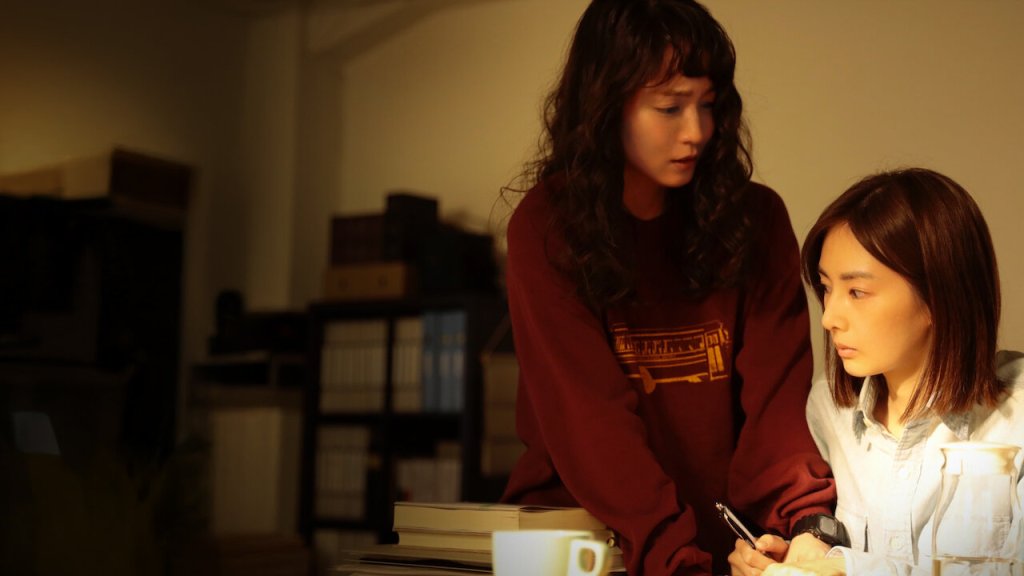
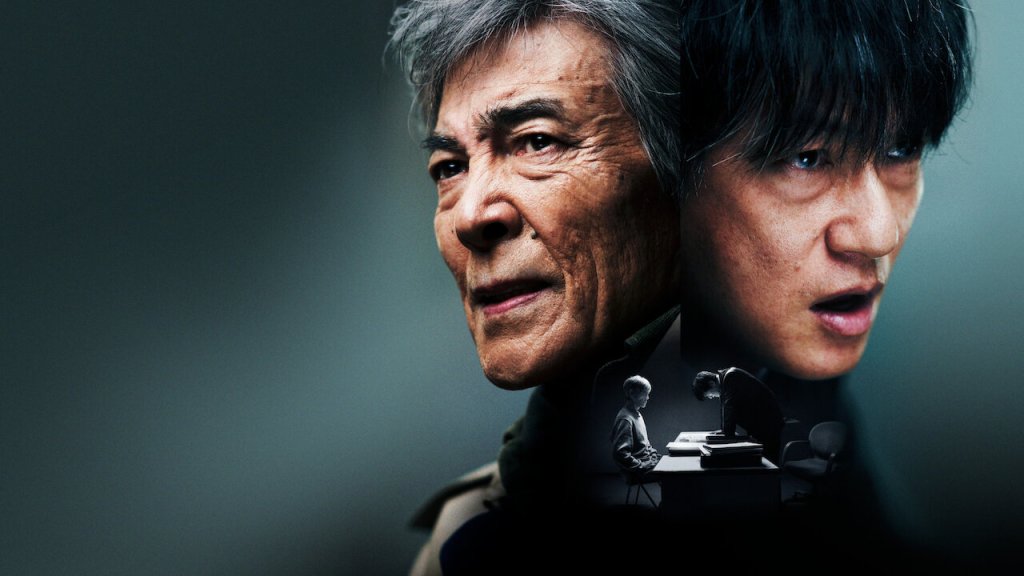
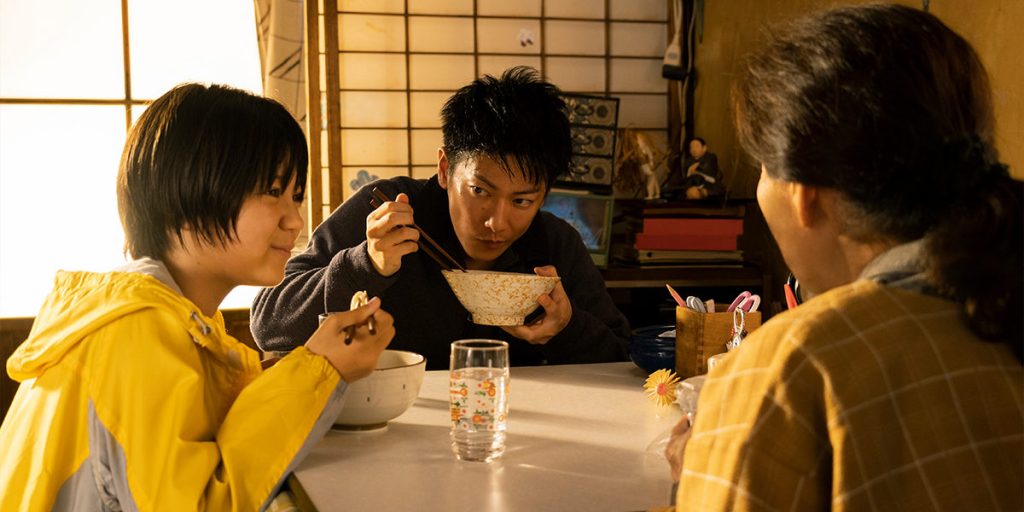
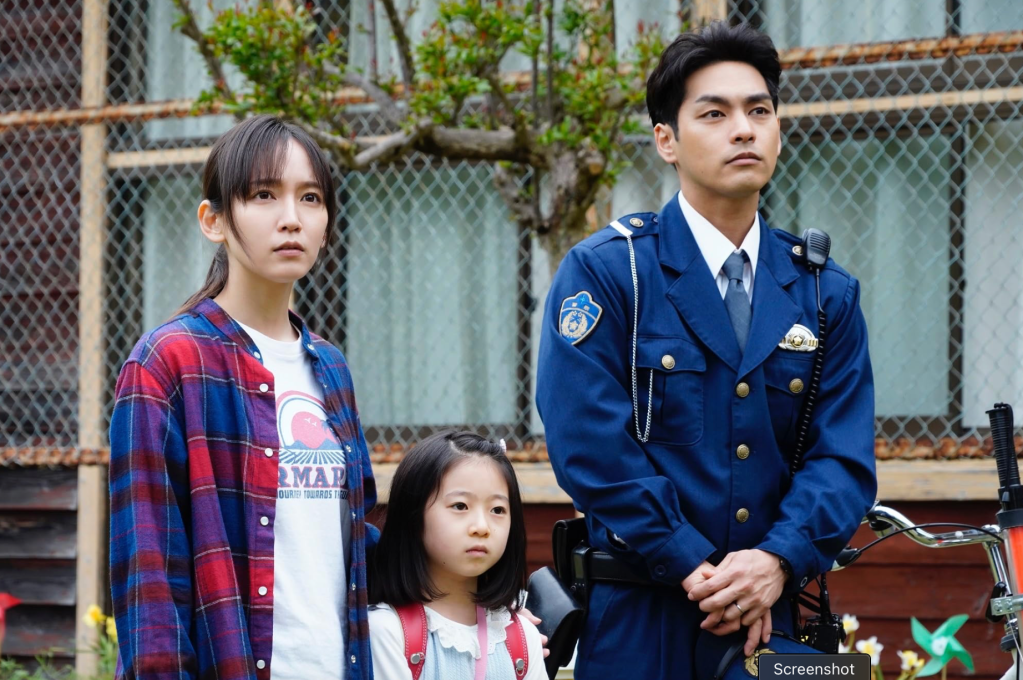
There really are no words to express the disappointment I feel in viewing TAGUSARI BROTHERS, a misshapen monster of a detective series. The series begins with two grown-up brothers working together in law enforcement. The older brother, Makato (Okada Masaki), manages to get by as a junior detective and his younger brother, Minoru (Shota Sometani), is a promising forensic specialist. Minoru wears his commuting backpack in almost every scene, and I can’t decide if this strange choice was meant to evoke a schoolboy or suggest subliminally that he has some serious baggage, which he does. The brothers were orphaned at a young age when their parents were murdered. The government has decided to extend the statute of limitations on violent crimes, but the extension only begins the year after their parents were murdered, so they are out of luck seeking justice unless they want to take it into their own hands. First they have to find the culprit. Everything goes downhill from there. It is shocking that an actor of Shota Sometani would agree to co-star in this mess. In fact, the series is beneath all of its cast. The recent crop of detective dramas from Japan has been overall weak. WHO SAW THE PEACOCK DANCE IN THE JUNGLE? (TBS network, 2025) started strong but finished with an insanely bad resolution. SILENT TRUTH (Asahi network, 2026) had a decent premise but excessive character-driven melodrama turned it into a soap opera painful to watch. However, TAGUSARI BROTHERS is far worse. It is both light hearted and heavy, both melodramatic and vapid. It has zero consistency of tone or atmosphere, but I wish that was all that was wrong with it. It should be used in film school to teach screenwriters how not to construct and resolve mysteries. The eight episode series was written by Watanabe Kei. It featured three directors. I will not embarrass them by mentioning them here.
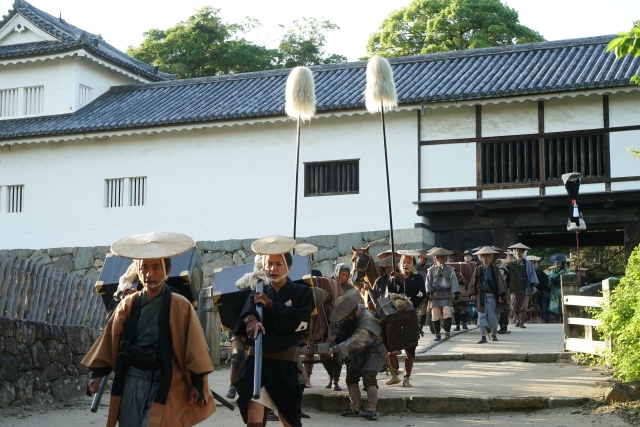
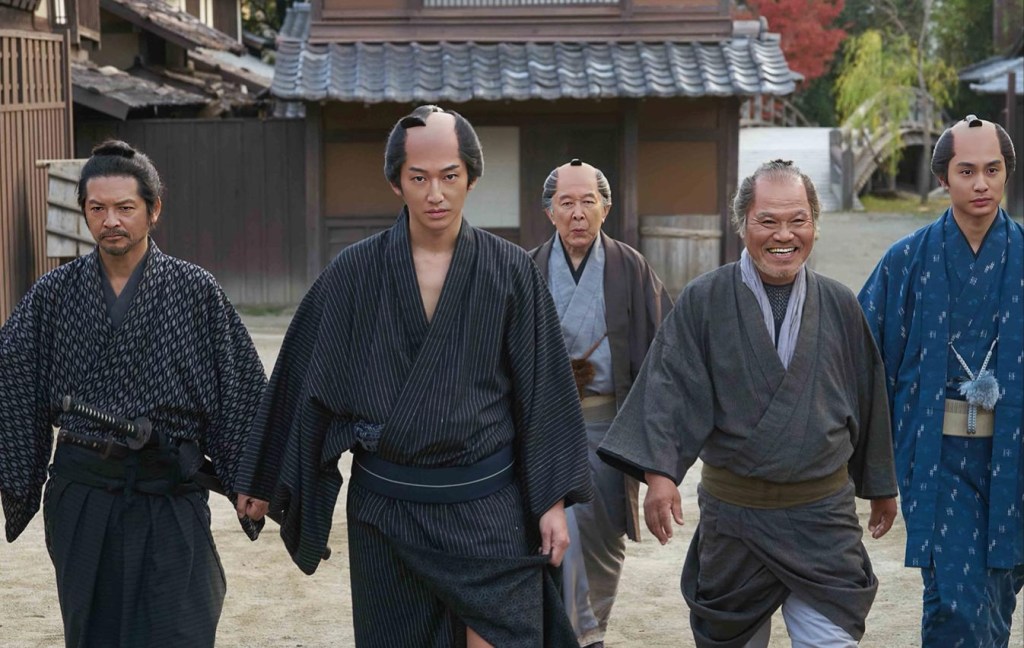
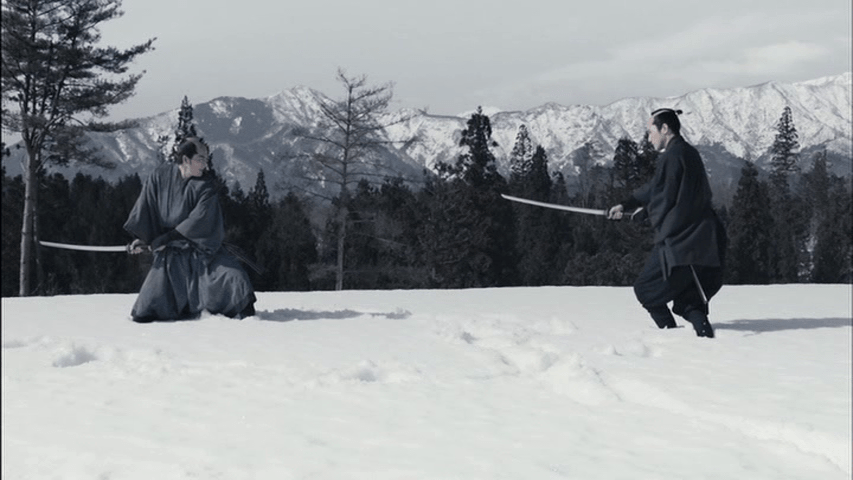
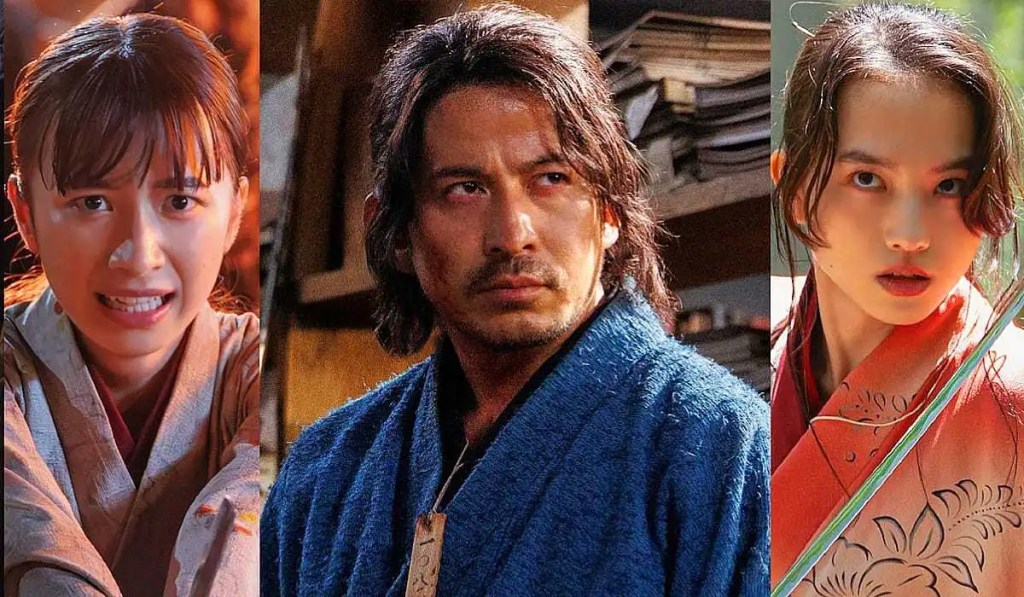
It is fair enough to depict a civil war as a chaotic, meaningless spasm of violence engulfing men and women of all classes. 11 REBELS revolves around the fate of ten prisoners given a last minute reprieve under orders to fight for their freedom and hold off an invasion force at a mountain pass. This invasion occurred during the Boshin War which raged across Japan in the 1860s. The film itself will not tell you anything about that war or the issues which caused it, nor how it was resolved. 11 REBELS is a violent, somewhat fast paced action movie replete with sword duels, snipers, acts of bravery and cowardice, and a surprising number of explosions. It harkens back to many Hollywood and Japanese action films set during WWII, the Wild West, or ancient times (300) in which a small number of men must hold off an army at a narrow pass.
The premise of drafting condemned prisoners into this responsibility is also not new, but it 11 REBELS plays an intriguing variation: The excellent Abe Sadao portrays a wily councilor of the Shibata clan tasked with holding off the army while his lord plays both sides of the conflict. He sacrifices the prisoners and their samurai guards in a bid for time. Unfortunately the film struggles to keep up with the complexity of these details in its explication. Director Shiraishi Kazuya (BUSHIDO) and screenwriter Ikegami Junya do a good job of differentiating between the many characters through costume choices, nicknames, haircuts, and behavioral quirks. Unfortunately it takes a lot of screen time to build up this rapport between them and the audience and then we quickly observe their decimation, as if we are watching a slasher film.
Yamada Takayuki (HOUSE OF NINJAS) is compelling as the lead, a prisoner who bears a grudge against the Shibata clan. Sakumoto Takara (SONG OF THE SAMURAI) steals many scenes as the childlike street urchin who follows him around. Nakano Taiga (BROTHERS IN ARMS) is dashing as the one katana-swinging samurai with a shred of honour left. Many of the action scenes are inventive and gripping. I was reminded of Spielberg’s INDIANA JONES AND THE TEMPLE OF DOOM at times. As a samurai action flick, it is comparable to Miike Takashi’s 13 ASSASSINS (2010), but it does not live up to the quality of that film. My biggest criticism of 11 REBELS is that many scenes take place at night and Ikeda Naoya’s cinematography was too murky and hard to follow. There should be a special award for films that take place at night but don’t hurt your eyes; 11 Rebels would not win it.
Since 1963, the annual Taiga drama produced by and for the NHK channel in Japan has showcased the glorious pageant of Japanese history. Each season consists of roughly fifty episodes which air weekly. I have watched eighteen Taiga dramas; for viewers, it is a big investment. Each Taiga (“big river” in Japanese) focuses on one male or female figure from Japanese history. It benefits a taiga drama immensely when the main character’s life is a nonstop epic journey rising up through a dangerous world, through battle after battle, challenge after challenge, surrounded by the most interesting people who lived in their century. Since the NHK makes taiga dramas annually, those elements cannot always come together–some historical figures lived quieter lives. But the two best examples of this that I have ever seen are GUNSHI KANBEI (2014) and SEGODON (2018). The first is perhaps the greatest taiga drama of the Sengoku Jidai (the warring era c. 1550-1615) and the second is perhaps the greatest taiga drama of the Boshin War and Meiji Restoration (1860s).
“Gunshi” means war strategist, as in a samurai raised on the classics like Sun-Tzu’s The Art of War, who understood both battle and politics. Kuroda Kanbei was born into a minor samurai family in Harima province. He was destined to serve Toyotomi Hideyoshi as one of his two great strategists: Hanbei and Kanbei (known collectively as “Ryobei”–the two Beis). Takenaka Hanbei, the older of the two, engineered Hideyoshi’s early successes. Kanbei was able to succeed the more cerebral and circumspect Hanbei. In contrast, Kanbei was, especially regarding his Christian faith, a more passionate and emotional man. At least, that is how history tends to portray them. With Kanbei’s help, Hideyoshi seized power over most of Japan and became Regent for life.
The NHK values its composer’s contribution, which consists of a huge amount of tracks, so much that the composer always features second in the main title credits. Some taiga dramas open with a title sequence full of charging horses and clashing swords. Others have main titles resembling fashion videos where the camera pans across the plaintive eyes of the lead actor incessantly. The musical score by Kanno Yugo is excellent. Unfortunately, the main theme consisting of a minor key waltz is a rather boring and morose slog set to just such a shampoo commercial. Many of Kanno’s other composed tracks would have made better opening title music. The theme chosen seems to emphasize the tragic nature of some of Kanbei’s personal challenges.
The stage sets which are meant to represent many castles, temples, and battlefields across Honshu, Kyushu, and Korea, are somewhat convincing. The set lighting can be harsh. You can see the spit gushing out of actors’ mouths when samurai scream at each other. NHK did not produce taiga dramas in 4K until 2020’s AWAITING KIRIN.
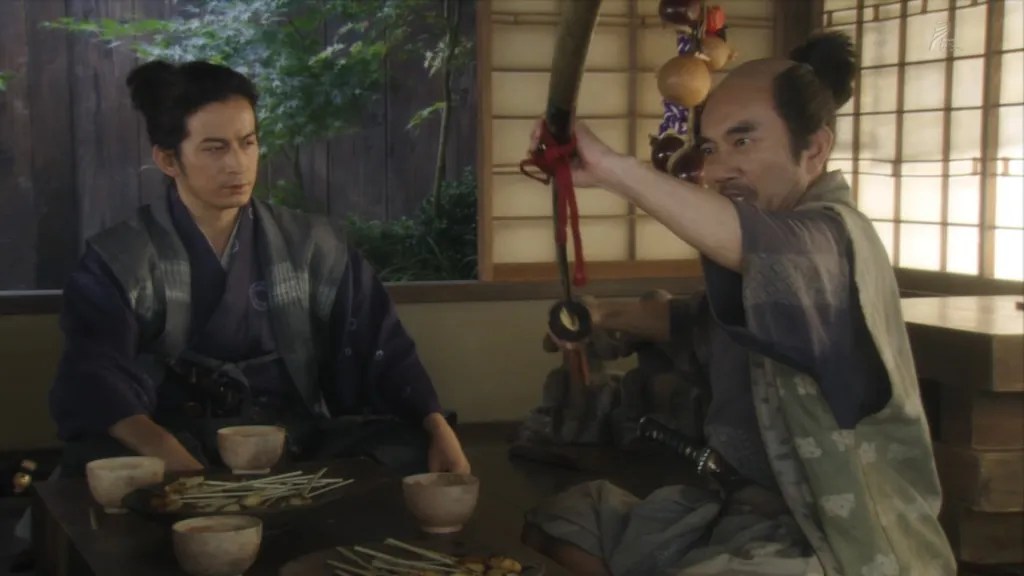
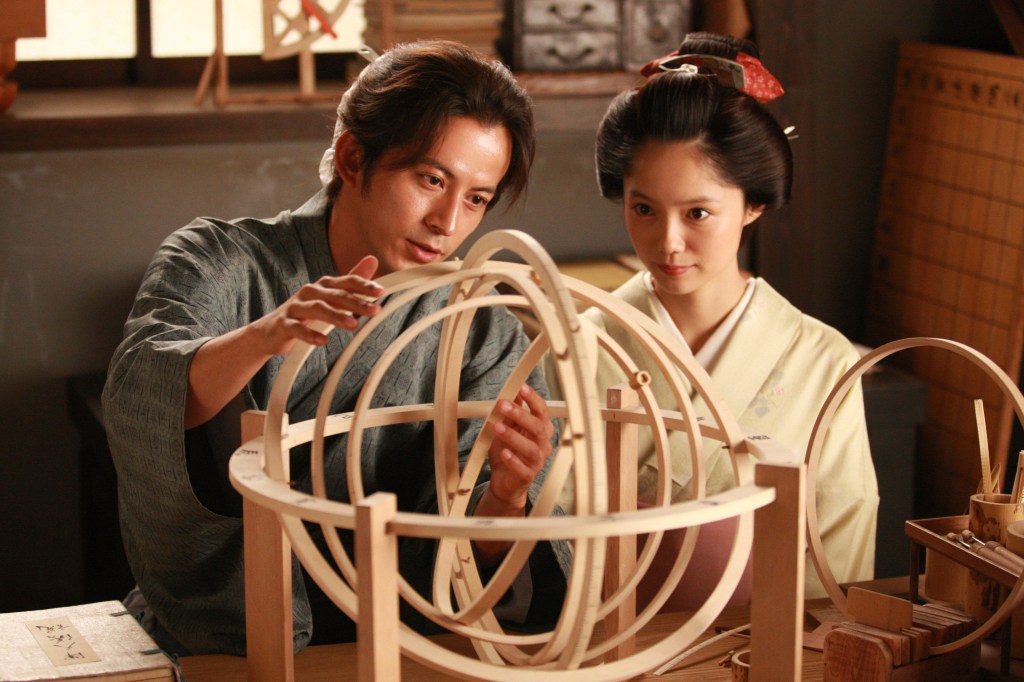
Because taiga dramas stretch across fifty episodes, the main actor has to carry a lot on their shoulders. Often they must portray a character maturing from teenager to deathbed. Depending on who they cast, some pull off the youthful better than the aging, or vice versa. Okada Junichi as Kanbei is capable throughout. Some actors emote so clearly, we always know what they are feeling. Some actors give off cerebral signals so transparently, we can almost hear their thoughts. Okada is a rare example of an actor who does both so well, in every role. It is one of the things responsible for his long and successful career. Another facet of his skills is his excellent swordsmanship and horsemanship. Unlike some recent taigas where the actors have to mount a fake galloping machine and be framed in closeup, most of GUNSHI KANBEI’s stars are trotting along for real. Okada has probably starred in more samurai projects than any other actor in his generation, and the overwhelming number of them are of the highest quality. I have reviewed his film TENCHI: THE SAMURAI ASTRONOMER, one of the greatest of its genre. He was also excellent in HARD DAYS and SAMURAI CHRONICLE.
GUNSHI KANBEI also features the greatest Hideyoshi on film, embodied by Takenaka Naoto (SAMURAI MARATHON). He had starred as Hideyoshi in a previous taiga drama from 1996. That story covered Hideyoshi’s rise and ended at his victory at Yamazaki. The actor agreed to return because GUNSHI KANBEI gave him the chance to play Hideyoshi in his older and more tyrannical years. Surprisingly, Takenaka actually played Hideyoshi five times. I imagine the real Hideyoshi would be fascinated to meet Mr. Takenaka.
Eguchi Yosuke (THE BIG BEE, RUROUNI KENSHIN) gives a sensitive performance as the brutal overlord Nobunaga. It is not as gripping as Shota Sematani’s psychopathic turn in AWAITING KIRIN, but Eguchi stands out as the best of the recent standard takes on Nobunaga. He is particularly compelling in his fascination with the outer world and his wish to explore it. Kuroki Hitomi is brilliant as Lady One, Hideyoshi’s wife. Kanbei’s father is played memorably by the charming Shibata Kyohei (AXE IN THE LABYRINTH). You will love him, you will hate him: Kataoka Tsurutaro turns in a full throttle performance as the clownish, indecisive but crucial lord Kodera whom Kanbei serves as a young man. Kataoka is a veteran of several taiga dramas (TAIHEIKI, MORI MOTONARI, UNBOUND) and always throws himself into his roles fearlessly. With Lord Kodera, lesser actors would have pulled back from the edge. The character of Sen no Rikyu pops up in many dramas from this period. The merchant and famed pioneer of the tea ceremony served as an adviser to the regent and is capably played here with an air of mystery by Ibu Masato.
Kanbei’s three vassals were played by fine young actors who have since gone on to star in projects of their own: Takahashi Issey (NAOTORA, WIFE OF A SPY), Hamada Gaku (MY FAMILY, LAST SAMURAI STANDING), and Hayami Mokomichi (EMERGENCY INTERROGATION ROOM). Ikuta Toma is brilliant as the Christian samurai Takayama Ukon, whose friendship with Kanbei was only one facet of a fascinating life lived in two countries. Ikuta also played the villain in the recent taiga drama, UNBOUND. Okinawan actress Nikaido Fumi plays Lady Yodo, Hideyoshi’s dangerous paramour. Her petulant princess was improved upon when she returned unexpectedly to the role in SHOGUN (2024). James Clavell’s novel, Shogun, changes the names and circumstances of the characters, but the character of Lady Yodo is little altered.
It is incumbent upon all taiga dramas set during the latter Sendoku period to explain the Honno-ji Incident. Spoiler alert for anyone not familiar with Japanese history: Lord Nobunaga is betrayed by his own general, Akechi Mitsuhide. GUNSHI KANBEI does the best job of foreshadowing the infamous betrayal. Not coincidentally, Gunshi Kanbei is the only taiga drama to feature Araki Murashige as an important character. Tanaka Tetsushi stands out for his gripping performance as Araki. Araki is my favorite figure from the Warring Era. Here he is played with riveting intensity by Tanaka Tetsushi (SPEC, GUILTY FLAG). Tanaka captures the intriguing man in three life stages: an optimistic and youthful ronin, a jaded and warn-out daimyo, and a zen monk wrapped in tragedy who renounced the world in favor of the tea ceremony. Here the story suggests that Araki, who was Akechi’s relative by marriage, was a kind of canary in the coal mine facing off against Nobunaga’s brutality and abrasive personality.
In the hands of screenwriter Maekawa Yoichi, GUNSHI KANBEI serves as an excellent introduction to the world of the Sengoku Jidai as well as to the glorious traditions of NHK’s taiga drama.
Japanese screenwriter and comedian Bakarhythm takes a story about four ordinary girls growing up in a small city in Japan and injects it with quirky potion of science fiction/supernatural elements to create a landmark in the history of feel-good dramedy.
Much like his later, and equally great HOTSPOT (2025), REBOOTING starts off with big laughs and small stakes, but the story transforms over time into a quest to redeem and save the people you cherish. It is based on a television anthology story called “Afterlife Real Estate” that he debuted about fifteen years ago and, in both, Bakharythm illustrates a vision of the afterlife and reincarnation that is bureaucratic, sometimes stifling, but ultimately freeing.
The genius in REBOOTING is in writing and directing exactly the scenes that can be played one or two or five different ways. These reinacted scenes not only advance the plot, but define the characters. It is never boring revisiting Asami’s earlier life because life springs anew. It becomes a story about everything, about meaning, human potential, and ambition.
Ando Sakura, as Kondo Asami, carries the series ably on her shoulders. Although a major actress for over a decade, I first noticed Ando’s work in GODZILLA MINUS ONE (2023) as the streetwise and no-nonsense neighbor. She may be best known globally for her co-starring roles in Koreeda Hirokazu’s films SHOPLIFTERS (2018) and MONSTER (2022). She comes from a dynasty of actors and politicians and married into another dynasty of actors, the Emoto family. Ando inhabits every role with a startling tenacity.
The actresses Kaho, Kinami Haruka, Asami Mizukawa are all excellent as Asami’s childhood friends whose life paths diverge, but subtly, over the many reincarnation cycles. The brilliant Shota Sometani appears in a small but memorable role as Fukuda, their school friend with musical ambitions. Shota’s wife, the Oscar-nominated Rinko Kinkuchi, would later appear in HOTSPOT. The many child actors who perform the younger versions are incredible, especially Nagao Yuno as young Asami. Nagao would later become a precocious filmmaker herself at age eight.
For those who grew up in 1990’s Japan and came of age in the early 2000’s, REBOOTING will provide a nostalgic trip down memory lane. Universally, it weaves an amusing tale of girls growing up together, and sometimes growing apart, which plumbs the depths of human awkwardness and human potential.
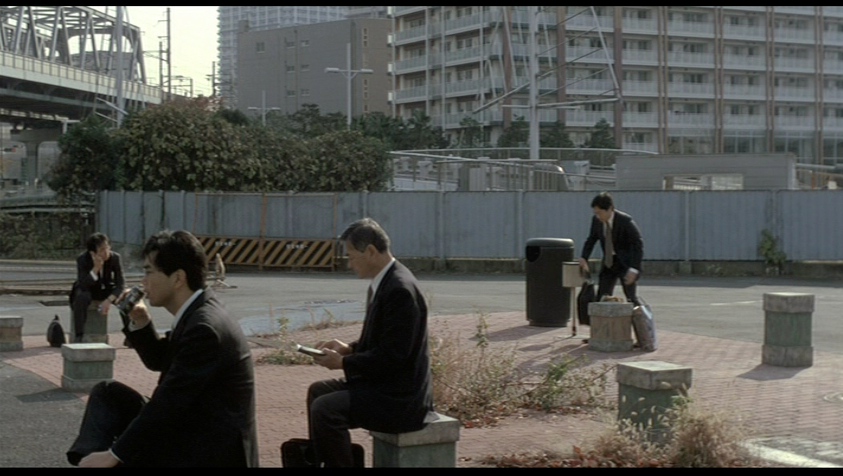
I admire several films and miniseries directed by Kurosawa Kiyoshi. Some of his horror projects have stood the test of time and scrutiny with their subtlety and intensity. TOKYO SONATA probably went off the rails somewhere between the second and third draft of its screenplay. It commits hara kiri with an abrupt shift in style in the third act. Sadly, there was more than a kernel of potential for a great film here. TOKYO SONATA begins as a careful character study about Ryuhei, a petty and neurotic salaryman going to great lengths to avoid his family finding out he has been laid off from his job. Ryuhei is played by Kagawa Teruyuki (HANZAWA NAOKI, CREEPY). All of Kagawa’s performances are good. This is not his best, but, all things considered, he handles it with aplomb.
The camera follows Ryohei like a stalker obsessed with his sad existence. Ryuhei runs into a former schoolmate (Tsuda Kanji) also laid off and also fooling his family, who teaches him some tricks to keep the illusion going. But this unemployment buddy has an appointment with tragedy. Ryuhei’s long suffering wife, Megumi, is played brilliantly by Koizumi Kyoko (AMACHAN, PENANCE). She emotes such a wistful and ethereal vibe, she appears ghostlike at times. Meanwhile, their young son Kenji (Inowaki Kai) rebels against his stifling and fake home environment by pocketing his lunch money to pay for piano lessons with a beautiful music teacher down the street (Igawa Haruka). Inowaki (BERABOU/UNBOUND], IN THE WAKE) would go on to a prolific career. At this point, there are a lot of intriguing directions this story could go.
After Kurosawa sets up this quirky scenario, he begins to allow exotic characters to infiltrate it. A much older son (Koyanagi Yu) comes and goes from their violent home seemingly oblivious to it all. The young man is mad at the world and desperate to make a difference so, inexplicably, he joins the American military. Thus follows an oddball examination of the responsibilities of Japan to American hegemony in the world, a clumsy political statement of sorts, and exactly what this film does not need.
After 80 minutes in, the film descends into a series of over-the-top expressionist vignettes in the vein of 1970s avant-garde European cinema. TOKYO SONATA was released in 2008 during the financial crisis and it bears the imprint of panic. The most panicked character to appear is a failed-locksmith turned burglar played with wild abandon by superstar Yakusho. From the moment he brandishes his knife, he appears to be a refugee from another movie. Frankly, Megumi’s plot threads deserved to be resolved in a way that would have given Koizumi a chance to shine rather than pairing her depressed housewife with another violent man with a different shade of violence. Kurosawa’s promising vision of a decaying family facing financial ruin could have yielded a steady harvest. His decision to trade a slow payoff for shock value is a shame.
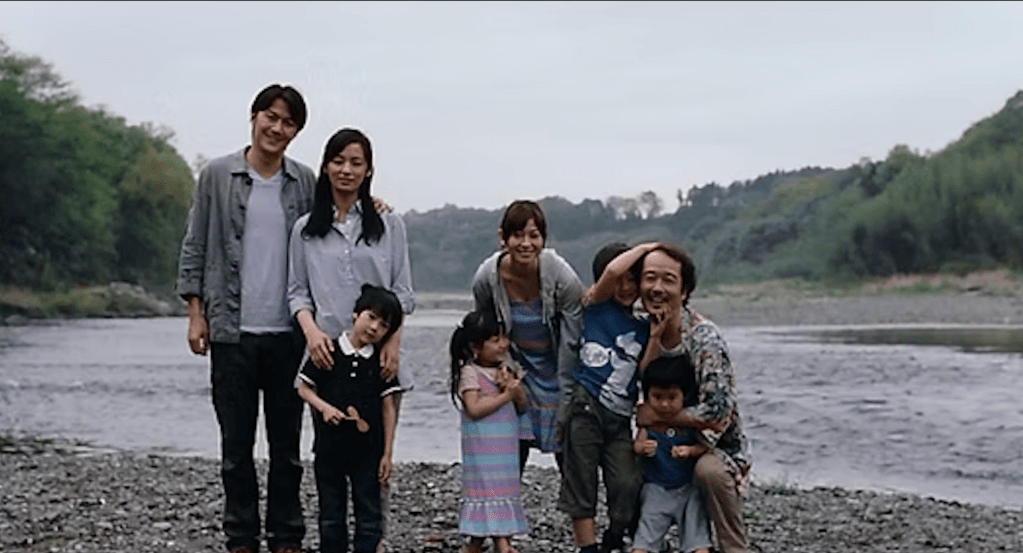
Written and directed by Koreeda Hirokazu, LIKE FATHER LIKE SON draws a contrast between two families brought together by unexpected tragedy. As each prepares their son for entering elementary school, they suddenly discover that the two boys were switched after birth in the hospital. What ensues is a sensitive examination of the role of nature vs. nurture in the human heart. The beginning of the film is punctuated by unsettling cinematography (Takimoto Mikiya); every building and human figure appears slightly too close. Innocent people discover their lives were not all they assumed, and all at once, people who seem underqualified to do so are burdened with an urgent need to make major decisions.
Although LIKE FATHER, LIKE SON concerns two families, it is the Ninomya family that inhabits the centre of the film, and it is father Ninomya Ryota, a successful architect, who is the central focus. Fukuyama Masaharu (THE THIRD MURDER, GALILEO) plays Ryota as a highly intelligent and responsible man, but aloof and sometimes arrogant. His wife Midori, played by Ono Machiko (CARNATION, ASURA), serves as a sounding board to question his instincts, though she herself struggles with divided loyalties. Ono’s performance, as always, is down to earth and emotional. She is more a Sally Fields-style than a Meryl Streep-style actress. The other couple, the Saikis, come from a lower economic background, and the film eyes these class differences closely. Maki Yoko’s performance as mom Saiki Yukari is realistic but enigmatic. Maki (MOZU, AFTER THE STORM) is the kind of actress you picture as a police detective or aristocrat. Dad Saiki Yudai is played by the ever-charming Lily Franky (SHOPLIFTERS), whose skill at embodying gregarious and zany characters makes him one of Koreeda’s most frequent collaborators. Franky is especially good at playing childlike men who relate well to real children. All the lead actors have appeared in multiple Koreeda projects, including Kiki Kirin who plays Ryota’s mother-in-law. The child actors in this film, as in all Koreeda works, are excellent.
Koreeda has stated that he hired Fukuyama because he did not give off typical paternal energy, and it is really Fukuyama’s film to make or break. The actor has the rare quality of slowing down scenes with his deeply relaxed delivery. His acting is an art that cannot be rushed, and that quality often leads to superlative work. It is fascinating to watch Ryota’s slow and clumsy emotional development over his love for his accidental son and his growing attachment to his biological son. Ryota prepares to deliver Keita to the Saikis by explaining to Keita he is on a mission the boy must fulfill. It is an approach that comes from a place of maximum kindness in Royata, and reads as true to his creative and highly organized character. Later he tries to convince Keita that his “real parents” will love him more than he does. He says so even though he feels deeply competitive with the Sakais. This is a scene that can only make sense in this movie, and that is a testament to Koreeda’s vision. Koreeda’s films are always thought provoking and several provoke the specific question: In which family are children better off? LIKE FATHER, LIKE SON is one of the best of these.
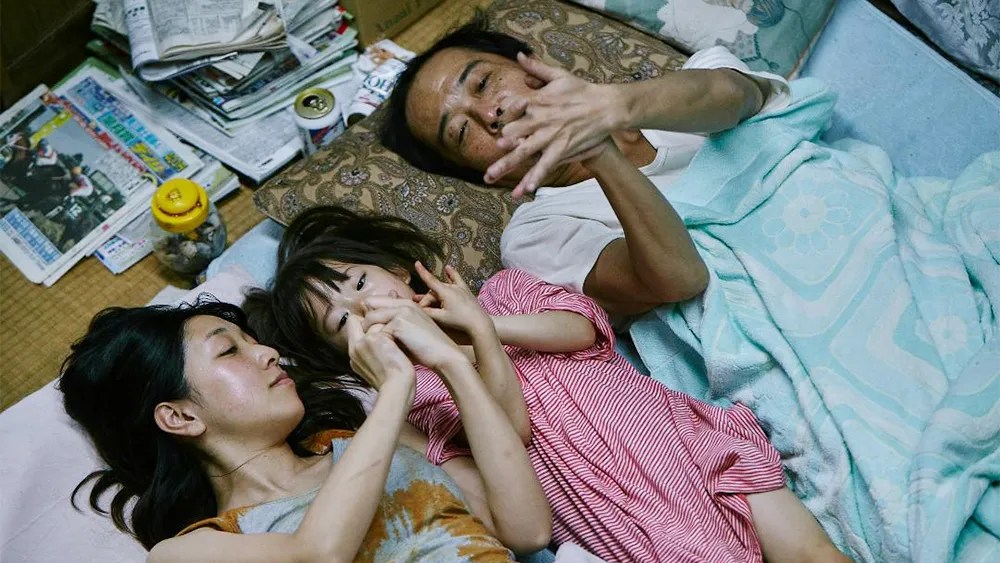
Proving a film can be a slice of life and a walk on the wild side, SHOPLIFTERS portrays one family surviving poverty in Tokyo by any means necessary. The manner in which their family has been stitched together through a series of dubious events and connections is key to the story. Those viewers who grew up on Charles Dickens novels and adaptations will recognize that moments of genuine joy and compassion exist within the criminal class. SHOPLIFTERS is principally concerned with family and how to define it. In a Dickensian manner, it provokes the question: could children be better off being raised by a gang of thieves than left to the alternatives? Where SHOPLIFTERS diverges from Victorian fiction is sex. Sex, fertility, reproduction, regeneration, appear as compelling themes. The film centers around Osamu and Nobuyo, a couple played by the amazing Lily Franky and Ando Sakura. They struggle with an understanding of their own worth. They have a lot to give as parents but they also lack the wisdom and skills to turn their own lives around. Therein lies the trap. Since Nobuyo has struggled with her own fertility, her motivations in surrounding herself with a pseudo family are questioned. The film also questions how genuine the love between Nobuyo and Osamu remains. As the story progresses, we discover more about their troubling past and we find that they are never closer than on the eve of disaster.
Written and directed by Koreeda Hirokazu, SHOPLIFTERS boasts a remarkable cast. Many of the usual Koreeda suspects appear, such as Kiki Kirin (AFTER THE STORM, CHRONICLE OF MY MOTHER) as the grandmother and the remarkable Kairi Jo (ASURA, THE PROMISED NEVERLAND) as Shota, a young boy learning the tricks of the shoplifting trade. Ikamatsu Sosuke (AFTER THE STORM, MOZU) makes an appearance in a subplot involving Osamu’s stepsister Aki (Matsuoka Mayu), who is struggling to form authentic connections with men. SHOPLIFTERS won the Palme d’Or at the Cannes Film Festival and Best Film at the Mainichi Awards. Its unflinching focus on the seedy side of modern society puts it in the top tier of Koreeda’s works.
A lighthearted examination of a middle-aged man who cannot adapt to change and cannot process failure, AFTER THE STORM was written and directed by Koreeda Hirokazu. Koreeda filmed it during breaks in the year-long production of OUR LITTLE SISTER. AFTER THE STORM is certainly the superior film.
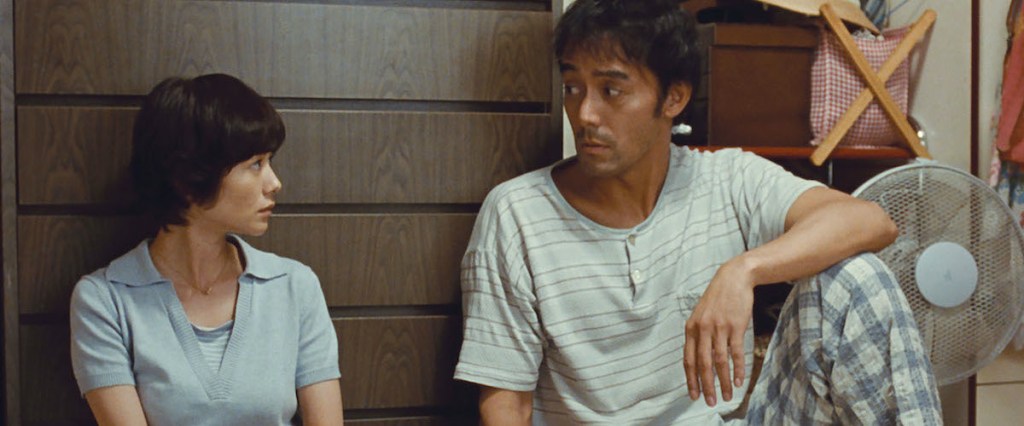
Hiroshi Abe excels at playing blue-collar misfits grappling with lives that didn’t turn out as expected, as in TOMBI (2022). He more often plays highly educated and aloof misfits, as in BECAUSE WE FORGET EVERYTHING and the TRICK franchise. In AFTER THE STORM, he plays Ryota, a former novelist with a stalled career moonlighting as a private detective. After his father’s death, he seeks help from his mother, but is foiled by his disapproving sister, played memorably by Kobayashi Satomi. Ryota’s continuing relationship with his son, Yoshizawa Taiyo, is in doubt because he is behind on child support. Ryota’s mother is played by veteran actress Kiki Kirin, who co-starred in the Koreeda films SHOPLIFTERS and LIKE FATHER, LIKE SON. Maki Yoko (RYOMADEN, MOZU) is indispensable as Ryota’s former wife who refuses to engage with her ex husband on his terms, but politely embraces his family and their warmth.
A typhoon traps these mismatched characters together. Whether due to budget limitations or artistic license, we do not see a single gust of wind or downed branch. Instead, the cast gathers in their pajamas to confront their demons over board games and snacks. A retiree explains the music of Bethoven to curious old ladies. Lottery tickets are fought over, lost, and searched for. Characters emerge from an octopus-shaped playground igloo as if reborn. AFTER THE STORM manages to weave its themes into a quiet, but never trite family drama.
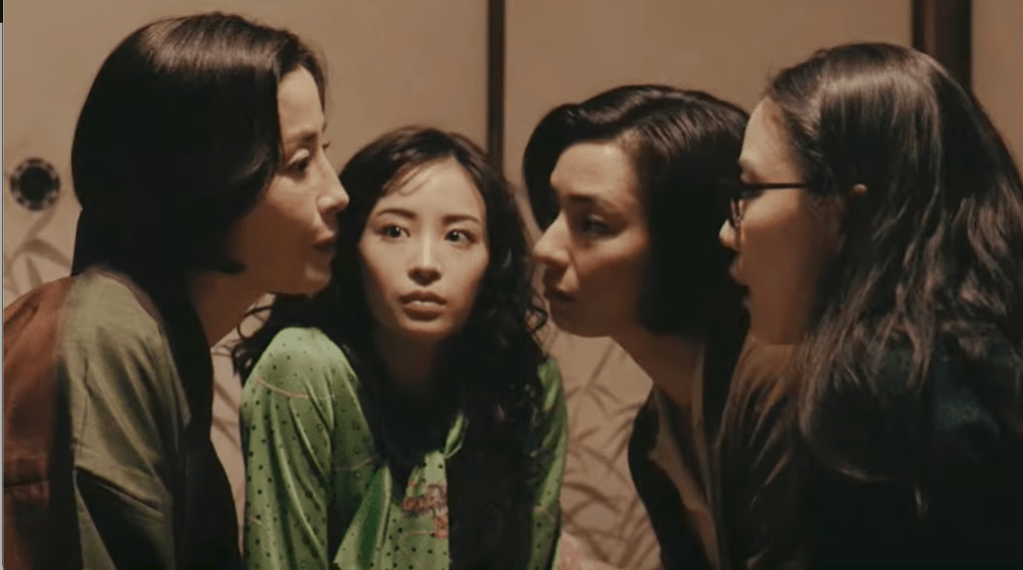
Japan’s top film auteur, Koreeda Hirokazu, turns to television for this Netflix-produced family drama. Based on an earlier series ASHURA NO GOTOKU from 1979, which is based on the novel by Mukoda Kuniko, ASURA tells the story of four sisters whose ages range across a generational divide coming to terms with life and love and family drama in 1970s Tokyo. Koreeda assembles an army of talent and entrenches them in material which ranges from feel-good drama to maudlin soap opera.
Of all his works, ASURA most closely resembles OUR LITTLE SISTER, based on a manga about four sisters of varied ages moving in together. Hirose Suzu who featured as the youngest sister in that film and has appeared in several Koreeda projects, again plays the youngest sister, Sakiko, in ASURA.
The always capable Miyazawa Rie (TAIHEIKI, GUILTY FLAG, HUMAN SPECIMENS) and Aoi Yu (PENANCE) join her as sisters Tsunako and Sakiko, but it is Ono Machiko as the second sister Makiko who is the MVP of this production. Ono (CARNATION, BULLET TRAIN EXPLOSION) plays a wife and mother who struggles to hold her family together. Ono’s acting always has an earthy poignancy. Motoki Masahiro (DEPARTURES) plays Makiko’s husband, tendering a humane and accessible performance. When I think of Motoki’s body of work, the performances that come to mind are young Emperor Hirohito in THE EMPEROR IN AUGUST and a naval officer in SAKA NO UWE, but here he plays a very normal salaryman. Matsuzaka Keiko, one of the greatest Japanese female character actors of all time plays Fuji, the aging matriarch of their family. Her work in historical dramas such as MORI MOTONARI (1997) and ATSUHIME (2008) is unparalleled. The talented Kunimura Jun (THE WAILING, KILL BILL) plays her husband. The strong chemistry of the four sisters is key to the success of ASURA, and is without a doubt superior to the four March sisters in Greta Gerwig’s 2019 remake of LITTLE WOMEN.
Curiously, there is a point halfway through the series when the story itself seems like it could be put to bed. The more the filmmakers indulge youngest sister Sakiko’s subplot, the more aggravating the series becomes. Oldest sister Tsunako, always aloof, features in a love affair so removed from the mainline story, it might as well have been a different show. Miyazawa is matched with the brilliant Uchino Seiyo (FUURIN KAZAN, CHUSHINGURA) and their chemistry is wonderful to behold. Though stylish and engaging, ultimately ASURA cannot overcome the limitations of its material. It remains a showcase for star power and for the brilliant cinematography (Takimoto Mikiya) and set design that resurrect a bygone era.
Directed by Koreeda Hirokazu and written by Sakamoto Yuji, MONSTER ranks as the best of Koreeda’s films thus far. It is a masterclass in the cinema of multiple perspectives. Ando Sakura (SHOPLIFTERS, REBOOTING) plays Saori, a widow who raises her son Minato in a small town in Japan. Her son develops issues that bring her into a collision course with a young teacher, Hori Sensei, played by Nagayama Eita. Ando, as always, embodies her role as a frustrated parent up against impenetrable bureaucracy. She could carry the film easily if it were her role to do so.
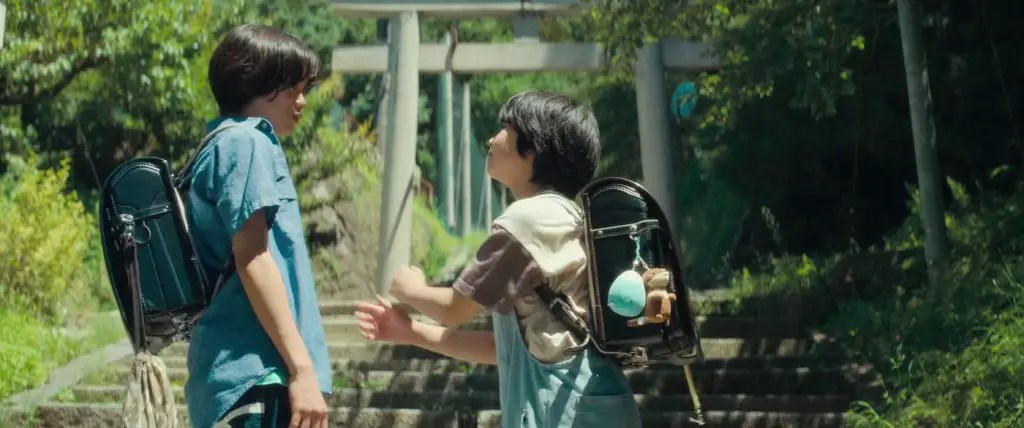
Nagayama Eita is one of those actors who is not everyone’s cup of tea. He excels at playing awkward misfits. Perhaps it is his off-kilter delivery of lines. Despite these qualities he often takes leading-man roles and frequently appears in chanbara films including annual NHK taiga productions. Here he is perfectly cast as a teacher who is accused of disturbing behavior and may be well out of his depth. His performance holds the film together as perspectives change like shifting sands. The two child actors, Kurokawa Soya (KOKUHO, AFTER THE QUAKE) as Minato and Hiiragi Hinata (DEAR RADIANCE) as Yori, deliver stunning performances worthy of accolades.
The ending of MONSTER and its editing has caused controversy, prompting the filmmakers to feel the need to speak out about their intentions. My own interpretation is that due to the nighttime passage of the storm, the failed rescue attempt, and the presence of vibrant daylight in the final shot, certain characters are no longer alive. That gives the film extra poignancy. I believe if the filmmakers had wanted to indicate otherwise, these characters would have needed to extricate themselves before daybreak, but that is just my take.
THE THIRD MURDER is written and directed by the ever-versatile and ever-relevant Koreeda Hirokazu. Fukuyama Masaharu (GALILEO, RYOMADEN) is excellent as a highly focused, no-frills lawyer Shigemori. Taking over a highly volatile case from an older but less celebrated lawyer, he struggles to understand his client. Cinema star Koji Yakusho plays Shiegemori’s client Takashi. We the audience grapple with him in a battle over trust, so every gesture and facial expression counts in Koji’s beguiling performance.
Yoshida Kotaro (MOZU, WAITING FOR KIRIN) is excellent as Takashi’s sidelined lawyer Settsu. Yoshida is one of Japan’s most gifted character actors on screen, and is a noted stage actor and director. Hirose Suzu, now a veteran of several Koreeda films, is memorable as Sakie, the mysterious daughter of the man Takashi admitted to killing. Ichikawa Mikako (HOTSPOT, UNNATURAL), one of the most gifted female character-actors in Japan, steals scenes as a by-the-books young prosecutor struggling with a case going off the rails.
Though a life is at stake in this capital trial, THE THIRD MURDER is less a thriller than a courtroom drama. It is also less a courtroom drama than a tense tête-à-tête between Fukuyama and Koji. It is possibly the greatest thriller ever made about that sacred relationship between lawyer and client, and about the special privileges and responsibilities that fall under its purview. Along the way, the film asks many questions about the value of human life.
Director Kurosawa Kiroshi has worked in horror for decades, though not exclusively. He directed PULSE and PENANCE (also reviewed here). Based on a novel by Maekawa Yutaka, CREEPY is beautifully photographed by Ashizawa Akiko, with an old fashioned score by Habuka Yuri that is reminiscent of Hollywood’s golden age. The story concerns a sidelined police detective, Takakura (Nishijima Hidetoshi), who finds himself teaching criminology to university students after his failure to contain a crisis at the precinct. In his new neighborhood, he starts looking into a local unsolved missing persons case. Gradually his investigation collides with his own research on the psychology of sociopaths.
CREEPY makes great use of its stellar cast. Nishijima is always a capable actor and leading man. Here he reunites with his old MOZU cast mate Kagawa Teruyuki. Kagawa plays his unsettling neighbor, Nishino. Kagawa, excellent as always, revels in every twist and turn of awkwardness Nishino’s personality necessitates. Kagawa often plays the villain or foil, memorably in HANZAWA NAOKI as a corrupt company exec, and in the first ROURONI KENSHIN film (2012). When Kagawa is given eccentricities to sink his teeth into, he always contributes unforgettable performances. Higashide Masahiro (LAST SAMURAI STANDING, SATOSHI: A MOVE FOR TOMORROW) plays Takakura’s young detective assistant with his usual charm and intensity. Even the dog, Max, is full of character and steals a few scenes.
However, without the three female costars, most of the dramatic developments in this unusual story of mayhem and trauma would fall flat. Kawaguchi Haruna (SCANDAL EVE, WAITING FOR KIRIN) is believable as the reluctant witness orphaned by destiny. The young Fujino Ryoko (SOLOMON’S PERJURY) plays Nishino’s daughter Mio, and she embraces the character’s twisted journey with gusto. Her performance hits every beat necessary to communicate Mio’s fear and anguish. Takeuchi Yuko (THE RING, THE MAGNIFICENT NINE, SANADA MARU) plays Takakura’s wife Yasuko, and her performance anchors the film perfectly. Takeuchi was surely one of the top two or three actresses of her generation. Her tragic death at age 40 in 2020 cut short a brilliant career, but her dramatic genius lives on in over fifty films and television serials. There are moments when CREEPY’s plot veers from suspenseful into the preposterous, and only Takeuchi’s performance keeps it from spinning out of control.
Novelist Minato Kanae has trailblazed a reputation for disturbing horror and crime fiction, not afraid to disgust her readers or rob from them a happy ending. Called the “Queen of Iyamisu” for the grisly details, many of her works have seen film and television adaptations. TESTIMONY OF N had the potential to be the best of them all. Less a crime mystery, more a bildungsroman, the long prelude showing Nozomi’s young on the island enters Dickensian territory with its unforgettable depiction of a dysfunctional family descending into abject poverty.
An exceptional performance by lead actress Eikura Nana as Nozomi saves this ten episode crime series from a demise at the hands of clunky and repetitive exposition. It suffers from structural deficiencies derived from divided character focus compounded by time jumps which inelegantly and unnecessarily interrupt the narrative flow. Most episodes feature a stunning and surprisingly colourful pallet of cinematography. However, gimmick editing including the ever-present stylized eye blinks synced to shutter clicks and perky pop song play-outs damage the integrity of the series.
The story covers about 15 years of Nozomi’s life. Kubota Masataka (TAIRA NO KIYOMORI, DEATH NOTE) plays her childhood companion, Naruse. The series works best when their strong chemistry is on display. However, her life in Tokyo takes her away from Naruse.
Miura Tomokazu plays an island policeman and Hara Hideko his wife. These characters were added to the story by screenwriters. Perhaps they felt they needed someone to gather all the threads or amplify the detection of the central mysteries, but the story would have been better served in a simpler and streamlined miniseries of five or six episodes. Miura makes a specialty of playing cops who keep in touch with young victims for years. He played much the same in THE TIES OF SHOOTING STARS. He is perfectly cast but the director is uncertain how to use him with the leads. He ends up being one part mentor, one part Inspector Javert.
Koide Keisuke contributes a memorable performance as Nozomi’s roommate Nishizaki. His life is so dramatic and haunted, it is as if he entered the story as a refugee from another Minato novel. Together they inhabit and protect an antiquated dormitory called Nobara and run by a charming old man, Nohara-san (Orimoto Junkichi). You can see the pattern. So many N names. The original title means “FOR N,” not TESTIMONY OF N, which makes more sense.
Yamamoto Mirai is excellent as Nozomi’s troubled mother. If you make it to the end, you may enjoy through tears the resolution of their tense mother-daughter relationship. It is one of the most interesting such relationship in Minato’s oeuvre. Eikura Nana (SHIP OF THESEUS) perfectly embodies Nozomi at all stages of her life.
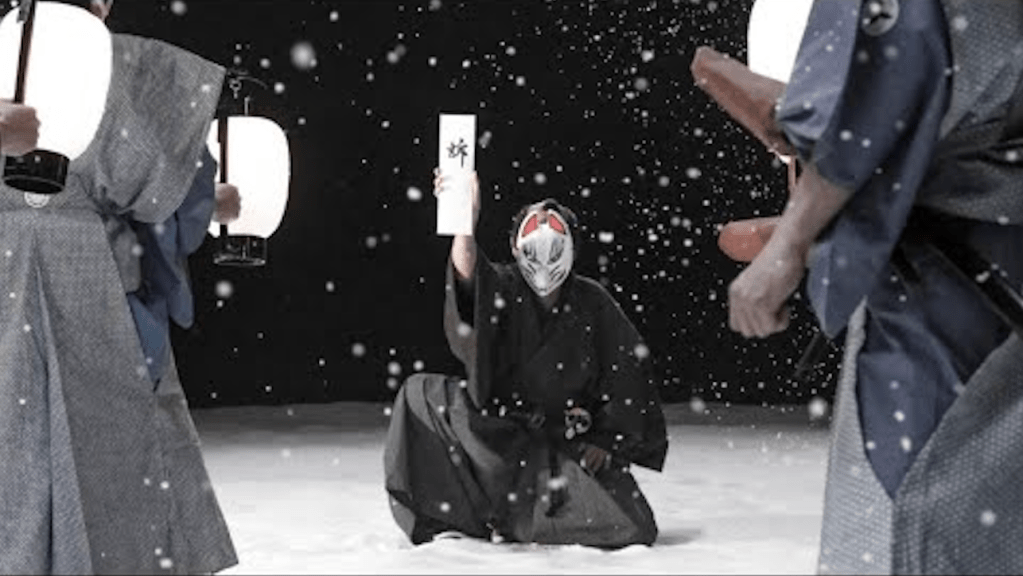
Crime writer Minato Kanae has been called the “Queen of Iyamisu,” a reference to the disturbing and gory nature of much of her writing. However it would be wrong to undercount the many strands of suspense and arabesque horror running through her work, as well as its overall colour of intellectual curiosity. Take, for instance, the journey through butterfly biology and life cycles that readers must make in HUMAN SPECIMENS (an adaptation of which was also reviewed here). There have been many adaptations of her novels onto television and the silver screen. So far, PENANCE is my favorite. Director Kurosawa Kiyoshi (no relation to the famed Akira) manages to balance the serious and quirky styles found in Minato’s writing. Kurosawa, known for his horror film PULSE, also helms the upcoming historical mystery thriller THE SAMURAI AND THE PRISONER.
PENANCE makes the best of a rigid anthology format. In the prologue to episode one, five young girls’ lives are forever shattered when a predator invades their schoolyard. The remaining episodes follow their separate lives. Each life is touched by, indeed haunted by, the victim’s bitter mother, who exacts a price for their survival. PENANCE features a strong cast, with the excellent Kyoizumi Kyoko (AMACHAN) as Asako and Kagawa Teruyuki as a school official. Kagawa, who I believe to be Japan’s greatest living actor, is effective as always, but has little screen time. Kurosawa featured both in his TOKYO SONATA (2008).
Aoi Yu headlines episode one as a young woman grappling with a perverse and otherworldly marriage. Aoi was excellent as one of the four sisters in ASURA (2025).
In episode two, Koike Eiko plays Maki, now grown into a strict and joyless schoolteacher. Koike was wonderful in TOKYO SWINDLER and REBIRTH (reviewed here). She memorably played Lady Masako, sister to Shun Oguri’s tyrannical Hojo ruler in the taiga THIRTEEN LORDS OF THE SHOGUN. This exciting episode is not just a perfect exploration of mob mentality in the context of a school community, it is one of my favorite hours of television ever produced.
Episode three features early work by Ando Sakura (GODZILLA MINUS ONE, REBOOTING), one of Japan’s most gifted and versatile actresses, and although a weaker episode, Ando’s performance reveals her future promise.
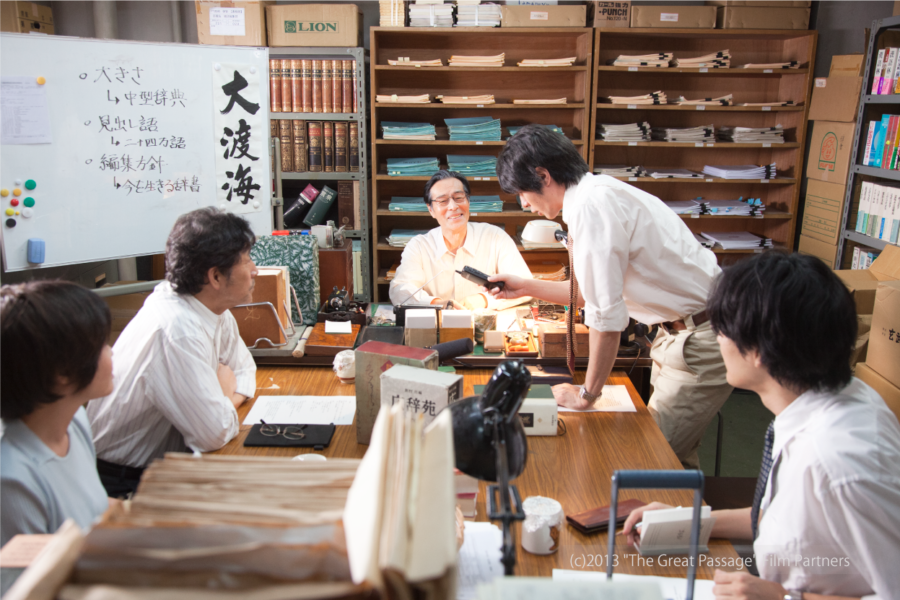
Ikewaki Chizuru headlines episode four as a strongwilled and wily survivor who challenges Asako’s authority while simultaneously sabotaging her own family. Ikewaki co-stared in THE GREAT PASSAGE (reviewed here) and memorably played Takeda Shingen’s wife Lady Sanjo in the 2007 taiga FUURIN KAZAN.
Episode five wraps up the remaining threads and features an intense performance by Koizumi Kyoko. Every one of Minato Kanae’s novels features a fraught mother-daughter relationship and PENANCE is no different. Director Kurosawa wisely crafts a spare miniseries, free of gimmicks, minimalist in production and cinematography, even light on musical score, allowing this story of cursed lives to shine.
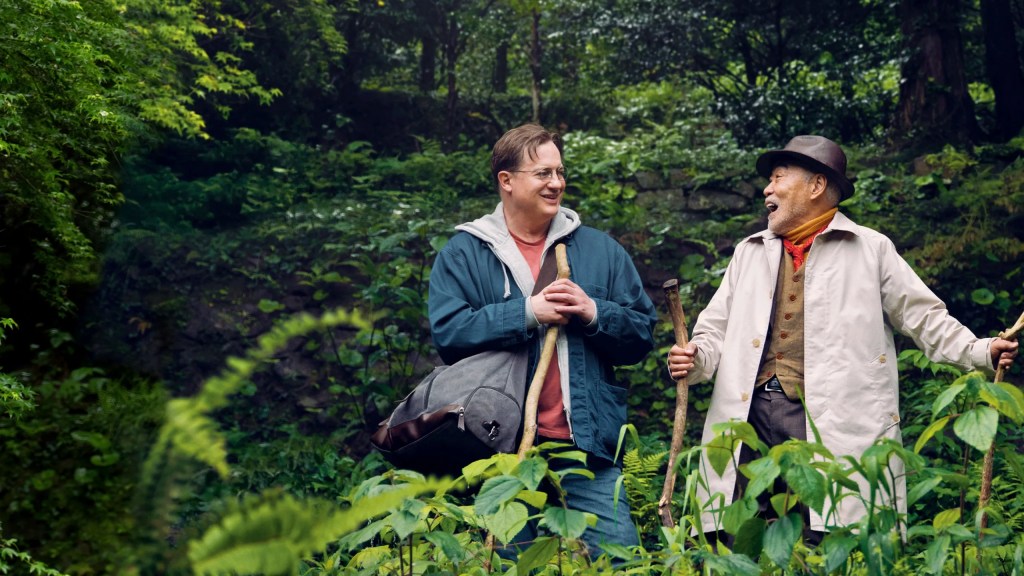
RENTAL FAMILY was directed and co-written by Japanese filmmaker Hikari, who studied cinema in the US and released her first feature film, 37 SECONDS, in 2019. RENTAL FAMILY stars Canadian-American actor Brendan Fraser as Phillip, a jobbing expat living in Tokyo. Having sparked his “Brenaisance” return to Hollywood stardom with THE WHALE (2022), Fraser chooses the quirkiest out-of-the-box followup project possible in this international production filmed with a 90 percent Japanese cast entirely in Japan.
The story explores an industry found in Japan but in few other nations. Philip plays a hired stand-in pretending to be whoever the client needs them to be in their home, in public, and even in solemn ceremonies. Luckily RENTAL FAMILY does not fail to grasp its potential as a film using fake human relationships to explore the mysteries of real humanity.
Hira Takehiro (SHOGUN) is excellent as Philip’s boss. Child actress Shannon Mahina Gorman turns in a fine performance. Emoto Akira is moving as Hasegawa-san, a famed Japanese actor in his twilight years. Emoto is something of a legend himself, being a veteran of countless films and television serials over 40 years and the patriarch of an acting dynasty. He frequently plays the villain but here he plays an elderly man rebelling in order to confront devastating secrets from his past.
When a film is whimsical, inexorable pacing is king. RENTAL FAMILY sets a brisk pace and explores just enough off-kilter scenarios within the rental-persona industry to establish the emotional stakes. By putting Phillip and his journey through the fraught rental-persona industry at the center, the film tells one story out of many. Brendan Fraser exudes chemistry with all of his costars and carries the film on his solid shoulders.
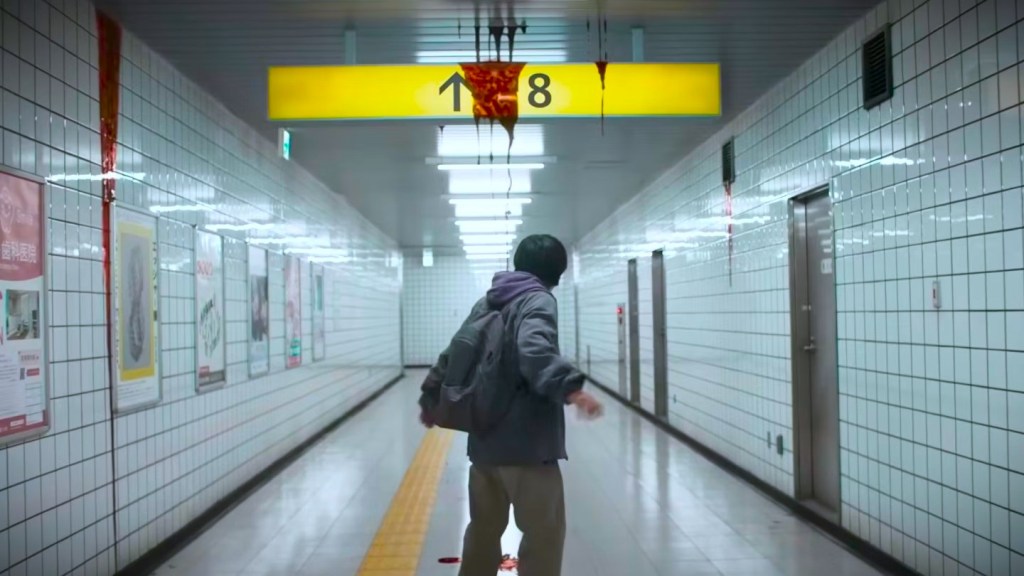
Adapted from a video game and directed by Kawamura Genki (A Hundred Flowers), who is best known as a producer on Koreeda Hirokazu’s masterpiece MONSTER (2023), EXIT 8 combines suspense and claustrophobia with a human interest story seamlessly.
Key to its success are the no-frills cinematography by Imamura Keisuke and the lead performance by expert everyman Ninomiya Kazunari. Ninomiya, known as “Nino,” burst onto the scene in the 1990s as a child actor and later pop artist. He has worked steadily ever since despite an appearance so nondescript, you could easily lose him in a crowd. I first encountered his work as the lead in MY FAMILY (2022), playing the father of a kidnapped daughter and as the lead THE TIES OF SHOOTING STARS, in which he played the older brother to Toda Erika and Nishikido Ryo. He also co-starred in the Clint Eastwood film LETTERS FROM IWO JIMA. Ninomiya would make a fine Hamlet: he has a talent for portraying quiet angst and indecision, skills which he draws on heavily in EXIT 8, carrying the entire film on his shoulders. Yamato Kochi and child actor Asunuma Naru also contribute fine performances.
I have not played the original video game, in which players must spot anomalies in a dreary landscape. The filmmakers wisely decided to keep the visuals subtle. Here the Tokyo subway showcases gleaming tiled corridors full of mystery and haunted by impending doom. These hallways can carry the protagonist to hell but also serve as a kind of re-birth canal, as I interpret it. Parenthood, responsibility, and freedom are the central themes of the story. A darker director’s cut release has been rumored.
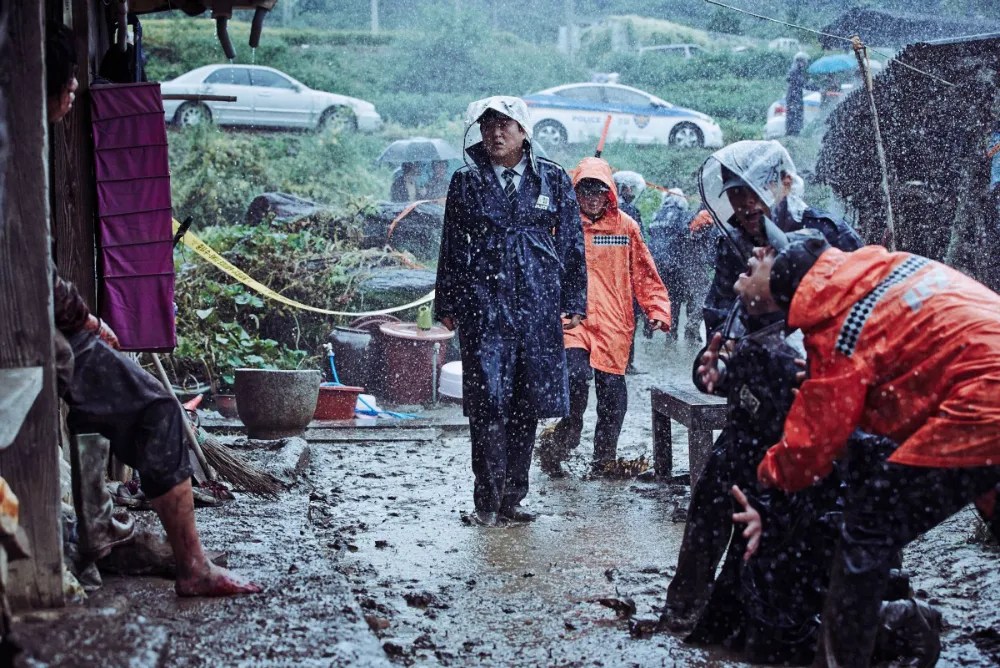
THE WAILING is a slick production, full of interesting choices in direction and editing. There are genuine moments of ominous horror. However, viewers may be surprised to find that THE WAILING is a bumbling mall cop movie wrapped in the skin of a demonic possession movie. I am guessing the filmmakers bet that extraordinary contrast would give them extra mileage to reel in the frights. Korean star Kwak Do-Won performs the role of Jong-goo: a lowly countryside policeman, a failing husband, and struggling father. He patrols a mountainous village called Godseong along with his inexperienced partner. Like so many horror settings, this community has been recently blighted by mysterious deaths. But the cops’ antics feel more like light comedy that distracts than dark comedy that forces us to stoically behold the grim truths of existence.
Suspicions naturally fall on the outsider, a lone elderly Japanese man, played with intensity by Kunimura Jun. The Japanese hermit is as much an idea as a character, as he features in the imaginations and dreams of many characters and Kunimura is able to embody all facets. As an actor, he has often been able to generate dangerous vibes while maintaining decorum, in many of his other roles in Japanese cinema and television (see his factory CEO in MINAMATA). He has worked with international directors before, including Ridley Scott and Quentin Tarantino, so his casting here is not surprising. Kim Hwan-hee plays Jong-goo’s young daughter and hers is the best performance of the movie.
Writer-director Na-Hong Jin can’t quite decide whether to invoke symbolism of Korean shamanism or Hollywood tropes of bible-centric demons. I’m not so sure the two blend seamlessly as the mystery unfolds.
There is a difference between surprise twists and flaws in the narrative and THE WAILING has both. Atmosphere takes dominance over story. Some secondary characters are given far too much screen time while one crucial character, Il-gwang, (a shaman hired from outside the village played well by Hwang Jung-min) is not given enough to establish himself. Dilapidated houses in this rural village all look much the same, leading to confusion about the settings. The WAILING is an intriguing film that could have been a great film, with better writing and editing.
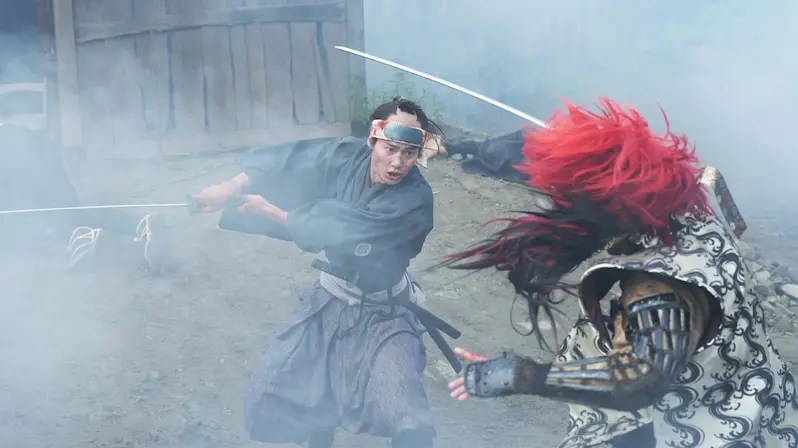
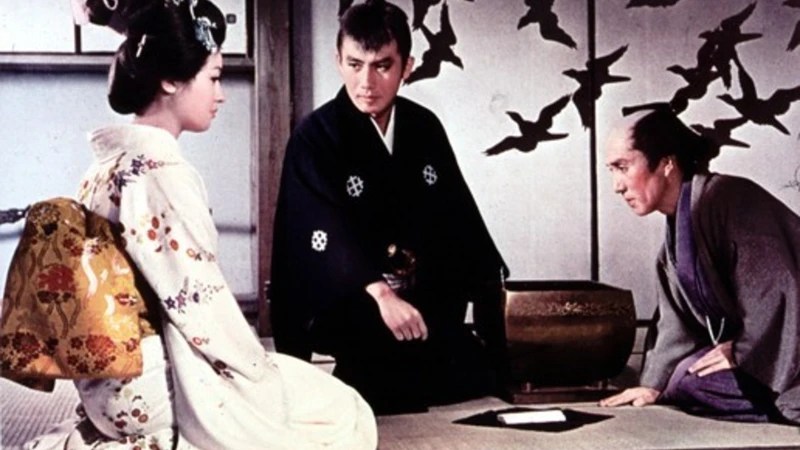
SWORD OF FIRE is the fifth of a series of twelve film adaptations starring Ichikawa Raizo as Nemuri Kyoshiro, a red-haired, half Portuguese (hence the “sleepy” western eyes), half Japanese wandering ronin. Based on the historical novels of Shibata Renzaburo, which spawned many series over decades. Ichikawa Raizo VIII was adopted into a kabuki family at a young age, became a very prolific film actor, and sadly died in 1969 at age 37 from cancer. He carries the film well on his slender shoulders, despite the abrasive and soulless demeanor of his anti-hero.
SWORD OF FIRE presents as nihilistic an outlook as you will find in vintage samurai films. Violence, betrayals, a rogue in place of a hero, and sexual assault and rampant misgyny abound.
There is an excellent final choreographed fight on the stairs and promenade of a beautiful temple, featuring superb camera work, even if the swordplay is a little sleepy.
The background about a conspiracy to smuggle valuable antiquities had potential, but the characters involved never rise to the surface. They are eclipsed by the parade of violent and sometimes twisted female characters, who enter as tropes and leave as celluloid arson. The iconic actress Nakamura Tamao (currently the matriarch of a famed kabuki family) delivers the best performance of the movie as one such twisted siren.
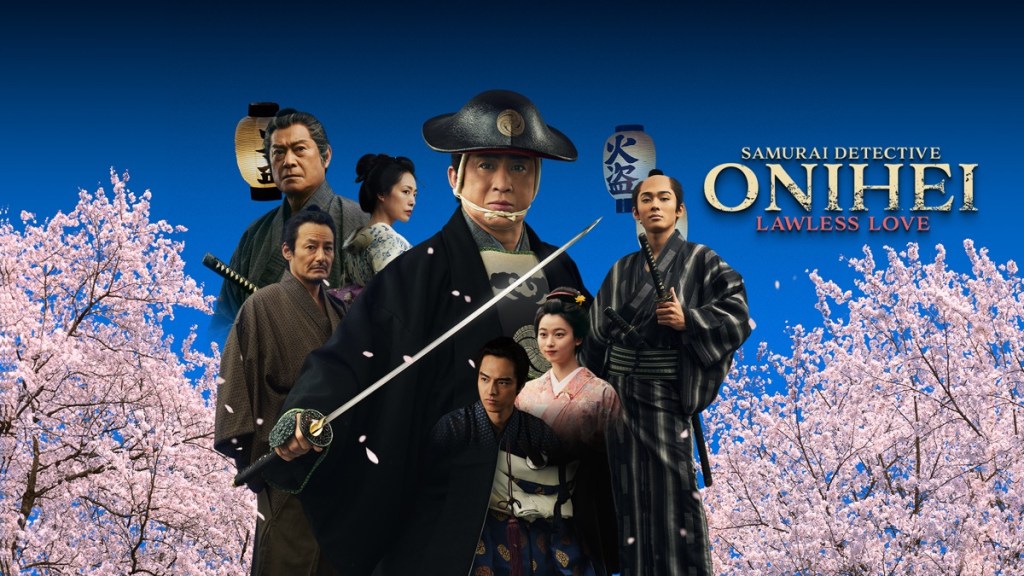
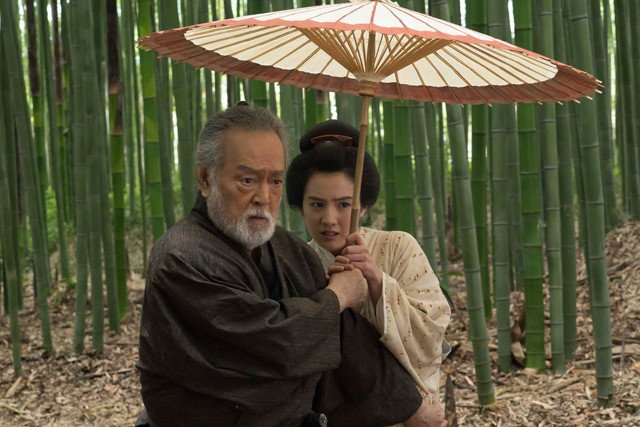
Directed by Yamashita Tomohiko and starring Matsumoto Koshiro X as the titular Heizo, leader of the arson and robbery bureau of the Edo police, LAWLESS LOVE exemplifies straightforward storytelling at a leisurely pace. The screenwriter, Omori Sumio, wrote the NHK taiga drama FUURIN KAZAN. High definition cinematography captures the beauty of outdoor sets transporting us to historic Edo’s bridges, canals, and antique villas. Composer Yoshimata Ryo (NHK taiga drama ATSUHIME) contributes a pleasant orchestral score. This film succeeds as both a police procedural and a character study. Because it takes its sweet time unfolding the plot, we learn intricate details about colorful side characters and what ties them together. What ensues is a bittersweet story about Heizo’s reunion with old friends and companions from his mispent youth. The film also features the lead actor’s son, Ichikawa Somegoro VII, as young Heizo.
A line from Heian-era poet Ki no Tsurayuki is twice quoted: “The hearts of people are unknowable but in my hometown the flowers still bloom with the fragrance of the past.”
Hito wa isa Kokoro mo shirazu Furusato wa Hana zo mukashi no Ka ni nioi keru
Matsumoto, a popular actor from a Kabuki dynasty, brings warmth and steely determination to his role. Stuntwork is satisfactory, but perfunctory. When you peel back the layers of this film, it feels the great ambition hidden at the center is not the resolution of the plot, which is a standard case of foiling a heist. Rather, it is the production’s ambition to be accepted as a worthy successor to the popular show of yesteryear.
The previous ONIHEI HANKACHO series ran from 1989 to 2001. It starred Nakamura Kichiemon II who hailed from a Kabuki acting dynasty. Matsumoto Koshiro X is his nephew. Remarkably, Nakamura’s father, Matsumoto Koshiro VIII, played Heizo in an earlier production from 1969-1972. Now four generations from the same family have embodied Heizo. Clearly LAWLESS LOVE was meant to launch a new era of ONIHEI stories, and several episodes of a television series starring Matsumoto have been produced since.
Onihei Hankachō is a series of popular novels written by Ikenami Shotaro (1923-1990) featuring the historical Edo policeman/Tokugawa enforcer Hasegawa Nobutame Heizo. This historic samurai recently cropped up in the recent NHK Taiga drama, BERABO/UNBOUND, set in the 18th century Edo literary scene and the red light district of Yoshiwara where he was played charmingly by Nakamura Hayato. There was also an anime chronicling Heizo’s exploits.
Veteran actor Matsudaira Ken stands out as Heizo’s former dojo instructor. The most important female character, Ofusa, is played well by Hara Sachie (elder) and Kikuchi Hinako (younger). Without their humane performances, the narrative would have fallen flat.
A good ONIHEI story will transport you to a bygone era of Tokyo where responsible investigators ferret out criminal intent in much the way countless Sherlock Holmes adaptations take you to Victorian and Edwardian London. LAWLESS LOVE succeeds in this, despite a narrative that feels more slice of life than edge of your seat.
The producers of AFTER THE QUAKE took on a tall challenge in adapting novelist Murakami Haruki’s volume of interconnected short stories into a single feature. All such adaptations of short fiction volumes into cinema seem bound to fail. Directed by Inoue Tsuyoshi, AFTER THE QUAKE is adapted from my favorite Murakami book, originally published in Japan as Kami no Kodomo-tachi wa Mina Odoru (All God’s Children Dance).
Each section is realized in the sparest dialogue and shots to keep the narrative moving. The key to understanding the viability of such an adaptation is that the stories are interrelated mostly by emotional content, rather than by plot. The emotional basis of characters’ struggles is trauma and survivor’s guilt following natural disasters. Considering these handicaps, the audaciously grim atmosphere of all the stories doesn’t help. At times I was reminded of old adaptations of the Ray Bradbury fix-up books, The Martian Chronicles and The Illustrated Man. A fix up book is a volume of stories originally unrelated, into which the author has later fermented mycelial networks of dependent origination, in the form of mostly extraneous details.
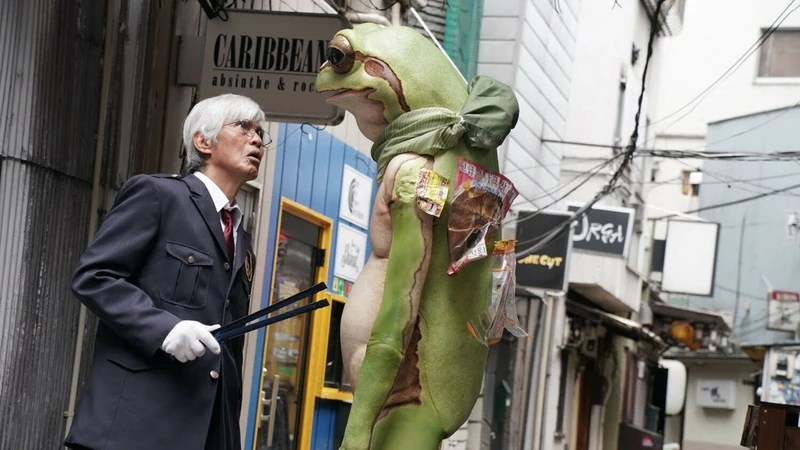
Some of the Murakami stories, especially those weighted around the middle of the film, really never take off the ground. Actors put forward their best dramaturgical foot, but the path disappears. The central conceit of the film, drawn from the story Super-Frog Saves Tokyo, is a subterranean battle between the angry worm and frog-man Kaeru-Kun which epitomizes the tectonic danger and drama. The nature of that underground battle is translated onto the screen in an intriguing (if unsatisfactory) way. Crimson color filtering and footage of (I’m guessing) model trainsets stand in for the worm, intercut with an ominous and equally red hallway from which multiple characters emerge and recede. Inoue and cinematographer Watanabe Yasutaka turn the battle into a kind of Lynchian Hilton hotel reservation. Sadly, the actual frog suit cannot hide behind such glossy techniques and sticks out like a sore thumb.
An extraordinary cast was assembled to make this film, its collective talent largely wasted. Screen veterans Tsutsumi Shinichi (Miyake), Sato Koichi (Katagiri), and Shibukawa Kiyohiko (Tabata), and younger talents like Non (Kaeru Kun), Hashimoto Ai (disappearing wife), Okada Masaki (Komura), and Nishikido Ryo (Kushiro) try their best to anchor the story in human emotions, but there is little for the viewers to cling to but cinematic poetry, and only that of the abstruse postmodern variety. I cannot recommend AFTER THE QUAKE, which proves that the book continues to be unfilmable.
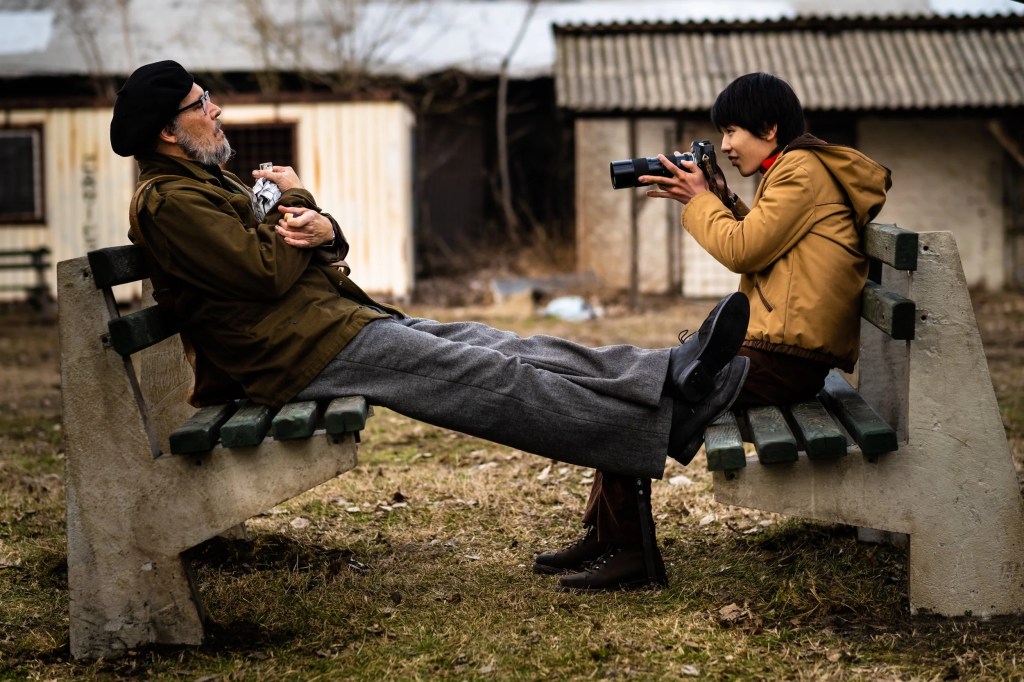
MINAMATA is a rare bird of a film. A true story set in the early 1970s in Japan, with brief interludes in NYC, it was filmed in Japan and Serbia. Directed by Andrew Levitas, an American who has helmed two movies, it features a mostly Japanese cast rounded out by Johnny Depp and Bill Nighy. The story features dedicated activists joining up with one reluctant photo-journalist to take on industrial pollution (mercury poisoning at an unspeakable level) in a small Japanese town. The story is such an important historical event, we must wonder why a Japanese director has yet to tackle the subject. Politics?
The first thing that strikes you about MINAMATA is the photographic fabric of the cinematography. Veteran cinematographer Benoit Delhomme weaves a fabric of color and black and white schemes full of saturation and grain that roots the visuals in Gene’s photographic world. The second thing you notice is the excellent score by the late Japanese composer Sakamoto Ryuichi.
The film tells a compelling story about a nation and community struggling to come to terms with justice and responsibility. That the activists needed to bring in outside help in the form of a LIFE magazine photo-journalist (really, THE first photo-journalist, W. Eugene Smith), and that he had to suffer along with them to document their reality is the heart of the film. Depp is effective as the outsider in a frail position among a sea of Japanese whose language he cannot speak and who are figuratively at war with each other. In his moments of introspection when Gene’s mettle is tested, it may not be Depp’s finest performance but it rings true. Depp is no novice at portraying alcoholics, and Gene’s protestations emerge meekly around gulps of liquor. The film hints at Gene’s PTSD from his photographic tour of duty in WWII.
Popular actress Minami plays Aileen Mioko, a half Japanese, half American woman dedicated to the cause. Minami is herself half French. She hails (along with Shibasaki Ko, Fujiwara Tatsuya, and Kuriyama Chiaki) from the group of Japanese actors who burst into cinema in the infamously bloody thriller BATTLE ROYALE (2000), a dystopian film that predated the HUNGER GAMES. Minami plays Aileen as both serious and sultry and the film makes much of the sparks between her and Depp.
Kunimura Jun plays Gene’s nemesis, the factory CEO who tries to strike a Faustian bargain. Kunimura is known for his work in both Japanese cinema and in international films such as Ridley Scott’s BLACK RAIN, Na Hong-Jin’s THE WAILING, Tarentino’s KILL BILL VOL.1, and Miyazaki’s THE BOY AND THE HERON. Depp and Kunimura square off as enemies and mirror images. Both men begin to feel empathy and are resistant to feeling it and showing it.
MINAMATA suffers from its unusual balance of tone. Depp’s character bumbles through the landscape drunk and seething with self-loathing like a knavish everyman in a Graham Greene thriller. The real Gene Smith, who walked a gauntlet of maximum obstruction and brutality in order to get the pictures, probably didn’t need such embellishments to be cinematic.
The screenplay clearly chooses Gene as the character through whose eyes we learn the story, but then leaves him out of one of the most important scenes about the townsfolk who struggle for a humane outcome. That scene is anchored by actor Hiroyuki Sandada as a crusading activist. Viewers may feel they are watching two stories but will probably remain invested in both outcomes.
FAKING BEETHOVEN is a unique outing in the history of Japanese cinema. Written by Bakarhythm, noted Japanese screenwriter and comedian who brought us the recent comedy hit HOTSPOT, it is based on Kagehara Shiho’s 2018 nonfiction book and features superb acting from a huge cast, but lead Yamada Yuki carries the film. He plays Anton Schindler, Beethoven’s devoted and obsessed secretary whose curious relationship with the truth and ambition to document the maestro’s legacy creates friction with musicians and historians. The film has been billed as “the greatest scandal in music history.” This is far from the truth, but the value of its story is a character study of a man obsessed and his fateful decision to pour all of his creativity into an unworthy cause. Nasty grudges and intricate deceptions abound. The film is not so much about music as about obsession.
The film features a framing device, in which the actors of the film perform double duty as both the historical figures and contemporary schoolteachers. Looking bored and sullen behind his piano, one music teacher (Yamada) narrates the story to a boy who left his pencil case in the classroom. It immediately brings to mind THE WIZARD OF OZ, with Ray Bolger as a farmer AND the Scarecrow, Margaret Hamilton as Miss Gulch AND the Wicked Witch. Is it necessary? This is not a modern fairytale in the style of L. Frank Baum, Michael Ende, or William Goldman. The framing device is clearly designed to explain and excuse the use of an all Asian cast to portray 19th century Europeans. Was it all in the mind of one forgetful child? Perhaps it was just a dream, but using the vibrant Japanese film industry with all its technical and actorly resources in this way opens up a world of possibilities.
Yamada Yuki has done excellent work in GODZILLA MINUS ONE and WHAT WILL YOU DO, IEYASU? Furuta Arata is excellent in a supporting role as Beethoven. The actor’s job was to showcase the two competing sides of the genius’s character, the two sides being fought over in the memoirs of his secretaries, students, and friends. Furuta aptly and efficiently highlights those facets, one more heroic and one more human. The excellent Shota Sometani appears halfway through the film as the American investigative historian Alexander Wheelock Thayer.
The soundtrack faithfully reproduces a greatest hits reel from Beethoven’s works. Those performances and the music editing are not as sublime as AMADEUS, or even IMMORTAL BELOVED, but the music does transport us into a lost world. Frequent use of CGI backgrounds is not too distracting. I do not imagine there are many locales in Japan that can stand in for 19th century Vienna excepting a few neighborhoods erected in the Meiji era. The costumes are opulent. Antique furniture, musty drawing rooms, and bookshelves filled with leather-bound volumes carry us into the story (which is about competing books, after all).
Although it is no AMADEUS, and Schindler’s agonizing journey can be a bit of a slog, I have chosen to assign a score of 8/10 with extra points for daring.
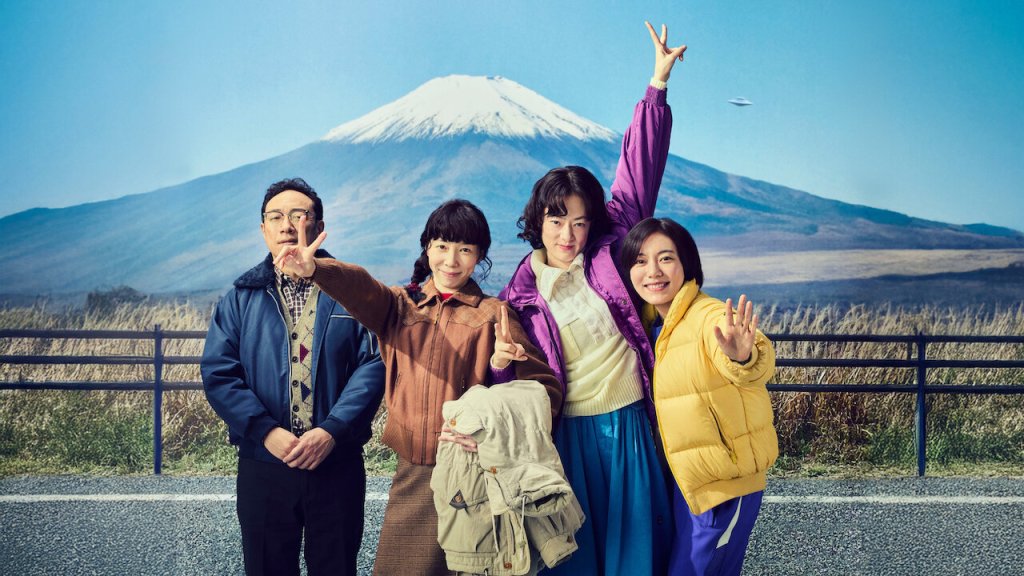
A charming ensemble workplace comedy sprinkled with hints of sci-fi and the supernatural, HOTSPOT will pull you in and make you fall in love with the humdrum personalities that populate this small resort town in the mountains. Its ingenious title is a pun on the hot spring vacation spot where it is set. That town is near the iconic Mount Fuji and most of the characters work in the hospitality industry. Japan is sprinkled with such geothermal waters called onsen. The title also refers to this particular fictional town’s extraordinary proclivity for attracting the abnormal and even the paranormal.
HOTSPOT does pack enormous charm. Part of that charm derives from the chemistry of the cast and their commitment to their characters’ individual quirks. Another part draws from the unmistakably Japanese workplace humor, grounded in its own kind of awkward. Coworkers twist themselves into pretzels trying not to speak their minds too directly and hold grudges over small incursions of personal space and autonomy. Internal monologues are a necessary apparatus of the storytelling, making it more David Lynch than The Office, but Lynch-lite. Finally a significant portion of the charm builds on the whimsy of the world the writers built. These days, studios want to cash in on whimsy, building marketable and toy-line universes, or worse, multiverses. Not so here. I doubt Hotspot will ever return in any form. You will want to take this unique world for a spin and then must leave the mountainous resort town with its galactic/supernatural connections behind.
HOTSPOT’s writer (and longtime comedian) Bakarhythm has a reputation in Japan for offbeat humor and it shows. He co-wrote the recent historical film FAKING BEETHOVEN, which features an all-Japanese cast portraying the 19th century musical scene.
HOTSPOT’s success relies upon its cast, including its two leads. Kakuta Akihiro is endearing as Takahashi, drawing from his comedy background for timing but never straying from realism and subtly. Ichikawa Mikako as Kiyomi plays the comedic straight man to Kakuta’s (inadvertent) clown. Ichikawa was also excellent in the crime procedural UNNATURAL and in SHIN GODZILLA.
At the start of the series, plots seem driven mainly by the personal connections and bonds of trust which the characters build. Science fiction elements are added (or revealed) to explain strange behaviors first seen as personality quirks. In the middle episodes the writers rely upon the tried and true formula of superheroes avoiding the pitfall of their powers and identity being revealed, as journalists swarm the town. The final episodes surprised me when further qualities of scifi and elements of the supernatural were added like pot luck entrees, creating a more chaotic story smorgasbord. Also to my surprise, a heist plot involving local politics took a central focus. The heist plot works adequately because the fate of the town’s economy and of its most vulnerable resident relies upon the outcome. But the heist does distract somewhat from the organic texture of the comedic narrative. I would have liked to see these ideas explored in a further season; there simply was not enough HOTSPOT for me. It is the most intriguing workplace comedy I have seen since I discovered the hit Icelandic comedy (and Jon Gnarr vehicle) NAITURVAKTIN in 2009.
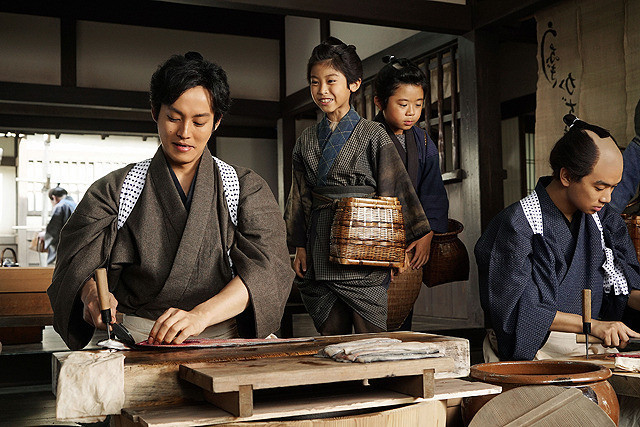
SAMURAI SHIFTERS is a delightful romp through Edo-period Japan which strikes a perfect balance between the dramatic and the comedic. Director Inudo Isshin (THE FLOATING CASTLE) keeps the story laser-focused despite the huge cast of colorful characters. Hoshino Gen stars as Shunnosuke, a pale bookworm born into the samurai class who works as a daimyo’s librarian. Takahashi Issey, sporting much more charm than usual, plays a confident and boisterous samurai in the same clan responsible for shanghaiing Shunnosuke into a high-pressured new job. The two lead actors have good chemistry, mainly by playing as opposites off of each other. Hoshino and Takahashi carry the film which aims to tell a very peculiar story.
The Tokugawa shogunate presided over a Pax Romana of two and a half centuries by controlling their vassals with an iron fist. From time to time, entire clans would be abolished, forcing lords to fire all their retainers. Other clans would be downsized or forced to relocate domains or switch places with other clans. This policy was handled strategically or capriciously, or stratego-capriciously, if you will. A clan that successfully transformed and relocated according to these edicts had a chance at survival. But a generation later, they might find themselves moving again, with no one left alive experienced in the ordeal.
This is where we find our young heroes, preparing to not only move, but enact lay-offs, cut expenses to fit the new salaries, and move people and property across Japan. Failure to do this successfully may lead the shogunate to outright abolish the clan. This ambitious and delicate operation needs a managing director and his role will automatically result in his stepping on everyone’s toes. Shonnosuke, the well-read but shy samurai, is nominated to the position against his own wishes.
Takahata Mitsuki (GUNSHI KANBEI), well known as the Japanese voice-actor and singer dubbing Elphaba in the WICKED films, plays Shunnosuke’s stubborn and aloof love interest, Oran. Oran holds the keys to the clan’s survival in the form of her late father’s moving instruction manual. He once held the job that now belongs to Shunnosuke. He must get his hands on the wisdom of the past to save his clan and his faltering lord (Oikawa Mitsuhiro), who is haunted by dreams of his own father dying en route between domains.
The chapters of moving instructions become the backbone of the film, which follows their structure religiously. As a relic the book represents continuity between generations. Even the musical score follows as samurai join together in educational songs to teach themselves how to pack up and vacate their castle. A long challenging process of decluttering ensues, replete with tense confrontations between Shonnosuke and his powerful superiors. It all brings to mind Marie Kondo and her catchphrase “Does it spark joy?”
I cannot avoid comparing two nerdy samurai at the heart of singular films: In SAMURAI SHIFTERS we have Shonnosuke as relocation-tzar and in SAMURAI ASTRONOMER we have Santetsu (Okada Junichi) as a brilliant scientist bucking tradition. Because SHIFTERS is a lighthearted and romantic comedy, Hoshino’s performance never has to rise to the level of Okada’s. Hamada Gaku (MY FAMILY, GUNSHI KANBEI) joins SHIFTERS halfway through, portraying yet another brilliant samurai. Hamada is effective in what is ultimately a superfluous role.
Between the bureaucracy, the logistics, and the musical numbers, we naturally begin to wonder if this will be a samurai film without a single fight. Patience rewards the viewer of this delightful and utterly original samurai story.
MISSING is a long slog of a movie that can’t decide if it is an oddball buddy film or a Nancy Drew-esque detective flick. The buddies are a pervert and a slob who team up to commit crimes that crisscross the lines of mercy, sadism, and opportunism. The young detective is a streetwise middle-schooler who sets out to find her missing father though everyone around her shrugs off her suspicions. MISSING’s weakness can be found in the way each plotline disappears from view as one leapfrogs the other. The central issue tackled is suicide, a perennial Japanese obsession. Assisted suicide becomes the gateway drug for one character with a killer instinct. Katayama Shinzo directs. He directed another production with dark themes featuring men on the run: THE HOVERING BLADE (2021) as well as the gory and action-packed GANNIBAL (2021-2025). In MISSING, as in his other works, the performances are excellent. Ito Aoi (HUMAN SPECIMENS, IEYASU, WHAT WILL YOU DO?) stands out as young Kaede who boldly confronts a killer she suspects of kidnapping her dad, played by Sato Jiro with a carefully balanced mixture of grief and comedic timing. Shimizu Hiroya plays a mysterious young man with unhealthy obsessions. Morita Misato (CITY HUNTER, 2022) steals scenes as an eccentric suicidal woman stubbornly pursuing her goal. Unfortunately, these high caliber performances cannot raise the film above its automatic mediocrity. It is too disturbing to be funny, too funny to be taken seriously, too long to be entertaining, and too preposterous to be inspiring.
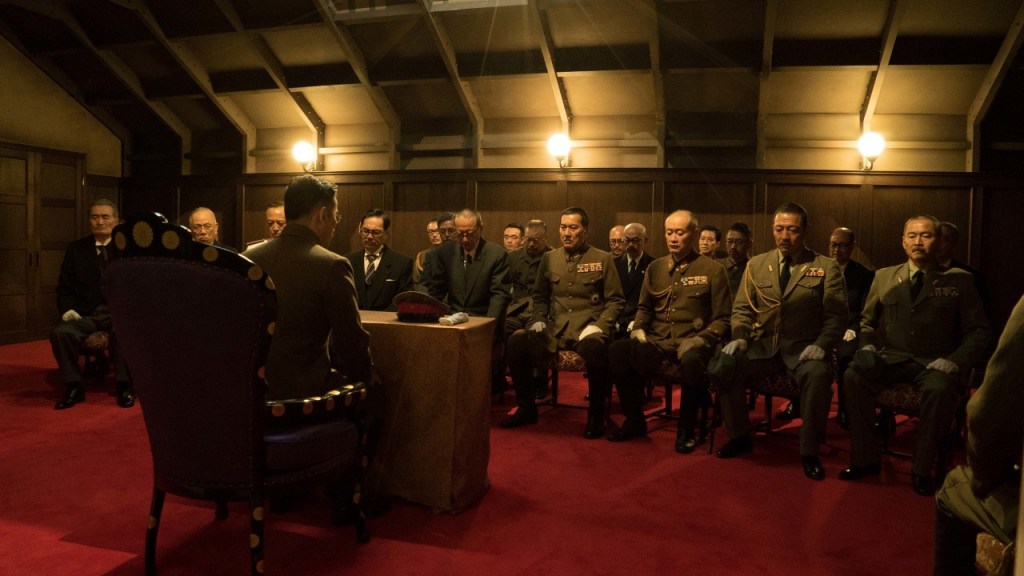
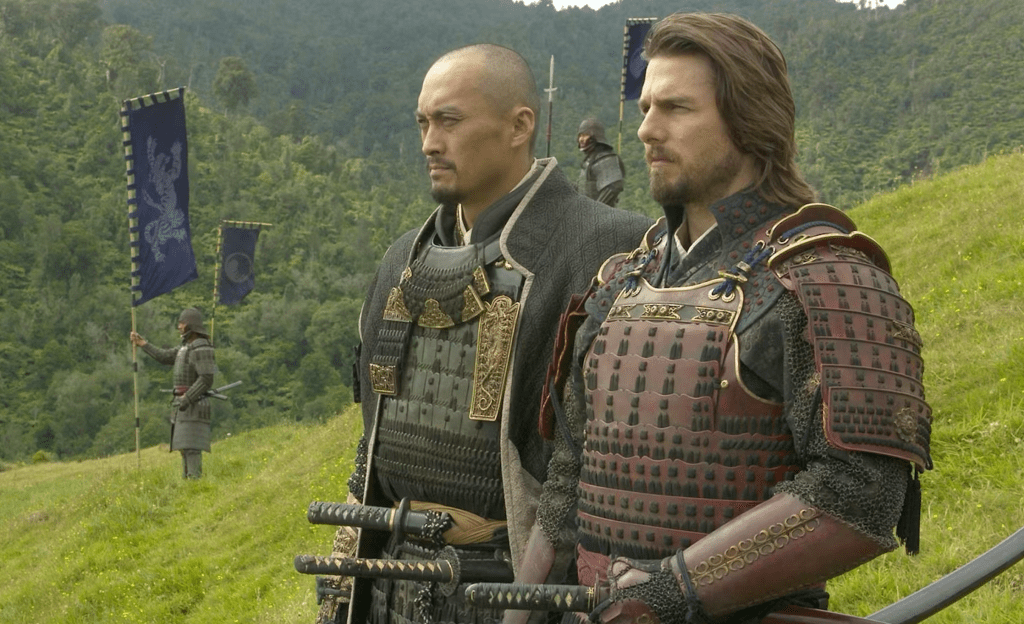
Film director (and occasional actor) Harada Masato recently passed away, leaving behind an impressive body of work. He may be best known to western audiences as the villain in THE LAST SAMURAI, but he directed 26 feature films. His 2015 film, THE EMPEROR OF AUGUST is a remake of the 1967 film JAPAN’S LONGEST DAY. Harada’s more recent account aims to depict Emperor Hirohito realistically. Motoki Masahira won a Japanese Academy award for best supporting actor in his regal role as the wartime figurehead of the crumbling constitutional monarchy of a nation losing history’s most destructive war. Like SHIN GODZILLA (2016), this film depicts an elite clique attempting to impose order over things which cannot be controlled. What unfolds is a detailed parade of chaos.
The cast is excellent: Japanese film icon Yakusho Koji carries most of the film as General Anami. Matsuzaka Tori gives one of his greatest performances as Major Hatanaka, a fanatic who won’t accept defeat. Veteran actor Yamazaki Tsutomu plays Prime Minister Suzuki as an aged statesman from a bygone age and hard of hearing when convenient.
One of the film’s greatest strengths is its relentless pacing, lacing together days of inaction with one night of chaos. Of course those days of inaction brought about tragedy too. The atomic bombing of Hiroshima is depicted and the bombing of Nagasaki is referenced. Characters, true to their mid-20th century context, fail to comprehend the magnitude of the west’s new weaponry.
The other strength is the filmmakers’ anthropological lens: characters are duly treated as relics of their time and culture. The camera brings them to book for their hypocrisies and for their disloyalties as debate leads to argument leads to coup. But it does not judge them from modern standards, nor should it. An act of seppuku may be portrayed as ridiculous in its timing, but the aims of the one committing are taken into account. The callous and selfindulgent folly of the age is exposed in all its ugly veins and sinews, but each man and woman, like a cog in a machine of doom, is treated realistically. Japan’s longwinded and faltering surrender was a debacle that prolonged suffering for both sides. Whether or not the filmmakers’ take on each man’s culpability is accurate in the judgement of history, Japan’s longest days are depicted accurately as a bitter struggle to find common purpose and faith in a meaningful life after war.
An interesting addition to the canon of Japanese horror films and series, HUMAN SPECIMENS is adapted from the novel by Minato Kanae (SUNSET). The production leans on symbolic and transformational cinematography, detailed art design, and strong but enigmatic performances from the stellar cast.
There are many horror productions in which the filmmakers force us to confront unimaginable grotesqueries. This alone cannot sustain a story. In the detective genre, there is the unfolding mystery. In that genre and in thrillers, there is often excitement generated from cat-and-mouse dynamics. Sometimes dark comedy, or even light comedy, balances out the grotesque (for example, both can be found in DEXTER). HUMAN SPECIMENS relies heavily on its unfolding mystery. But it imposes upon the audience the role of detective. Being a study of extremes in the personalities of humans and artists, it reminds me of Thomas Harrris’ Hannibal Lecter novels, populated by eccentrics indulging themselves with free reign amongst their mere-mortal neighbors. However, among the main characters, it is hard to find anyone whose personal agency outweighs the degree to which they are manipulated by others. Our vision as the viewers struggles to secure the truth as the main theme of the story comes into focus. It is vision: its clarity vs. its range.
I recently reviewed SUNSET (2023), another miniseries based on Minato’s work. The two stories do share common features. For instance, both feature a character on death row who is very content to remain there. But whereas SUNSET probes sickening acts of the past, HUMAN SPECIMENS horror unfolds in real time.
The cast all do yeoman’s work. Nishijima Hidetoshi plays Shiro, an expert on butterflies. At first he seems like a one-dimensional academic. In mysteries and psychological thrillers, the camera tends to peel back layers. It does so here, but it also adds layers. Nishijima succeeds in the role because he is believable from all angles. He was effective in the MOZU films and series, and remarkable in YAE NO SAKURA (2012) as Yae’s brother Kakuma, a historic figure and survivor of the Boshin War. Miyazawa Rie plays Rumi, Shiro’s childhood friend who is now a star in the modern art world and commands adoration through her unique artistic vision. Miyazawa has had a long career in film and music. She was striking in the NHK taiga drama TAIHEIKI (1991). She recently co-starred in ASURA (2025).
Minato’s novel plays with the reliability of the narrator. This is a story that aims to disturb, then pull back the lens and make you rethink things, and keep disturbing. Perhaps the flaw in this narrative is that the story tries to bathe the audience in every kind of pathos from the most exotic and gory to the most familiar and depressing. It is both a story about murder and a multigenerational saga of family dysfunction. There is too much to the story to fit into one film but the filmmakers could have accomplished more with less episodes.
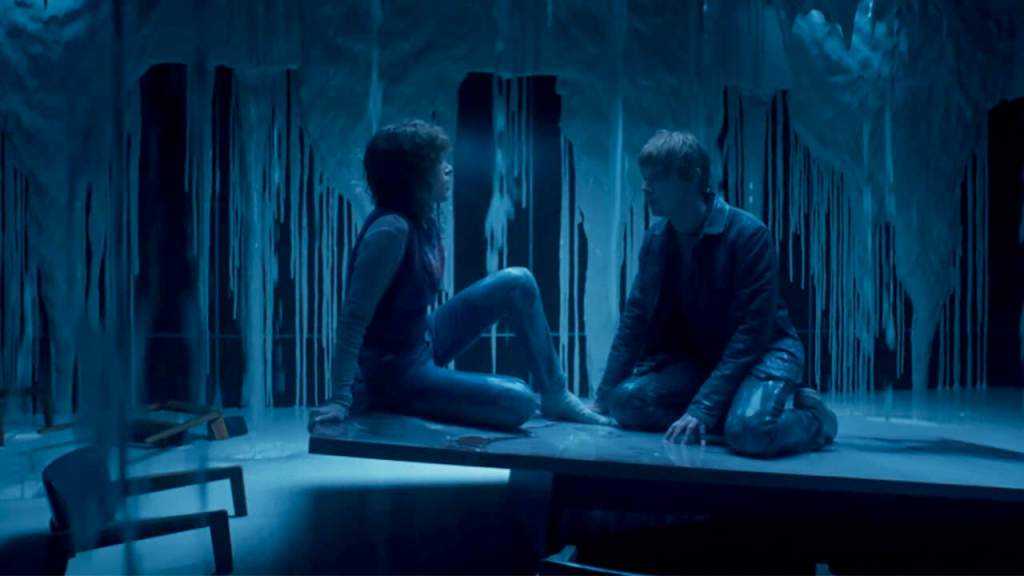
Less action-packed than chapter one, chapter two of season 5 is primarily concerned with three long-delayed conversations. The first is between Nancy and Jonathan, whose relationship chemistry has been put under questioning by the writers this season. Their fateful dialogue happens in an inventive landscape of dripping and oozing matter transformed by a mysterious energy force from above. The production crew does a good job of bringing this epoxy deathtrap to life, even if the concept verges on the silly. The second conversation involves Will finally telling his circle of loving friends the truth about his feelings and identity. Not that he needed an extra reason, but the writers cleverly weave Vecna’s bullying presence and mental menace into Will’s choice to seek transparency. The third conversation finds Dustin and Steve burying the hatchet on their bickering and remembering what made them unlikely buddies in the first place.
In chapter one we acquainted ourselves with Max living inside Vecna’s mindscape, as a refugee in her desert hideout. In chapter two she sets into motion her carefully laid plans to return to the world of Hawkins. In chapter one, Eleven’s ‘sister’ Kali/Eight made a shocking return. Now we get to know her again and her unique perspective on Vecna which threatens to sow discord among the band of heroes.
One of the startling things about chapter one is how many assumptions made by our heroes about the mysterious landscape of the Upside Down and about the whereabouts of Vecna turned out to be misunderstandings. Chapter two continues to build on these mysteries, creating a cosmology as elaborate as Dante’s multitiered poetic landscape. Devoting so much new energy to this world-building in a final season with an underwhelming episode count is a risk. It reminds me of JK Rowling’s The Deathly Hallows, when the author turns her characters from the search for the horcruxes to devote a whole new mythology to the three hallows and thus reboot the quest. We shall see if the new architecture defining the Upside Down and Hawkins place in the universe pays off!
It’s been a busy year chock full of Japanese productions dropping on Netflix, Amazon Prime, Hulu, Jme, and elsewhere. Some disappointed, many entertained, and a handful soared to heavenly heights. The following mini reviews are taken from REEL JAPAN’s current and upcoming posts:
ASURA
Score: 8/10
Director Hirokazu Kore-eda known for his dozen feature films, painstakingly adapts this Showa era novel at a leisurely pace over 7 episodes. Beautiful cinematography and a great ensemble cast, highlighted by Ono Machiko, make it a pleasure to watch.
More action-packed than season 1, but not as scary, the season brings all the characters to their inevitable conclusions.
UNBOUND (BERABO)
Score 10/10
The best NHK taiga drama in years, written by Morishita Yoshiko (NAOTORA). Learn about the glorious Edo literary and artistic scene of the 18th century. Witness characters climb out of the deprivations of the red light district on their journey to fame and consequence.
HOTSPOT
Score: 9/10
A charming ensemble workplace comedy sprinkled with hints of sci-fi and the supernatural. It will pull you in and make you fall in love with the very humdrum personalities that populate this small resort town in the mountains.
An ambitious production starring Non as a talented shogi player on a mission for honor and vengeance. Non’s performance carries the series.
HUMAN SPECIMENS
Score: 6/10
Adapted from the novel by horror writer Minato Kanae and starring Nishijima Hidetoshi, Ichikawa Somegoro, and Miyazawa Rie, the story seeks to endlessly disturb while it educates about insect life and questions the role of art in human life.
BULLETTRAIN EXPLOSION
Score: 7/10
Starring Kusanagi Tsuyoshi, Non, and Ono Machiko. An exciting disaster thriller that is a followup to the 1975 BULLET TRAIN thriller which the Hollywood film SPEED is based on.
It is fun to see a historical policework thriller set in Okinawa. Takahashi Issey, Aoki Munetaka, and Kobayashi Kaoru give it their all as actors. The plot is murky and hard to follow but at times you may feel transported to an exotic time and place.
This series will please the sword fighting crowds with its great stunts and visuals. Perhaps the least interesting among many samurai roles played by Okada Junichi.
SINCE I TOOK YOU AWAY
Score: 4/10
Kitagawa Keiko excels in her role as a grieving mother whose obsession leads to a new lease on motherhood. Kitagawa carries the series with her star power, but the plot amounts to mild entertainment. Curious, considering the kidnapping storyline could have driven a much darker drama.
Film star Shibasaki Ko remains a reigning queen of Japan’s television dramas. In her early days she co-starred in DR. COTO and GALILEO, as a nurse and police detective, respectively. Most recently she headlined INVISIBLE for the TBS station in 2022, memorably playing a mysterious and dangerous dealer of secrets. In director Kanai Kou’s SCANDAL EVE, glamor abounds, fittingly for a series that invites us into the world of media talent agents. Much of the budget seems to go into high fashion and posh interiors.
Shibasaki plays Ioka, a talent agent genuinely dedicated to providing her clients with pathways to success and stardom. Shibasaki also sings the theme song. Suzuki Honami plays Yoko, the heir to powerful agency Kodama which Ioka had the audacity to leave years ago. As these two competing agencies do battle, it pits one scandal against another. Suzuki deserves the highest praise for her scene-stealing performance as a scheming and controlling CEO which perfectly balanced menace and vulnerability. Emoto Akira, who has specialized over a forty plus year career in villains and schemers, for a change plays Yoko’s empathetic father who has a soft spot for Ioka, his former protegee. Kawaguchi Haruna plays Hirata, a journalist who finds herself caught in the middle. Her steely resolve to publish incendiary stories no matter the consequence leaves an impression. Ironically, Kawaguchi herself had assumed the role of Lady No, wife of warlord Oda Nobunaga, in the NHK taiga drama WAITING FOR KIRIN after another actress was forced to withdraw under a cloud of scandal.
Later episodes slow down to explore peripheral characters. This gives us a grittier and deeper dive into the harm done by the talent industry to its victims and reveals a truly misshapen industry that chews up and spits out hopeful youths. The writing does a good job of showing not telling this until the finale arrives. By the final episode, both armies square off against each other on an open field. That is to say, almost every character has chosen a side: Kodama or Rafale. In each army, agents join hands with journalists. However the finale is not just preachy, it decommissions the heros’ battle strategies and searches for grace in surrender. I lost track of how many bland soliloquies the writers lace together into a chain of transparent virtue. When I call a drama arresting, I usually mean that it stops me in my tracks, calls out to me, and moves me. Scandal Eve’s finale suffers cardiac arrest, the complete cessation of all life signs.
I look forward to Shibasaki’s future projects; let’s hope they nail the writing next time.
MISS KING stars Non as Asuka, a young lady struggling to find her way alone in the world, who has carried with her since childhood an extraordinary talent for shogi. Shogi, like western chess, is a descendant of the Indian game chaturanga. Shogi shares many traits with chess but is more complicated. Pieces can be promoted to higher rank when reaching deep into enemy territory and pieces taken from the board can be returned to it by the capturer; this mimics the reality of turncoat mercenaries. Netflix’s popular 2020 film QUEEN’s GAMBIT starring Anya Taylor-Joy may have breathed new life into the chess story. Netflix returns to that well with MISS KING. The actress, singer, and model Non has been working in Japanese cinema and television since 2010 when she was known as Nonen Rena and starred in the NHK annual morning drama AMACHAN. No stranger to adversity herself, her stage name arose from a conflict with her former talent agency that claims to own the rights (!) to her birth name. It has been reported that in the wake of that conflict, she lost many roles. 2025 is the year of her comeback (Nonaisance?) She recently co-starred in the riveting BULLET TRAIN EXPLOSION for Netflix. As Asuka, she brings the same aura of intelligence and intensity that she did for that desperate shinkansen driver. Non’s acting style and feline grace reminds me of Yoshizawa Ryo (the KINGDOM series, REACH BEYOND THE BLUE SKY, KOKUHO).
Asuka’s nemesis in shogi and in life is the father who abandoned her and her mother. Nakamura Shido II plays Yuuki Shoichi who has ascended the mountain of competitive shogi as the reigning kishi. His path has brought him fame and wealth and a replacement family. Nakamura, a kabuki actor and frequent character actor of film and television, is always effective as villains and schemers. He was great as the shogun’s spymaster in the THIRTEEN LORDS OF THE SHOGUN, great as a disgraced and drunken samurai in YAE NO SAKURA, and an effective menacing presence in LUMBERJACK THE MONSTER. He seems typecast here as the unfeeling dad who disappoints, but the minimalist contours of his performance are perfect. Nakamura can communicate volumes with a glance.
In the first few episodes, we travel a crazy quilt of mismatched tones, ranging from light physical comedy and antics to loss, overwhelming grief, and brushes with suicide and homicide. Later episodes smooth out the wrinkles and the series just about sticks the landing.
A chess story is comparable to a sports story: the underdog advances against impossible odds from match to match and ultimately triumphs over their opponents, and their own fears, demons, or baggage. Sports films are a staple of American cinema, invariably mixing tough-minded competitiveness with feel good camaraderie between teammates or between coach and athlete. Eventually all the stories come back to family values and fairplay. There is an expression in English: “For love of the game.” In contrast, MISS KING depicts the elite echelons of shogi as populated by obsessives. Those obsessions are channeled into a vengeance story more comparable to 47 Ronin than FIELD OF DREAMS or A LEAGUE OF THEIR OWN.
Western sports films have showcased some great coaches, like Burgess Meredith in ROCKY, Ian Holm in CHARIOTS OF FIRE, Mickey Rooney in THE BLACK STALLION, Pat Morita in THE KARATE KID, Clint Eastwood and Morgan Freeman in MILLION DOLLAR BABY, and Paul Giamatti in CINDERELLA MAN. Quite unlike all of those mentors, Fujiki Naohito takes the role of Seigo, coach to Asuka’s shogi as well as her emotional challenges. He seems particularly unsuited for the latter job. Here we are presented with coach and apprentice as mirror images. Both resent Yuuki. Both lost a parent before a disastrous match. Both lack the skills to communicate their emotions effectively.
The problem with MISS KING is not so much the plot, which is intriguing enough, nor the acting, but the tone deaf script with its simplistic dialog. Characters speak more like samurai of yore than multidimensional citizens of modernity. The manner in which one family has taken over the various shogi associations and rule them with an iron fist makes MISS KING resemble a yakuza story. I suspect the real world of shogi is a much more upbeat club to join.
Based on the 2009 novel by famed detective fiction author Higashino Keigo (The GALILEO series), this limited series arrives over a decade after it was adapted into a film in 2009 by Mashiko Shoichi. The novel was also adapted in 2014 into a Korean film and in 2024 into a Chinese film, making it one of the most adapted Japanese novels of this century. Katayama Shinzo helms the newer Japanese adaptation, filmed during the Covid-19 pandemic and featuring many scenes where civilians and detectives wear masks. Nagamine Shigeki (Takenouchi Yutaka) is an everyman living a normal life in Tokyo when everything he holds dear is taken from him by a gang of young murderers and rapists. The first episode especially contains many disturbing scenes which will challenge the viewer’s capacity for violence. It is reminiscent of the teenage carnage in Fukasaku Kinji’s infamous BATTLE ROYALE (2000) but worse.
What proceeds is a revenge story which contrasts, in many ways, from the more philosophical and scientific bent of Higashino’s other crime fiction, such as the award-winning SUSPECT X. That is not to say that this story does not pose philosophical questions about crime and punishment. It focuses specifically on the implications of the Juvenile Act which limits accountability for under age 18 offenders.
THE HOVERING BLADE transforms in style from the stomach-churning violence of episode one to what resembles an NHK railway travel doc in episode two. I have never seen episodes in a series deviate so much in tone. After confronting the reality of his loss, our everyman Nagamine flees the city for the mountains near Nagano in search of the ringleader. On his solo journey through a beatific landscape, his deadly resolve will be tested by Wakako, played with great subtlety by Ishida Yuriko. She is a fellow survivor of loss whose grief leads her to empathize with Nagamine. It is the chemistry between these lead actors that makes the series watchable.
I am intrigued by how the filmmakers transform the focus of the story. After roasting our eyeballs in the hellish landscape of episode one, they pull back the lens from tormented Nagamine to Wakoko. She functions independently, choosing of her own volition to be Nagamine-san’s would-be-savior. She tries to convince him of the value of staying alive and moving on from his loss. The emotional heart of the narrative is transplanted into the question: Will she or won’t she succeed? Meanwhile the major questions raised by the story remain fixated on the future of the villain. That he will never face true justice because of his age is a given. His fate becomes a choice between extrajudicial justice or a short stay in juvie. These conflicting focal points reveal a weakness in the narrative. Another weakness in the narrative is our own omniscience. We the audience know that Kaiji (an effective Ichikawa Riku) is a monster who deserves at least decades behind prison because we know how cruelly he treats strangers and even those who help him. We have the 20/20 vision to see his irredeemable nature but prosecutors, judges, and juries never will. The Juvenile act which will spare Kaiji adult punishment is referenced disparagingly by law enforcement. Nagamine on the trail for vengeance offers a way to circumvent the law and execute the villain. That the audience will cheer him on is built into the bones of the story.
Voyeurism becomes a recurring theme. In addition to the audience, three characters will find themselves watching the harrowing footage of the crimes. What does watching violence do to “normal people” who live humdrum lives? In THE HOVERING BLADE, witnessing violence changes most, but not all, of them. Although reminiscent of the Charles Bronson (DEATH WISH) and Clint Eastwood (DIRTY HARRY) vengeance thrillers of fifty years ago, the film is not steeped in them. It reinvents the wheel and tries to keep us guessing as to Nagamine-san’s fate.
Filmmakers in the West have produced several monumental films challenging the humanity of the death penalty: DEAD MAN WALKING, PIERREPOINT, SHEPHERDS AND BUTCHERS. Is THE HOVERING BLADE the antithesis of these works? If not the antithesis, it is without a doubt the antipode–the furthest pole away, because we are looking at these questions from nearly the opposite perspective.
Based on a novel by Kakuta Mitsuyo, and thoroughly grounded in her novel’s visionary exploration of female and maternal identity, REBIRTH will take you to unexpected places. Bringing to mind several Japanese films and series about kidnapping (MISSING, MY FAMILY, SINCE I TOOK YOU), in director Narushima Izuru’s REBIRTH the emotions are the most raw and revealed as generations are caught up in repercussions of cruelties and crimes.
Nagasaku Hiromi anchors the many fine performances as Kiwako, a woman on the run whose actions upend many lives. The actress’ ability to embody love and desperation and her chemistry with her child Kauru (Watanabe Konomi) make the film watchable. Less emotive, but believable, Inoue Mao plays the grown Kauru on a search for truth and meaning. Koike Eiko (TOKYO SWINDLER, NHK taiga drama THIRTEEN LORDS OF THE SHOGUN) turns in one of her finest performances as Chigusa. Yo Kimiko (SHIN GODZILLA, NHK taiga drama ATSUHIME) as Angel and Moriguchi Yoko (WHISPER OF THE HEART, THE SHOPLIFTERS) as Etsuko are effective in supporting roles.
As the film opens to courtroom drama and various confessions erupt, I am led to wonder if we the audience will be escorted on a tour of human sufferings, to question who is responsible. In fact, deeper questions will arise and unexpected characters will emerge from the frozen ground. Both the English title and the original Japanese title are appropriate to headline this story, each in their own way. Characters ruminate over the curious life cycle of cicadas, which hatch onto the earth’s surface for only seven days. Is it a mercy they will die together? What if a lone survivor outlasts his kind? What then will the world have to offer?
The film’s narrative, grounded in its literary source, keeps its focus laser-like on the questions in its characters’ hearts. REBIRTH does not have any kind words for the male of the species, though its assorted cruelties come from all directions. The film does offer a unique perspective on female resilience.
Wakamatsu Setsuro’s SNOW ON THE BLADE concerns the fallout from one of the most dramatic incidents in 19th century Japanese history–the assasination of Lord Ii Naosuke by a gang of revolutionaries. A powerful minister from a family who served the Tokugawa shoguns for generations, Lord Ii angered anti-westerners by agreeing to open ports to American trade and by cracking down brutally on the pro-Imperial factions who wanted power returned from the Tokugawa shoguns to the Imperial court. Lord Ii turns up in many films and television shows and is often depicted as a cultured gentleman whose personal charm and sincere dedication to his job belies the torture and executions his regime pursued. We meet the character of Shimura Kingo (Nakai Kiichi), a rather simple lowly samurai with impressive sword skills who is so taken by Lord Ii’s graceful demeanor that he instantly pledges his loyalty. Employed as senior bodyguard, he will live with shame from his ineffectual role as on that fateful day. Nakai Kiichi was excellent as the Mito lord in SAMURAI ASTRONOMER and the father of Kiyomori in the NHK taiga drama, KIYOMORI. He also starred in the NHK drama SHINGEN in 1988.
The entire Ii-Hikone clan is scandalized by the event. The Shimura family is treated brutally and Kingo enters into a state between life and death where he is judged too guilty to be allowed to die until he tracks down the remaining killers. History throws a major wrench into his mission when, in a few years time, Japan endures a brutal civil war, the shogun abdicates, and the Emperor regains total authority over the nation. Emperor Meiji’s council of ministers (mostly former revolutionaries) did away with the feudal system, banning swords in public, westernizing industry and the military and even discouraging citizens from wearing traditional robes. Kingo becomes a walking anachronism as he obsessively wanders Tokyo with his swords intact. The film skips over the even worse fates which the other failed bodyguards suffered.
Abe Hiroshi plays kingo’s quarry, Sahashi Jubei, in a moving performance. The two characters share the experience of living in limbo and waiting for death each day. For decades, Abe has been one of Japan’s busiest actors known for his many fine lead performances in productions such as IN THE WAKE, the TRICK series, CLOUD UPON THE HILL, and BEFORE WE FORGET EVERYTHING. Nakamura Kichiemon is great as Lord Ii. Hirosue Ryoko (DEPARTURES, NHK taiga drama RYOMADEN) plays Kingo’s suffering wife and channels through her haggard demeanor the frailty contrasting with her youth. Veteran actor Takeshime Masahiro charms as Kingo’s old friend Shinnosoke. There is a great child actor in the role of Jubei’s neighbor.
The film features an unusually subdued score by Hisaishi Joe of Studio Ghibli fame. Nighttime cinematography, something so many films fail at, shines in SNOW ON THE BLADE.
After a strong prologue with clarity of purpose, SNOW yields to chaotic montages while Kingo wanders. There are rather abrupt time shifts so it is hard to tell if we are in Edo Japan or Meiji Japan. Time stamps are inconsistent. Better editing could have fixed this problem.
Revenge films depend on setting up the backstory of the wronged party and SNOW succeeds in grounding that story in the main character. Because of the thorny moral issues and because of the abrupt shift in government and national priorities, the audience will never be certain whose side we are on. Nakai factors this into his performance and it is a key feature of the storytelling that unfolds.
The theme of clinging to the past comes up over and over. There is a great scene when numerous former samurai come together to reinforce their bushido values. The film poses a question about inner values vs outer appearance. Yet Kingo’s quest for honor is a quest for killing. This is not lost on some characters or on the audience. Early on his friend Shinnosuke tells Kingo there is “not a political bone in you.” He is a simple man, but he does have years to ponder the worth of his quest.
“Flipping through books so much your fingerprints wear off is a joy.” These words are spoken by a senior editor at the small Tokyo publisher at the center of this story. Based on the novel by Miura Shion, THE GREAT PASSAGE is an inspirational story about men and women who made their life’s work the creation of a new kind of dictionary. The film flows along as mellow as its color palette. Set in the 1990s and filmed in Kodakesque hues, the film slowly beckons you into its quirky environments and relationships. Cinematographer Fujisawa Junichi really knows how to photograph books: big books, small books, coffee table books, walls of books, piles of books. It would have been fun to see the design department build up each set from book-cluttered bedrooms to the labyrinthine dictionary office.
Matsuda Ryuhei stars as Majime, a maladjusted word nerd perfect for his new job in the dictionary department. He immediately catches the infectious enthusiasm of his superiors. There will likely be many viewers for whom the prospect of this kind of inspired workplace offers the same wish fulfillment Diagon Alley might for Harry Potter fans. Matsuda was excellent in QUARTET, ASURA, and THE MAGNIFICENT NINE. Miyazaki Aoi (ATSUHIME, TENCHI: SAMURAI ASTRONOMER) is excellent as Hayashi, a young chef starting her life over in Tokyo, whose nighttime ritual of sharpening knives is not so much menacing as obsessive. Odagiri Joe is great as Majime’s sarcastic colleague Nishioka, who is worldly in all the ways Majime is not, including being experienced with women. Kobayashi Kaoru (MIDNIGHT DINER, 1972, and the NHK taiga drama NAOTORA) and Kato Go (DEATH OF A TEA MASTER, CLOUDS OVER A HILL), both veterans of the big and small screens are great as the seasoned editors.
Watanabe Takashi provides an intriguing score, here somewhat jazzy on piano and vibraphone, with minimalist but impertinent brass, always eclectic.
The filmmakers methodical process mirrors that seen on screen. For a dictionary that was projected to take years to complete, unsurprisingly time will lapse and move on. The film takes a sudden turn into new territory with the addition of Kuroki Haru (excellent in the NHK taiga dramas SEGODON and SANADA MARU) as a young female addition to the dictionary staff. Her character feels a little shortchanged in the narrative. Just as soon as she arrives, we are steeped in an editorial crisis that serves as a tense climax for the film as publishing deadlines loom. Overall, THE GREAT PASSAGE is a slow character study in a genre that we might define as workplace drama. Extra points for some wonderful cat actors.
Based on a true story, director Takita Yojiro (DEPARTURES, WHEN THE LAST SWORD IS DRAWN) brings us an absorbing biopic about human perseverance and the struggle for science against ignorance and superstition. Okada Junichi turns in one of his finest performances as Santetsu Yasui, a young man living in the late Edo period whose left-brained skill at board games, puzzles, and mathematics impresses everyone around him. In the first part, Okada acts young, pitching his voice higher, swaddled in ill-fitting clothes that make him look undersized. Gradually, the character matures into the kind of heroic samurai who is willing to stake his life on his mission. His passion and impatience for learning offsets his dry nerdy demeanor perfectly.
Tense games of Igo (an ancient East Asian strategy game consisting of black and white stones on a grid) presage more dangerous combats to come. Will TENCHI deliver the usual swordplay that samurai films all promise? We shall see, but we must also keep an open mind about what constitutes combat: martial, political, and cultural.
From the start, much is made of the celestial inspiration, indeed the heavenly shape that mathematics and especially geometry impart to puzzles. If we look closely at the narrative we may detect ever-widening circles of relevance: from puzzles to Igo matches to marching across Japan in order to measure the realm. Finally we must solve with Santetsu the grandest problem: tracing Japan’s progress through the cosmos with an accurate calendar. Santetsu must do in a short time what the West has accomplished over centuries (a theme found in many Japanese stories set in the later Meiji era). He will abandon the eight century old Chinese calendar. Appropriately this journey unfolds across all seasons, all weather. Alpine summits and beautiful shrines enchant the eyes. Makeshift observation decks pop up across Japan shielded by the kind of heraldic cloth fencing associated with war camps.
No less than HisaishiJoe, famous for his many Studio Ghibli films, scores TENCHI. One theme stands out the most, a metronomic march that perfectly matches the precision movements of these samurai scientists as they ambulate across the landscape counting their steps like a primitive sports watch.
Miyazaki Aoi plays En, the eligible sister of one of Santetsu’s learned friends. Miyazaki and Okada have great chemistry, not surprising considering that they went on to marry in real life. It will have been a huge challenge for the filmmakers to fit this epic journey into the frame of a love story. Did they succeed?
The always-excellent Sometani Shota shows up as shogun Tokugawa Ietsuna. Controversial actor Ennosuke Ichikawa turns in a fine performance as antisocial math genius Takakazu Seki. Yokoyama You shines as Dosaku, a monk considered the greatest Igo player in Japanese history. Oddly enough, the great Yoshioka Riho appears in her first filmed role as an extra. If you look very closely you might spot her in the crowd waiting for an eclipse of the sun.
Like all scientists, Santetsu has to slay sacred cows. His fight is not without risk. Born into the peaceful Edo period when the Tokugawa shoguns exercised complete control over regional lords and commoners, Santetsu comes to believe that fresh ideas have been wiped out. Interestingly, it is not the shogunate standing against progress, but the nobles of the Imperial court. Decades later, Japanese reformers would harness imperial power to overthrow the shogunate, but that is a different story.
Gorgeous cinematography by Hamada Takeshi (DEPARTURES, KUBI) transports us into the era. Ominous eclipses, crows taking flight: the filmmakers transfigure these disturbing tropes to presage not moments of horror but breakthroughs of scientific advancement.
TENCHI: SAMURAI ASTRONOMER is the most important in a new breed of quirky samurai film. Although long, detailed, and requiring an investment of attention from the audience, it is a superlative film. Like samurai scientist Yasui Santetsu, the filmmakers proved they had “perfect insight” and “perfect vision.”
A recent mystery series showcasing two young stars of Japanese cinema and television. Like an onion, peeling back its layers will make you cry. Tears of disappointment? Or tears in solidarity to these grieving and resilient characters? I have been looking forward to seeing the female leads, Riho Yoshioka and Keiko Kitagawa, among the greatest in their generation of Japanese actors, work together. Like many WOWOW productions, the higher budget and studio guidance makes for a slicker, better photographed, moodier look, but with fewer episodes. The story does plumb the depths of human suffering, not afraid to examine the complex motivations behind destructive human behavior. The story inevitably serves as a just critique of Japan’s death penalty system, though it avoids offering that critique in a political way.
There is a meta distance between the main characters, who are filmmakers without a finished script, and the history of the past which they explore as content creators and almost like us, the audience, as viewers. This can slow down the immediacy of the story. With apologies to the source novel which I have not read, this script comes close to making the filmmaker protagonists as interesting as the crimes they investigate, but falls short.
Yoshioka, as always, is able to do more with less, able to turn emotional repression into a slow simmering boil. Unfortunately, Kitagawa’s considerable talents lie elsewhere. Take, for example, her turn as a grief stricken and half crazed mother in SINCE I TOOK YOU AWAY. The producers of the recent NHK Taiga Sengoku biopic: WHAT WILL YOU DO, IEYASU wisely cast her as the infamous Lady Chacha, and she delivered one of the best versions in years (Chacha, Lady Yodo was the niece of Odo Nobunaga and mother of Toyatomi Hideyoshi’s heir, whose influence over both may have soured an already turbulent era. Kitagawa always has an elfin and diminutive appearance. Yet when she performs wide-eyed characters of Shakespearean scope, she can really pull it off, even when chewing the scenery. Yet here the production calls for her absolute austerity. Opposite her, Yoshioka has been turned into the plainest Jane they can make of her, under a mop of curly hair and bereft of a shred of glamor. At times I could not help but imagine their casting reversed. I have no doubt that version would also have been watchable. It may have been an imposition upon the viewer to follow two leads who were equally stunted in their emotional availability.
Obviously when adapting novels to the screen, screenwriters always face the pitfall of ending up with cinema that talks more than shows. This is undeniably a talky production. That may have been unavoidable here. In most mysteries, the resolution is KING. Here the journey is held up as just as important as the resolution. In other words, the way the struggling director and struggling screenwriter, both women experiencing painful loss, come together and change each other is the heart of the story.
Perhaps the star of this production is the town itself. SUNSET presents a slowly unfolding mystery where each person we meet turns out to know someone who knows someone who is at the center of the crimes. If you live in that town, you must have been the murderer’s hairdresser’s cousin’s math teacher. Is it because the town was so small, or because the script was small? You will have to decide.
Director Yamashita Tomohiko helms an Edo-era heist story that is, at best, an exploration of how poor men under strain of debt turn to thuggery. At worst, it lacks enough substance, stakes, and twists, to justify its passage into cinema. In the hands of a brilliant filmmaking crew, it could have succeeded. However, good performances and good cinematography by Hamana Akira cannot save this film from bad editing and a muddled first act which will leave the viewers scratching their heads wondering what is going on and struggling to keep track of all the characters who inhabit this warren tenements. Koji Endo provides a decent musical score, albeit one which veers distractingly into Irish melody. Featuring limited swordplay, this film is more a study of an historic underworld and its thugs, comparable to a modern yakuza film.
Lead Nagayama Eita gives a performance typical for him where he leans into the misery and imbues his street smart Sanosuke with pessimistic strength. However he tends to take this to extremes; there are times, as in other Nagayama Eita films, where you will wonder if he has lost interest in the script. The “fox” is a wily old man played by Hashizume Isao in a performance that deftly juggles friendliness and hostility. He recently embodied a similar role as the shinto priest in GANNIBAL. THE FOX DANCING IN THE DUSK was created to celebrate the 20th anniversary of the “Samurai Drama Channel.” If a director’s cut is ever released with all the missing scenes I would have needed, I’d be happy to watch it.
Fittingly for a movie that focuses so much on the 18th century Edo government’s currency policy, IWANE, like a coin, has two sides: On one side, it is a conventional samurai film, shot brightly through modern lenses, with maximum stunt work pitting one style of swordplay against another, featuring a young warrior haunted by tragedy and the loss of his love. The other side of the coin reveals an utterly unconventional story about monetary policy, duels fought between friends, the selfless patriotism of one money-changer, dooms averted by love of mercantilism, and love doomed by mercantilism. This is a story that takes you places you never expected to go and refuses to return you to the places you expect to see again. For me the most memorable scene was of three young boys who are IWANE’s neighbors, catching an eel in a stream and then haggling with a restaurant owner over its sale price. Now that I think of it, that scene was prophetic.
Now let’s see how many counterfeit silver coins we can exchange for gold: Most of the sword fights are well choreographed, though some of them are imbued with off-kilter emotions bubbling out of the jumbled screenplay. The performance by the lead, Matsuzaka Tori, carries the film, though his naivete and reluctance can be too much and too much of a trope.
Our senior villain is money changer Urakusai played by screen veteran Emoto Akira. For decades Emoto has played every flavor of villain from a retainer who betrays his lord to an entrepreneur who steals curry recipes. Here he chews the scenery while sporting ten pounds worth of smallpox scars from the makeup department. He adopts obnoxiously slowed speech to spew vitriol, but he is effective as always. He is joined in the cast by one of his prolific actor-sons, Emoto Tasuku as Iwane’s closest friend.
There are Samurai FILMS and there are Samurai MOVIES. A sophisticated, taut, auteur’s vision, IWANE is not. Based on a very long series of novels, it would have been better served as a TV series. A previous series ran from 2007 to 2010 starring Yamamoto Koji as Iwane. As a movie with a script stuffed like a Christmas fruitcake, it may charm you despite itself. Enough ambiguity crowns the climax to project thirst for a sequel. Next time, I hope they keep it quirky but streamline the bumpy road.
A young man gifted in swordsmanship but short in patience begs his teacher and his lord to allow him to travel to the neighboring domain to study swordsmanship further. Meanwhile, his clan leaders fear the annihilation of their entire domain after years of hiding fields, grain warehouses, and surplus funds from the Shogunate. These two plots will collide with the ugliest consequences as BUSHIDO unfolds.
Such circumstances bring to mind other productions: For instance, the hidden fields and crops in the NHK taiga drama NAOTORA, and the young swordsman desperate for a domain pass in the taiga, RYOMADEN. But these were indeed rather common occurrences at the time.
Director Yasuo Mikami films 95 percent of the movie in washed out colors bordering on black and white. Did he choose to do so because he knew the final act would feature endless fields of snow? The audience will feel surrounded by pale faces and grey vegetation for hours. An occasional orange hue breaks through by candle light.
All the higher ups act with minimalist performances bordering on the robotic. Tomohito Wakazaki’s performance as a wronged young man saves the film. He perfectly embodies all of Kagawa’s flaws and strengths as well as performing ably and believably the incredible stuntwork required. Tamao Sato brings warmth as his sister Yuki, and Takehiro Hira (SHOGUN, RENT A FAMILY) anchors the role of his teacher put into an impossible situation.
A malignant irony dwells at the center of the story: Kagawa is the son of a man who sacrificed himself for the clan a generation ago. And Kagawa is headstrong and unhappy because he always believed his father was wrong to give so much for the clan. His frustrated heart lands him into trouble when the clan lords return to the same well to save themselves.
Most samurais’ lives were grim. Bushido, the warrior’s code was grim. This film is nothing if not grim. It may not be your cup of tea, but it does not commit false advertising. Mikami does not rush the story. Most of the combat is verbal, but the final fight lives up to all the hype and can be compared with the greatest cinematic duels such as the climax of ROB ROY.
In this cold case murder mystery, a middle aged cop finds his elder mentor is at the center of the mystery. Further, the cold case once reopened spawns new deaths.
Veteran Japanese actor Shibata Kyohei, known for his former onscreen detective persona and numerous guest roles (excellent as the dad in GUNSHI KANBEI) occupies the emotional heart of this mystery as retired detective Shibasaki Sachio.. The script gives him ample opportunity to express the grief he carries around as Job-like, he endures one loss after another. His junior, family man Kawasumi Shigekatsu, tries to square his professional duties with his loyalty to her mentor and savior. Iura Arata is one of those Japanese actors who turns up all over the place, playing serious and light fare, historical epics and modern dramas. He certainly has range. To date, the best performance that I have seen would be his role as the unlucky and haunted Emperor Sutoku in the NHK taiga drama, TAIRA NO KYOMORI. Usually encountered as a supporting actor, here he anchors much of the script while remaining the cipher through which the audience comes to grip with a complex storyline. Iura illuminates a slightly stooped, messily dressed dad and husband, tired, often impatient with his colleagues, his eyes hidden behind overgrown bangs.
A detailed multigenerational saga from Wowow studios, known for their grittier and glossier productions, it requires the viewers’ attention. On the one hand, that attention is repaid in spades by Shibata’s performance. On the other hand, without getting into spoilers, the resolution requires a certain amount of suspension of disbelief.
Based on a novel by Nakayama Shichiri which chronicles the travails of two young people, Tone and Mikiko, whose world is violently wrenched from them by the 2011 earthquake and tsunami leaving them orphans and throwing them together. It also boldly tells a story of a series of grisly murders occurring years later. The film flashes backward and forward in time as we learn about these survivors and observe the shadows cast by their suffering and hope.
Abe Hiroshi is perfect as the lonely and bereft detective who sees the case through to its bitter end. He is just engaged enough emotionally in events for us to know that he is processing his own loss through them.
Satoh Takeru effectively plays Tone as constantly rattled and living on a hair trigger. Kiyohara Kaya plays the adult Mikoko, now an idealistic but frustrated young welfare officer. Her edgy performance keeps you guessing: Is she aggressively compassionate? Or compassionately aggressive? The chemistry between Abe and Kiyohara is electric. Years later, they would reunite in LAST SAMURAI STANDING, where, as the ancient vengeful warrior Ikusagami, he would haunt her steps in relentless pursuit.
Surprisingly, Japanese film stars Yoshioka Hidetaka and Nagayama Eita show up as relatively minor characters. But they accomplish much with their limited screen time.
An hour and a half into the film, we find Mikiko saying: “You have to ask for help. If you do, someone will respond. There’s still hope. Someone will reach out to you.” Does she still believe her own words? Yet this poetry ties together all the threads of disaster, survival, survivor’s guilt, poverty, charity, security, and a broken welfare system.
The fulcrum of the story is Kei, an old woman and fellow tsunami survivor looking after Tone and Mikoko. Misuko Baisho plays her memorably with compassion and fragility (an interesting contrast to her evil clan matriarch in GANNIBAL). It was the novelist’s flash of genius to tell two stories through Kei’s suffering and unite those stories into a compelling mystery.
Director Zeze Takahisa succeeds in bringing book to screen in an all-star, big budget production. Unlike so many other films, it does not suffer from its many time jumps; its editing and pacing are solely beholden to the storytelling.
Small Town Police Handle International Crimes With the Fate of Okinawa At Stake
This moody historical detective miniseries pours fire and ice on a ticking clock. The fire comes in the form of Aoki Munetaka who plays a headstrong and reckless young Okinawan detective who is justifiably distrustful of authority. The ice comes in the form of Takahashi Issei who plays an intensely private detective
The story puts them together, along with veteran policeman Tamashiro (the always excellent Kobayashi Kaoru) in a story that is ingeniously set in the final weeks (and minutes) of American rule of Okinawa. The change in government creates a situation of political and financial instability as well as raising infinite questions about authority and jurisdiction.
Most of the action unfolds through the viewpoint of Takahashi’s character–an Okinawan native who left years ago for the “mainland” (of Japan) and is expecting a child with his young wife he left there. He receives endless bullying and teasing about his abandonment of his people and Takahashi’s performance brings out his sensitivity and sincerity.
As the clock counts down on Okinawa’s fate, a complex heist story unfolds just as a cold case of brutal murders needs reopening. The production detours into wartime flashbacks; most of the characters are haunted by the war that ravaged their island. The series suffers not so much from its low budget as from poor writing. The middle episodes (2 and 3) are muddy and almost incoherent whereas episodes 1, 4, and 5 stick their landings. Patient viewers will be rewarded by a satisfying ending.
The Duffer Brothers bring us right into the action, which unfolds across four very different landscapes: suburban Hawkins, the military/twisted science industrial landscape, the moldy vegetative Upside Down, and an intriguing dreamier landscape of the Upside Down. Stranger Things has always put Hopper and Eleven at the center of their military and ESP science environs and what follows here is much the same, except that with Papa dead and Paul Reiser apparently out of the picture, the new evil doc who gives soldiers orders is played by Linda Hamilton, looking more like my grandmother here than I remembered her. She is effective, and like so many of the past and current cast (Matthew Modine, Paul Reiser, Sean Astin, Winona Ryder), she is a bonafide 80s star. It’s nice to see her back in action.
The two images of the Upside Down channel the grotesque and arabesque horror. There is more of an Edger Allen Poe vibe to the dreamscape. It is a surprise to see the recasting of Holly Wheeler, newly embodied by British actress Nell Fisher (ANNE WITH AN E). She plays the character with both plucky determination and vulnerability. Her sojourn through a seductively pleasant landscape of the Upside Down contrasts well against the other settings the show presents us. There are hints of Alice in Wonderland as well as Little Red Riding Hood in Holly’s wardrobe and her path across this horrorscape.
There is a necessary reorientation of friends here in order to bring out new qualities in our save the world team. Most intriguingly we see Robin paired up with Will, There is one exception: The Nancy/Jonathan/Steve triangle which seems to never reach a resolution.
The most intriguing twist in this new season is the way our Goonies-like team of heros/sleuths/Vecna hunters has used technology and secret tunnels to coordinate their members across two dimensions. We begin to see the Upside Down and (hardly) normal Hawkins as overlaid one atop the other, like one of their clever slide projector charts. This works well in keeping the expansive narrative tidy. The Duffer Brothers are aided here by exceptional writers and directors including Hollywood heavyweight Frank Darabont (The Shawshank Redemption).
Audiences will need to wait for the final installments of SEASON 5 to drop at Christmas and New Years.
Potentially more damaging to the Japanese tourism industry than any other production, Gannibal tells the story of a policeman from the city who takes a job in an isolated mountain village. It is hardly a spoiler to say: accusations of cannibalism haunt this village.
Gannibal, which is based on a popular manga, is equivalent to the American genre called Southern Gothic Horror, where an outsider tries so very hard to see the best in his new neighbors despite his misgivings, before being forced to confront with horror that the evils run deeper than he ever imagined.
The cast includes Yuya Yagira as Daigo. Yagira, who as a child actor won the Palm D’Or at the Cannes festival in 2004, is known for his eccentric, even mystifying acting choices. Since the main character frustrates his family, neighbors, and superiors constantly, his style works. Much of the protagonist’s moral development rests upon his young daughter’s reaction to violence, specifically violence carried out by her cop father. However by season 2, that thread is dropped leaving Daigo to merely dodge bullets and hatchets all the time. Riho Yoshioka shines as always, as Daigo’s wife, but we are left with a sense that her character could have been more important and virtually disappears from the season two finale. Yagira and Yoshioka don’t exactly spark up the screen with chemistry.
Comparing the two seasons, an analogy comes to mind: Ridley Scott’s ALIEN vs James Cameron’s ALIENS. Whereas season one focuses on horror, season two rolls out a parade of action and carnage on that foundation. Few productions equally balance the Arabesque and Grotesque elements of horror, and here we have a heavy weight towards the grotesque. Indeed, it is likely the most carnage-laden production coming out of Japan since BATTLE ROYALE.
Conspiracies can carry a horror plot forward, but the conspiracies here within the national police force overtaxes the suspension of belief. The season two finale lacks the punch of that season’s opening battle. Nevertheless the big budget is evident in the many choreographed fights and all-out mélees.
Colorful local characters populate the story until each meets their demise, each taking with them a chunk of local charm. Some of the supporting characters are very memorable, including matriarch Gin Goto (played wonderfully in two timelines by Baisho Mitsuko (elder) and Yuri Tsunematsu (younger) , a wounded child in exile (Mahiro Takasugi), father and son Shinto priests (Hashizume Isao and Kura Yuki, Shunsuke Tanaka), Nairu Yamamoto as Kuroe Goto, and Kita Kana as the daughter of the missing cop Daigo replaces.
Kasamatsu Show plays Keisuke, the Goto heir, and has excellent chemistry with Yagira. Their relationship as friends, enemies, and frenemies defines the story. Keisuke exists as a Hamlet cipher who goes through momentous events utterly lost and determined to take no action, make no decision. If you decide to watch, you are in for an exciting and gory adventure.
Fujii Michihito, veteran director of the big and small screen, helms this project. He is best known for realistic thrillers like FACELESS, THE VILLAGE, and HARD DAYS (all excellent) as well as intriguing television dramas like THE JOURNALIST. I was surprised to see his name attached to this project because it falls squarely into the genres of samurai fantasy and dystopian survival. Based on a novel by Imamura Shogo, LAST SAMURAI STANDING will inevitably draw comparison to the popular series of RUROUNI KENSHIN films based on the uber-popular manga and anime.
This series stars one of Japan’s hardest working actors, Okada Junichi, who has honed his samurai skills across countless projects. Okada’s best acting to date was probably in Fujii’s HARD DAYS (a heist story not about a heist) and in his lead role in the NHK Taiga drama GUNSHI KANBEI. He is always reliable to carry a project; most are samurai stories, some yakuza crime dramas. One of the many Japanese actors to originate in a boy band, he has come a long way from his youthful projects where he stood out as the dorky clothing designer in TIGER AND DRAGON. Whereas Kenshin, as played by Sato Takeru, evokes Matt Damon’s stunted and blank Jason Bourne, Okada’s Shujiro evokes Liam Neeson in his gloaming action career. Like Neeson, Okada’s haggard expression, his grimace-acting, and his preoccupation with saving his daughter-substitute are enough to make audiences relate and care. Fujisaka Yumia as the young lady in over her head brings sincerity and vulnerability to her role. An underutilized Abe Hiroshi plays the sinister Gentosai. Kiyohara Kaya imbues her wry warrior with world-weariness. Sometani Shota brings an otherworldly quality to his Ainu archer. Ito Hideaki shines as brutal killer, Bukotsu. Indeed, the whole cast is excellent, featuring a multigenerational array of Japan’s finest acting talent. And the wide scope of the story calls for a large cast.
Although set in the aftermath of the 1860’s Japanese civil war and the restoration of the Imperial monarchy, the series does not inhabit a realistic historical setting, but a manga-verse like the KENSHIN stories. The usual tropes apply; katanas deflect arrows with ease. Supporting characters are plucked from the rosters of political figures and business moguls in history books; here they perform roles in machiavellian conspiracies. It can feel awkward when our feet leave the ground and we descend (or ascend if you prefer) from history into fantasy. Yet this is the exact same time frame as the KENSHIN films which explore much of the same concepts and plumb the same emotional depths as veterans of brutal conflict try to move forward together into a new Japan.
The story of LSS is left unfinished and we await work about a second season. The narrative moves at a reasonable pace, and some episodes devote themselves to exploring Shujiro’s and Futaba’s backstories. The problem with Shujiro is how many backstories he has. Just how many people can you be on the run from while you are running towards your new enemies?
The conspiracies which dominate the plot fail to be more interesting than the tragic, violent, actual Japanese history of that era. In that history, extraordinary figures from all walks of life embodied and explored all the same themes of personal and national purpose, asking the soulful and tragic question: what do we do with all the samurai who are not needed anymore? You might as well read the history books or watch any number of more realistic Japanese productions about the generals, politicians, and businessmen who transformed Japan from a closed samurai state into a pacific power.
LAST SAMURAI STANDING provides exciting duels and high-budget battles, some of which borrow Peter Jackson’s camera moves. The characters find themselves in a desperate battle for survival reminiscent of cult Japanese film BATTLE ROYALE (2000) and the HUNGER GAMES stories (2008–). All the action entertains, but the RUROUNI KENSHIN films have already covered some of the same ground and are a superior series.
The paradox of THE LAST SAMURAI and the two adaptations of SHOGUN: If you don’t know Japanese history, they intrigue and they invite you in. If you do know Japanese history, these pseudo-histories disappoint. There is nothing in them which is as interesting as the reality. Like SHOGUN, THE LAST SAMURAI runs the risk of misleading us about the realities of Japanese history. Specifically: Meiji-era Japan, a time when that nation underwent more dramatic change than almost any place has in human history. If you want the real history, you will need to either read books or watch the many films and television shows produced INSIDE Japan. The Japanese love their history; repeating it and dissecting it on screen is a national pastime, almost a ritual.
Tom Cruise has a talent for carrying every film he headlines. He may not be as charismatic as Hollywood’s old guard (Harris, Connery, McQueen), but the camera loves him and his emotional range just about covers it. Here he is an alcoholic, disillusioned veteran haunted by the jobs the American army gave him out West. There is a little bit of John Dunbar as template from Kevin Costner’s DANCES WITH WOLVES. Cruise also emits some of the vibes of his wounded veteran in BORN ON THE 4th OF JULY, but the wounds are just internal this time. Cruise later made another historical war film, playing General von Stauffenberg in the WWII biopic VALKYRIE. Because VALKYRIE cleaves to its historical truth but tells an equally stunning tale of stoic fortitude, it is the superior film.
The late Billy Connolly, iconic Scottish comedian and actor, as beloved in the UK as Robin Williams was in America appears in a supporting role, but sporting an Irish accent, a common sound in the 19th century American army. Timothy Spall, shortly before his star-making turns as Harry Potter villain Peter Pettigrew and years before his Cannes triumph as William Turner, dials into his most “capital” style as a slimy but intellectually curious creature of the British Empire. Sosuke Ikematsu shines as the young nephew of Watanabe’s character. He would go on to appear in many productions as a superior child and adult actor. Hiroyuki Sanada, who would later star in the 2023 SHOGUN adaptation, does much here with just looks and grimaces.
You can be forgiven if the idealistic Japanese mountain village reminds you of The Shire where the hobbits lived, because it was filmed in New Zealand just a few years after the LORD OF THE RINGS was captured there. John Logan as screenwriter and Hans Zimmer (score) reunite from their GLADIATOR days, not coincidentally bringing a similar stoic vibe. You hear a lot about duty and zen or zen-like focus in both movies.
Director, Ed Zwick, made one of the great war films of all time: GLORY, about the Massachusetts 54th Union army regiment of Black soldiers in the American Civil War, so Zwick has plenty of experience summoning his heroes to brave overwhelming odds. The second and third acts land particularly well allowing the movie to hit all of these predicted and predictable emotional touchstones. The script places a mostly fictional American hero in the center of a tragic Japanese civil war. The British equivalent might be LAWRENCE OF ARABIA, a film with more historicity. THE LAST SAMURAI is a slick Hollywood production but one where none of the actors or creatives are phoning it in. It made a star out of Ken Watanabe, and we can all be grateful for that.
Slow and steady, this quirky samurai film by Shigemichi Sugita moves inexorably to its bittersweet conclusion. At the center of this tale is a disabled and dependent warrior. His life has been a string of disappointments and near misses with happiness. Especially afflicted by bad luck in his relationships with women, his love for his great-niece whose happiness he places before his own, defines his actions in this film. An outstanding performance by the recently deceased icon of Japanese film, Tatsuya Nakadai, will leave a lasting impression as Sanosuke. At times gentle or sardonic, eccentric or universally humane, the characterizations always stick the landing. I remember well Tatsuya’s work in the NHK taiga drama FUURIN KAZAN, in which he played a cruel and wanton daimyo who provoked hatred even in his own children. It was another arresting performance and contrasts interestingly with this one in a career that spanned almost 70 years from 1953 to 2020.
Playing Sanosuke’s niece, Nanami Sakuraba is engaging as a samurai’s daughter, pretty, neither exceptionally smart nor kind, but the “girl next door,” whose social class and marriageability lands her in hot water. Her timid father and overbearing mother are no help to her navigating these hazards.
Blessed with great performances, an intriguing script, well directed and photographed, though suffering from an inadequate and distracting musical score, A DUEL TALE should take its place alongside the dozen or so excellent low budget samurai films of the last decade and a half. Like SAMURAI ASTRONOMER, THE PASS, and SAMURAI PROMISE, it weaves its story on its own terms somehow evading the nefarious pressures that warp and mar many such films under the studio system.
Two scenes stand out for their metaphorical poetry: Near the beginning, our protagonist, an elder samurai, explains to an inquisitive young lady that he admires crows because they always fly towards the sun. Worried, she admonishes him that he will go blind if he also gazes at the sun. Holding up a candle between their faces, he looks straight into the flame and invites her to do so. At the end of the film, the director shifts this perspective to the audience’s gaze as the warrior contemplates his own fate.
The setting is eastern Japan, at the outbreak of the Boshin War that ended the Edo Shogunate’s rule and transformed Japan. Lord Kawai Tsugunosuke is the chief vassal of the lord of Nagaoka, one of the stalwart supporters of the Tokugawa Shogunate. Our elder samurai is torn between his loyalty to his lord and his desire to keep his small and fragile domain out of this destructive conflagration.
Yakusho Koji, (The Days), one of Japan’s most beloved actors, manages to keep his character relatable despite seeming to be an utterly stoic superhuman leader spouting endless axioms of bushido or confucian literature. He and the script accomplish this by showcasing his inner disappointment in his fellow humanity as well as the many failures he experiences in making peace AND war, despite making all the right efforts stubbornly.
Much is made of the loyalty of his male underlings and servants but the film mostly focuses on two females. His wife, played by Matsu Takako, gives an intriguing performance showcasing both her vulnerability and resilience. The actress, who gave terrific turns in QUARTET and THEIR MARRIAGE, amongst many others, almost steals the film from its capable lead.
THE PASS, with its frequent allusions to Aizu and other Shogunate loyalists, inevitably reminds me of the NHK taiga drama YAE NO SAKURA, which illustrates the tragic downfall of these clans during the brutal Boshin War. It was a fine taiga, but would have been even better under this director’s deft guidance. Takashi Koizumi, who has directed seven films and previously spent years as Kurosawa Akira’s assistant director, has previously directed and written other excellent small-budget samurai epics where the story is told in no hurry with competent but never excessive battle scenes. In each case the viewer will be rewarded by a narrative that concentrates on clarity and characterization.
This film appears to have a message, and director Takashi Koizumi tries very hard to show rather than tell it. The cast ranges in age from schoolchildren to nono-generians and Koizumi has herded them into the mountains near Nagano, taking care to film across four seasons. What slowly unfurls like a fiddlehead in June is a sweeping story of a community that helps each other through tragedies and losses. We see through the eyes of Takao (Terao Akira) recently relocated from the big city to his childhood village with his “big city doctor” wife, Michiko (Higuchi Kanako). We get to know the couple by watching how they get to know the locals, and the most salient facts of their story are not revealed to us until the third act.
The main cast of seven includes the excellent Terao and Higuchi, their ninety something neighbor (Tanie Kitabayashi), the young mute woman who writes the local paper (Konishi Manami), plus Takao’s old schoolteacher and his wife (Tamura Takahiro and Kagawa Kyoko). Also featured is Yoshioka Hidetaka as a doctor, the actor no stranger to medical roles. All are portrayed in compelling performances, mostly by veterans and icons of Japanese cinema and television. The film is chock full of beautiful vistas, lush gardens, and pithy wisdom of the rustic variety. At every point the story contrasts youth and age, experience and innocence, mentors and apprentices.
Through much of the film, very little seems to happen. Eventually events surge forward. These plot developments should not come as a surprise because the seeds were planted early, yet surprise they will because we the audience will have already planted our feet on a silent mountainside. Halfway in, anything too dramatic will disturb this meditation. Nevertheless, Koizumi juggles his storytelling responsibilities without losing integrity. Despite the excellent cast, this is really a director’s film. Some will take it as a slice of (rural) life, others will take away something more profound.