Score: 9/10
Written and directed by Koreeda Hirokazu, LIKE FATHER LIKE SON draws a contrast between two families brought together by unexpected tragedy. As each prepares their son for entering elementary school, they suddenly discover that the two boys were switched after birth in the hospital. What ensues is a sensitive examination of the role of nature vs. nurture in the human heart. The beginning of the film is punctuated by unsettling cinematography (Takimoto Mikiya); every building and human figure appears slightly too close. Innocent people discover their lives were not all they assumed, and all at once, people who seem underqualified to do so are burdened with an urgent need to make major decisions.
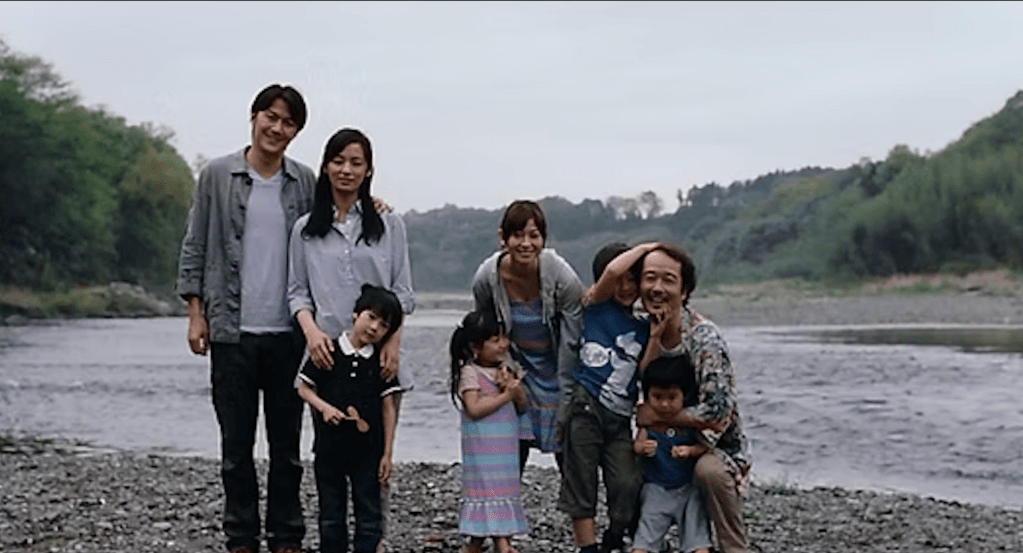
Although LIKE FATHER, LIKE SON concerns two families, it is the Ninomya family that inhabits the centre of the film, and it is father Ninomya Ryota, a successful architect, who is the central focus. Fukuyama Masaharu (THE THIRD MURDER, GALILEO) plays Ryota as a highly intelligent and responsible man, but aloof and sometimes arrogant. His wife Midori, played by Ono Machiko (CARNATION, ASURA), serves as a sounding board to question his instincts, though she herself struggles with divided loyalties. Ono’s performance, as always, is down to earth and emotional. She is more a Sally Fields-style than a Meryl Streep-style actress. The other couple, the Saikis, come from a lower economic background, and the film eyes these class differences closely. Maki Yoko’s performance as mom Saiki Yukari is realistic but enigmatic. Maki (MOZU, AFTER THE STORM) is the kind of actress you picture as a police detective or aristocrat. Dad Saiki Yudai is played by the ever-charming Lily Franky (SHOPLIFTERS), whose skill at embodying gregarious and zany characters makes him one of Koreeda’s most frequent collaborators. Franky is especially good at playing childlike men who relate well to real children. All the lead actors have appeared in multiple Koreeda projects, including Kiki Kirin who plays Ryota’s mother-in-law. The child actors in this film, as in all Koreeda works, are excellent.
Koreeda has stated that he hired Fukuyama because he did not give off typical paternal energy, and it is really Fukuyama’s film to make or break. The actor has the rare quality of slowing down scenes with his deeply relaxed delivery. His acting is an art that cannot be rushed, and that quality often leads to superlative work. It is fascinating to watch Ryota’s slow and clumsy emotional development over his love for his accidental son and his growing attachment to his biological son. Ryota prepares to deliver Keita to the Saikis by explaining to Keita he is on a mission the boy must fulfill. It is an approach that comes from a place of maximum kindness in Royata, and reads as true to his creative and highly organized character. Later he tries to convince Keita that his “real parents” will love him more than he does. He says so even though he feels deeply competitive with the Sakais. This is a scene that can only make sense in this movie, and that is a testament to Koreeda’s vision. Koreeda’s films are always thought provoking and several provoke the specific question: In which family are children better off? LIKE FATHER, LIKE SON is one of the best of these.
©May 2026 REEL JAPAN all rights reserved


Leave a Reply