• Score: 5/10

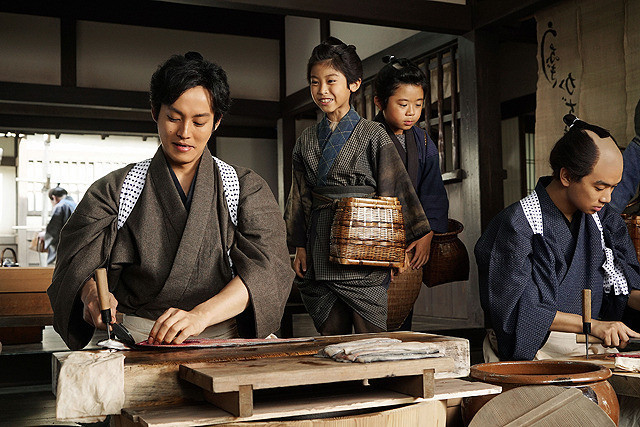
    Fittingly for a movie that focuses so much on the 18th century Edo government’s currency policy, IWANE, like a coin, has two sides: On one side, it is a conventional samurai film, shot brightly through modern lenses, with maximum stunt work pitting one style of swordplay against another, featuring a young warrior haunted by tragedy and the loss of his love. The other side of the coin reveals an utterly unconventional story about monetary policy, duels fought between friends, the selfless patriotism of one money-changer, dooms averted by love of mercantilism, and love doomed by mercantilism. This is a story that takes you places you never expected to go and refuses to return you to the places you expect to see again. For me the most memorable scene was of three young boys who are IWANE’s neighbors, catching an eel in a stream and then haggling with a restaurant owner over its sale price. Now that I think of it, that scene was prophetic. 

    Now let’s see how many counterfeit silver coins we can exchange for gold: Most of the sword fights are well choreographed, though some of them are imbued with off-kilter emotions bubbling out of the jumbled screenplay. The performance by the lead, Matsuzaka Tori, carries the film, though his naivete and reluctance can be too much and too much of a trope. 

    Our senior villain is money changer Urakusai played by screen veteran Emoto Akira. For decades Emoto has played every flavor of villain from a retainer who betrays his lord to an entrepreneur who steals curry recipes. Here he chews the scenery while sporting ten pounds worth of smallpox scars from the makeup department. He adopts obnoxiously slowed speech to spew vitriol, but he is effective as always. He is joined in the cast by one of his prolific actor-sons, Emoto Tasuku as Iwane’s closest friend. 

    There are Samurai FILMS and there are Samurai MOVIES. A sophisticated, taut, auteur’s vision, IWANE is not. Based on a very long series of novels, it would have been better served as a TV series. A previous series ran from 2007 to 2010 starring Yamamoto Koji as Iwane. As a movie with a script stuffed like a Christmas fruitcake, it may charm you despite itself. Enough ambiguity crowns the climax to project thirst for a sequel. Next time, I hope they keep it quirky but streamline the bumpy road. 

    (© ReelJapan.com November 2025 all rights reserved)
  • Score: 7/10

    A young man gifted in swordsmanship but short in patience begs his teacher and his lord to allow him to travel to the neighboring domain to study swordsmanship further. Meanwhile, his clan leaders fear the annihilation of their entire domain after years of hiding fields, grain warehouses, and surplus funds from the Shogunate. These two plots will collide with the ugliest consequences as BUSHIDO unfolds. 

    Such circumstances bring to mind other productions: For instance, the hidden fields and crops in the NHK taiga drama NAOTORA, and the young swordsman desperate for a domain pass in the taiga, RYOMADEN. But these were indeed rather common occurrences at the time. 

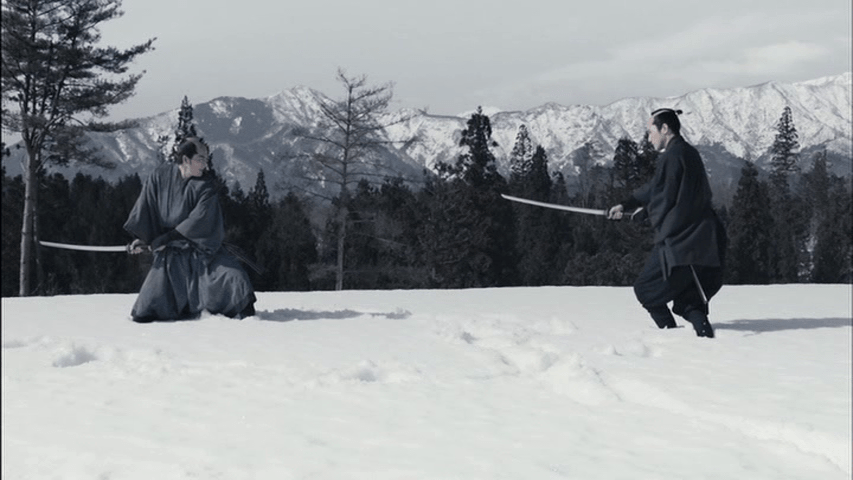
    Director Yasuo Mikami films 95 percent of the movie in washed out colors bordering on black and white. Did he choose to do so because he knew the final act would feature endless fields of snow? The audience will feel surrounded by pale faces and grey vegetation for hours. An occasional orange hue breaks through by candle light. 

    All the higher ups act with minimalist performances bordering on the robotic. Tomohito Wakazaki’s performance as a wronged young man saves the film. He perfectly embodies all of Kagawa’s flaws and strengths as well as performing ably and believably the incredible stuntwork required. Tamao Sato brings warmth as his sister Yuki, and Takehiro Hira (SHOGUN, RENT A FAMILY) anchors the role of his teacher put into an impossible situation.  

    A malignant irony dwells at the center of the story: Kagawa is the son of a man who sacrificed himself for the clan a generation ago. And Kagawa is headstrong and unhappy because he always believed his father was wrong to give so much for the clan. His frustrated heart lands him into trouble when the clan lords return to the same well to save themselves. 

    Most samurais’ lives were grim. Bushido, the warrior’s code was grim. This film is nothing if not grim. It may not be your cup of tea, but it does not commit false advertising. Mikami does not rush the story. Most of the combat is verbal, but the final fight lives up to all the hype and can be compared with the greatest cinematic duels such as the climax of ROB ROY. 

    (© ReelJapan.com November 2025 all rights reserved)
  • Limited series 

    Score: 5/10

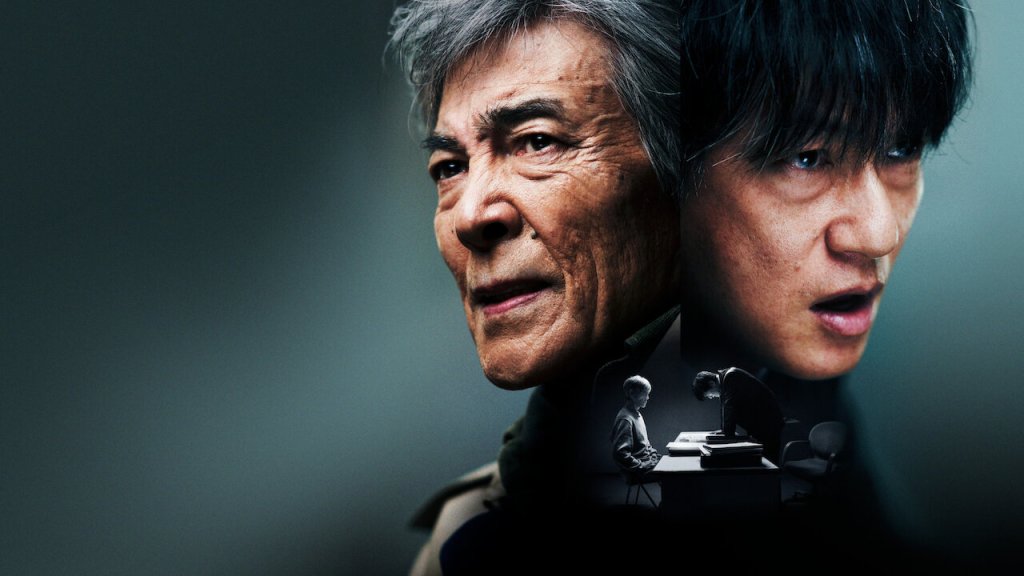
    In this cold case murder mystery, a middle aged cop finds his elder mentor is at the center of the mystery. Further, the cold case once reopened spawns new deaths. 

    Veteran Japanese actor Shibata Kyohei, known for his former onscreen detective persona and numerous guest roles (excellent as the dad in GUNSHI KANBEI) occupies the emotional heart of this mystery as retired detective Shibasaki Sachio.. The script gives him ample opportunity to express the grief he carries around as Job-like, he endures one loss after another. His junior, family man Kawasumi Shigekatsu, tries to square his professional duties with his loyalty to her mentor and savior. Iura Arata is one of those Japanese actors who turns up all over the place, playing serious and light fare, historical epics and modern dramas. He certainly has range. To date, the best performance that I have seen would be his role as the unlucky and haunted Emperor Sutoku in the NHK taiga drama, TAIRA NO KYOMORI. Usually encountered as a supporting actor, here he anchors much of the script while remaining the cipher through which the audience comes to grip with a complex storyline. Iura illuminates a slightly stooped, messily dressed dad and husband, tired, often impatient with his colleagues, his eyes hidden behind overgrown bangs. 

    A detailed multigenerational saga from Wowow studios, known for their grittier and glossier productions, it requires the viewers’ attention. On the one hand, that attention is repaid in spades by Shibata’s performance. On the other hand, without getting into spoilers, the resolution requires a certain amount of suspension of disbelief. 

    (© ReelJapan.com November 2025 all rights reserved)

  • Score: 9/10

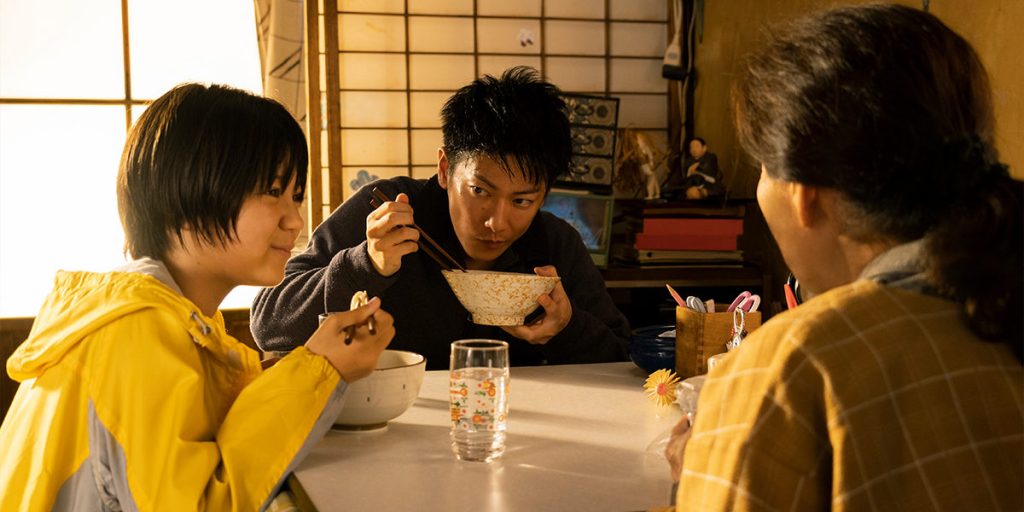
    Based on a novel by Nakayama Shichiri which chronicles the travails of two young people, Tone and Mikiko, whose world is violently wrenched from them by the 2011 earthquake and tsunami leaving them orphans and throwing them together. It also boldly tells a story of a series of grisly murders occurring years later. The film flashes backward and forward in time as we learn about these survivors and observe the shadows cast by their suffering and hope. 

    Abe Hiroshi is perfect as the lonely and bereft detective who sees the case through to its bitter end. He is just engaged enough emotionally in events for us to know that he is processing his own loss through them. 

    Satoh Takeru effectively plays Tone as constantly rattled and living on a hair trigger. Kiyohara Kaya plays the adult Mikoko, now an idealistic but frustrated young welfare officer. Her edgy performance keeps you guessing: Is she aggressively compassionate? Or compassionately aggressive? The chemistry between Abe and Kiyohara is electric. Years later, they would reunite in LAST SAMURAI STANDING, where, as the ancient vengeful warrior Ikusagami, he would haunt her steps in relentless pursuit. 

    Surprisingly, Japanese film stars Yoshioka Hidetaka and Nagayama Eita show up as relatively minor characters. But they accomplish much with their limited screen time. 

    An hour and a half into the film, we find Mikiko saying: “You have to ask for help. If you do, someone will respond. There’s still hope. Someone will reach out to you.” Does she still believe her own words? Yet this poetry ties together all the threads of disaster, survival, survivor’s guilt, poverty, charity, security, and a broken welfare system. 

    The fulcrum of the story is Kei, an old woman and fellow tsunami survivor looking after Tone and Mikoko. Misuko Baisho plays her memorably with compassion and fragility (an interesting contrast to her evil clan matriarch in GANNIBAL). It was the novelist’s flash of genius to tell two stories through Kei’s suffering and unite those stories into a compelling mystery. 

    Director Zeze Takahisa succeeds in bringing book to screen in an all-star, big budget production. Unlike so many other films, it does not suffer from its many time jumps; its editing and pacing are solely beholden to the storytelling. 

    (© ReelJapan.com November 2025 all rights reserved)
  • Limited series

    Score: 5/10

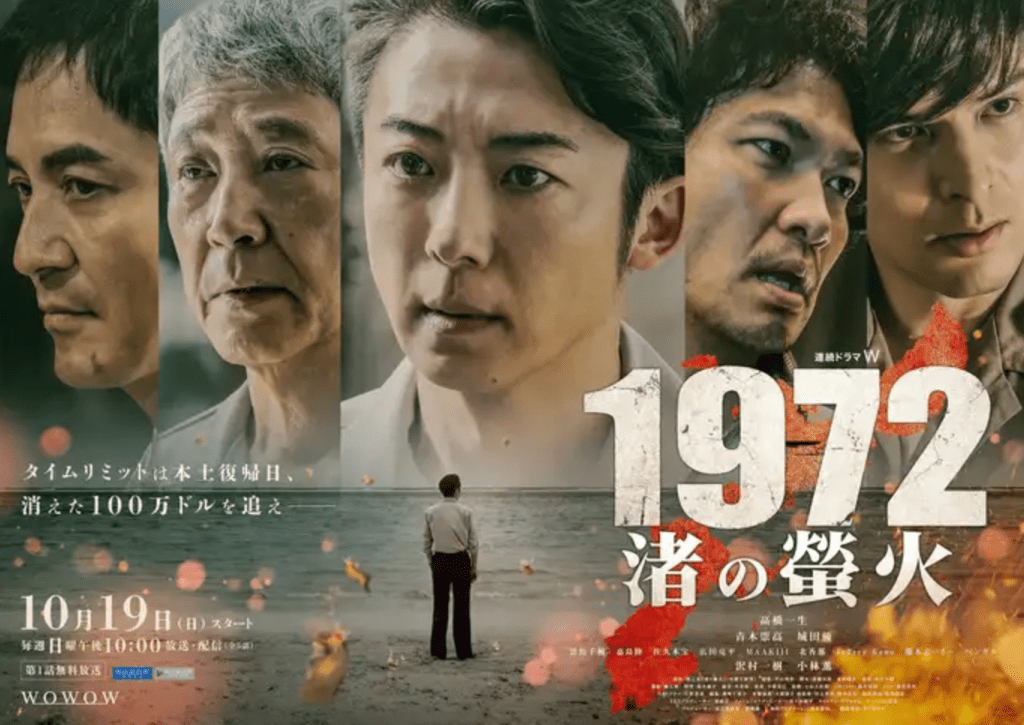
    Small Town Police Handle International Crimes With the Fate of Okinawa At Stake 

    This moody historical detective miniseries pours fire and ice on a ticking clock. The fire comes in the form of Aoki Munetaka who plays a headstrong and reckless young Okinawan detective who is justifiably distrustful of authority. The ice comes in the form of Takahashi Issei who plays an intensely private detective 

    The story puts them together, along with veteran policeman Tamashiro (the always excellent Kobayashi Kaoru) in a story that is ingeniously set in the final weeks (and minutes) of American rule of Okinawa. The change in government creates a situation of political and financial instability as well as raising infinite questions about authority and jurisdiction. 

    Most of the action unfolds through the viewpoint of Takahashi’s character–an Okinawan native who left years ago for the “mainland” (of Japan) and is expecting a child with his young wife he left there. He receives endless bullying and teasing about his abandonment of his people and Takahashi’s performance brings out his sensitivity and sincerity. 

    As the clock counts down on Okinawa’s fate, a complex heist story unfolds just as a cold case of brutal murders needs reopening. The production detours into wartime flashbacks; most of the characters are haunted by the war that ravaged their island. The series suffers not so much from its low budget as from poor writing. The middle episodes (2 and 3) are muddy and almost incoherent whereas episodes 1, 4, and 5 stick their landings. Patient viewers will be rewarded by a satisfying ending.

    (© ReelJapan.com November 2025 all rights reserved)

  • Score: 6/10

    The Duffer Brothers bring us right into the action, which unfolds across four very different landscapes: suburban Hawkins, the military/twisted science industrial landscape, the moldy vegetative Upside Down, and an intriguing dreamier landscape of the Upside Down. Stranger Things has always put Hopper and Eleven at the center of their military and ESP science environs and what follows here is much the same, except that with Papa dead and Paul Reiser apparently out of the picture, the new evil doc who gives soldiers orders is played by Linda Hamilton, looking more like my grandmother here than I remembered her. She is effective, and like so many of the past and current cast (Matthew Modine, Paul Reiser, Sean Astin, Winona Ryder), she is a bonafide 80s star. It’s nice to see her back in action. 

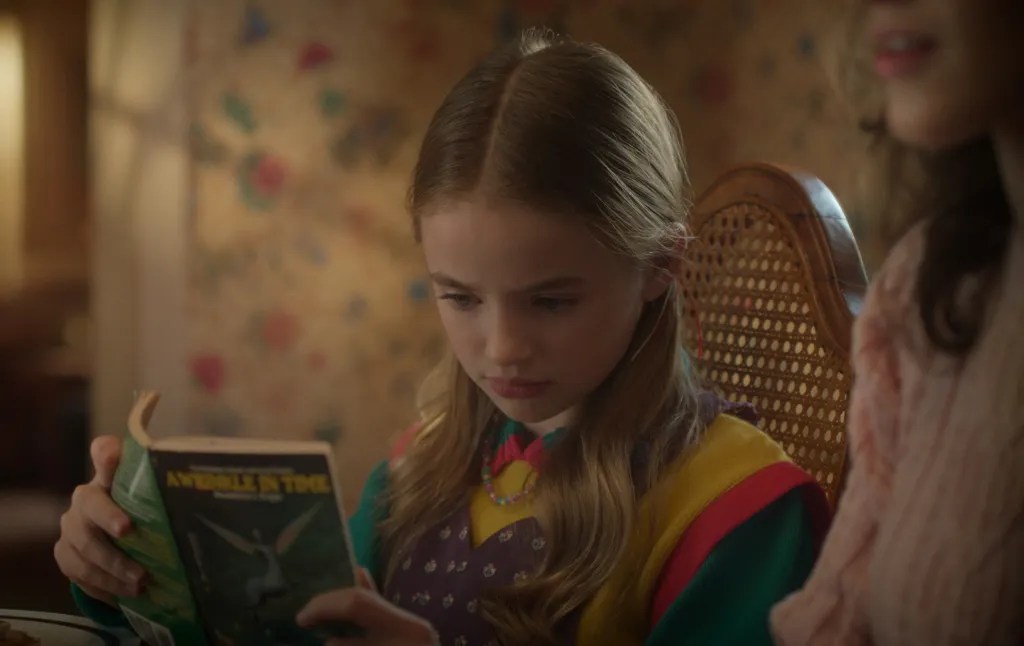
    The two images of the Upside Down channel the grotesque and arabesque horror. There is more of an Edger Allen Poe vibe to the dreamscape. It is a surprise to see the recasting of Holly Wheeler, newly embodied by British actress Nell Fisher (ANNE WITH AN E). She plays the character with both plucky determination and vulnerability. Her sojourn through a seductively pleasant landscape of the Upside Down contrasts well against the other settings the show presents us. There are hints of Alice in Wonderland as well as Little Red Riding Hood in Holly’s wardrobe and her path across this horrorscape. 

    There is a necessary reorientation of friends here in order to bring out new qualities in our save the world team. Most intriguingly we see Robin paired up with Will, There is one exception: The Nancy/Jonathan/Steve triangle which seems to never reach a resolution. 

    The most intriguing twist in this new season is the way our Goonies-like team of heros/sleuths/Vecna hunters has used technology and secret tunnels to coordinate their members across two dimensions. We begin to see the Upside Down and (hardly) normal Hawkins as overlaid one atop the other, like one of their clever slide projector charts. This works well in keeping the expansive narrative tidy. The Duffer Brothers are aided here by exceptional writers and directors including Hollywood heavyweight Frank Darabont (The Shawshank Redemption). 

    Audiences will need to wait for the final installments of SEASON 5 to drop at Christmas and New Years. 

    (© ReelJapan.com November 2025 all rights reserved)
  • Hulu/Disney+: 2 Seasons

    Score: 6/10

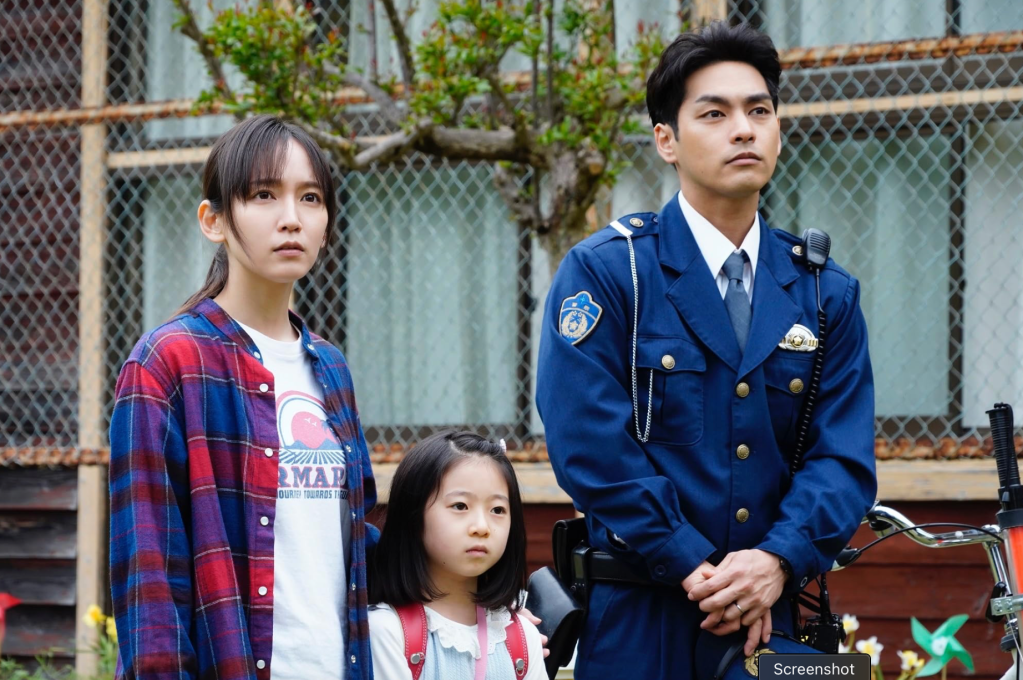
    Potentially more damaging to the Japanese tourism industry than any other production, Gannibal tells the story of a policeman from the city who takes a job in an isolated mountain village. It is hardly a spoiler to say: accusations of cannibalism haunt this village. 

    Gannibal, which is based on a popular manga, is equivalent to the American genre called Southern Gothic Horror, where an outsider tries so very hard to see the best in his new neighbors despite his misgivings, before being forced to confront with horror that the evils run deeper than he ever imagined. 

    The cast includes Yuya Yagira as Daigo. Yagira, who as a child actor won the Palm D’Or at the Cannes festival in 2004, is known for his eccentric, even mystifying acting choices. Since the main character frustrates his family, neighbors, and superiors constantly, his style works. Much of the protagonist’s moral development rests upon his young daughter’s reaction to violence, specifically violence carried out by her cop father. However by season 2, that thread is dropped leaving Daigo to merely dodge bullets and hatchets all the time. Riho Yoshioka shines as always, as Daigo’s wife, but we are left with a sense that her character could have been more important and virtually disappears from the season two finale. Yagira and Yoshioka don’t exactly spark up the screen with chemistry. 

    Comparing the two seasons, an analogy comes to mind: Ridley Scott’s ALIEN vs James Cameron’s ALIENS. Whereas season one focuses on horror, season two rolls out a parade of action and carnage on that foundation. Few productions equally balance the Arabesque and Grotesque elements of horror, and here we have a heavy weight towards the grotesque. Indeed, it is likely the most carnage-laden production coming out of Japan since BATTLE ROYALE. 

    Conspiracies can carry a horror plot forward, but the conspiracies here within the national police force overtaxes the suspension of belief. The season two finale lacks the punch of that season’s opening battle. Nevertheless the big budget is evident in the many choreographed fights and all-out mélees. 

    Colorful local characters populate the story until each meets their demise, each taking with them a chunk of local charm. Some of the supporting characters are very memorable, including matriarch Gin Goto (played wonderfully in two timelines by Baisho Mitsuko (elder) and Yuri Tsunematsu (younger) , a wounded child in exile (Mahiro Takasugi), father and son Shinto priests (Hashizume Isao and Kura Yuki, Shunsuke Tanaka), Nairu Yamamoto as Kuroe Goto, and Kita Kana as the daughter of the missing cop Daigo replaces.

    Kasamatsu Show plays Keisuke, the Goto heir, and has excellent chemistry with Yagira. Their relationship as friends, enemies, and frenemies defines the story. Keisuke exists as a Hamlet cipher who goes through momentous events utterly lost and determined to take no action, make no decision. If you decide to watch, you are in for an exciting and gory adventure. 

    (© ReelJapan.com November 2025 all rights reserved)
  • Netflix, 1 season, 6 episodes

    Score: 5/10

    Fujii Michihito, veteran director of the big and small screen, helms this project. He is best known for realistic thrillers like FACELESS, THE VILLAGE, and HARD DAYS (all excellent) as well as intriguing television dramas like THE JOURNALIST. I was surprised to see his name attached to this project because it falls squarely into the genres of samurai fantasy and dystopian survival. Based on a novel by Imamura Shogo, LAST SAMURAI STANDING will inevitably draw comparison to the popular series of RUROUNI KENSHIN films based on the uber-popular manga and anime. 

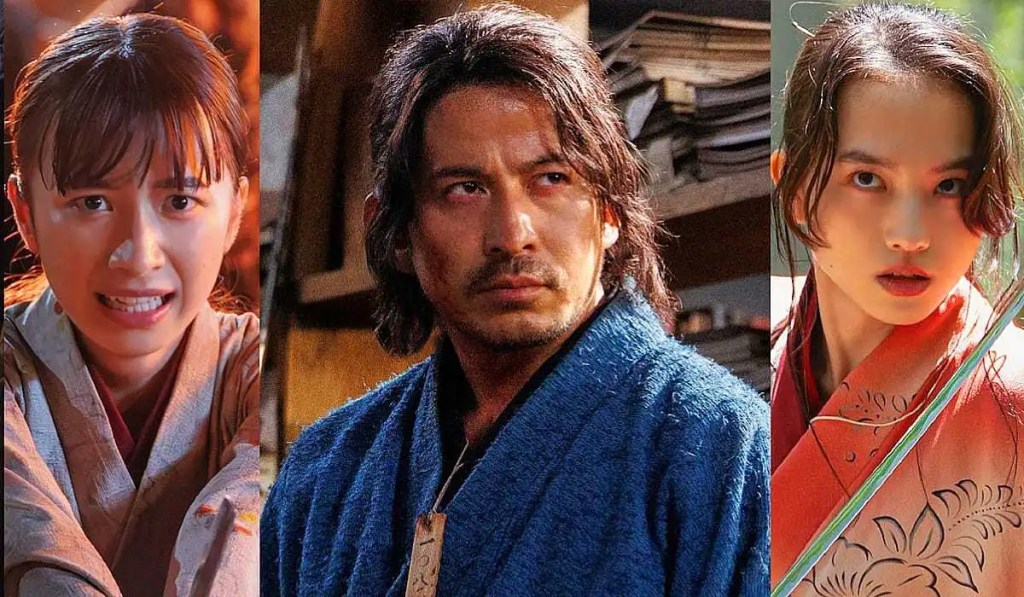
    This series stars one of Japan’s hardest working actors, Okada Junichi, who has honed his samurai skills across countless projects. Okada’s best acting to date was probably in Fujii’s HARD DAYS (a heist story not about a heist) and in his lead role in the NHK Taiga drama GUNSHI KANBEI. He is always reliable to carry a project; most are samurai stories, some yakuza crime dramas. One of the many Japanese actors to originate in a boy band, he has come a long way from his youthful projects where he stood out as the dorky clothing designer in TIGER AND DRAGON. Whereas Kenshin, as played by Sato Takeru, evokes Matt Damon’s stunted and blank Jason Bourne, Okada’s Shujiro evokes Liam Neeson in his gloaming action career. Like Neeson, Okada’s haggard expression, his grimace-acting, and his preoccupation with saving his daughter-substitute are enough to make audiences relate and care. Fujisaka Yumia as the young lady in over her head brings sincerity and vulnerability to her role. An underutilized Abe Hiroshi plays the sinister Gentosai. Kiyohara Kaya imbues her wry warrior with world-weariness. Sometani Shota brings an otherworldly quality to his Ainu archer. Ito Hideaki shines as brutal killer, Bukotsu. Indeed, the whole cast is excellent, featuring a multigenerational array of Japan’s finest acting talent. And the wide scope of the story calls for a large cast. 

    Although set in the aftermath of the 1860’s Japanese civil war and the restoration of the Imperial monarchy, the series does not inhabit a realistic historical setting, but a manga-verse like the KENSHIN stories. The usual tropes apply; katanas deflect arrows with ease. Supporting characters are plucked from the rosters of political figures and business moguls in history books; here they perform roles in machiavellian conspiracies. It can feel awkward when our feet leave the ground and we descend (or ascend if you prefer) from history into fantasy. Yet this is the exact same time frame as the KENSHIN films which explore much of the same concepts and plumb the same emotional depths as veterans of brutal conflict try to move forward together into a new Japan. 

    The story of LSS is left unfinished and we await work about a second season. The narrative moves at a reasonable pace, and some episodes devote themselves to exploring Shujiro’s and Futaba’s backstories. The problem with Shujiro is how many backstories he has. Just how many people can you be on the run from while you are running towards your new enemies? 

    The conspiracies which dominate the plot fail to be more interesting than the tragic, violent, actual Japanese history of that era. In that history, extraordinary figures from all walks of life embodied and explored all the same themes of personal and  national purpose, asking the soulful and tragic question: what do we do with all the samurai who are not needed anymore? You might as well read the history books or watch any number of more realistic Japanese productions about the generals, politicians, and businessmen who transformed Japan from a closed samurai state into a pacific power. 

    LAST SAMURAI STANDING provides exciting duels and high-budget battles, some of which borrow Peter Jackson’s camera moves. The characters find themselves in a desperate battle for survival reminiscent of cult Japanese film BATTLE ROYALE (2000) and the HUNGER GAMES stories (2008–).  All the action entertains, but the RUROUNI KENSHIN films have already covered some of the same ground and are a superior series. 

    (© ReelJapan.com November 2025 all rights reserved)
  • Score: 7/10

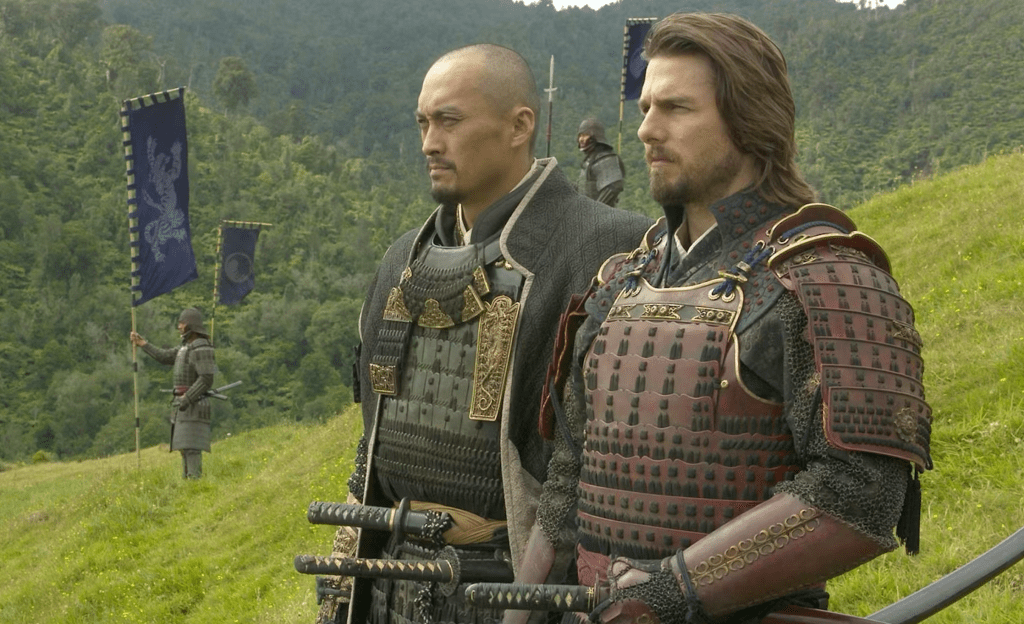
    The paradox of THE LAST SAMURAI and the two adaptations of SHOGUN: If you don’t know Japanese history, they intrigue and they invite you in. If you do know Japanese history, these pseudo-histories disappoint. There is nothing in them which is as interesting as the reality. Like SHOGUN, THE LAST SAMURAI runs the risk of misleading us about the realities of Japanese history. Specifically: Meiji-era Japan, a time when that nation underwent more dramatic change than almost any place has in human history. If you want the real history, you will need to either read books or watch the many films and television shows produced INSIDE Japan. The Japanese love their history; repeating it and dissecting it on screen is a national pastime, almost a ritual. 

    Tom Cruise has a talent for carrying every film he headlines. He may not be as charismatic as Hollywood’s old guard (Harris, Connery, McQueen), but the camera loves him and his emotional range just about covers it. Here he is an alcoholic, disillusioned veteran haunted by the jobs the American army gave him out West. There is a little bit of John Dunbar as template from Kevin Costner’s DANCES WITH WOLVES. Cruise also emits some of the vibes of his wounded veteran in BORN ON THE 4th OF JULY, but the wounds are just internal this time. Cruise later made another historical war film, playing General von Stauffenberg in the WWII biopic VALKYRIE. Because VALKYRIE cleaves to its historical truth but tells an equally stunning tale of stoic fortitude, it is the superior film. 

    The late Billy Connolly, iconic Scottish comedian and actor, as beloved in the UK as Robin Williams was in America appears in a supporting role, but sporting an Irish accent, a common sound in the 19th century American army. Timothy Spall, shortly before his star-making turns as Harry Potter villain Peter Pettigrew and years before his Cannes triumph as William Turner, dials into his most “capital” style as a slimy but intellectually curious creature of the British Empire. Sosuke Ikematsu shines as the young nephew of Watanabe’s character. He would go on to appear in many productions as a superior child and adult actor. Hiroyuki Sanada, who would later star in the 2023 SHOGUN adaptation, does much here with just looks and grimaces. 

    You can be forgiven if the idealistic Japanese mountain village reminds you of The Shire where the hobbits lived, because it was filmed in New Zealand just a few years after the LORD OF THE RINGS was captured there. John Logan as screenwriter and Hans Zimmer (score) reunite from their GLADIATOR days, not coincidentally bringing a similar stoic vibe. You hear a lot about duty and zen or zen-like focus in both movies. 

    Director, Ed Zwick, made one of the great war films of all time: GLORY, about the Massachusetts 54th Union army regiment of Black soldiers in the American Civil War, so Zwick has plenty of experience summoning his heroes to brave overwhelming odds. The second and third acts land particularly well allowing the movie to hit all of these predicted and predictable emotional touchstones. The script places a mostly fictional American hero in the center of a tragic Japanese civil war. The British equivalent might be LAWRENCE OF ARABIA, a film with more historicity. THE LAST SAMURAI is a slick Hollywood production but one where none of the actors or creatives are phoning it in. It made a star out of Ken Watanabe, and we can all be grateful for that. 

    (© ReelJapan.com November 2025 all rights reserved)
  • Score: 8/10

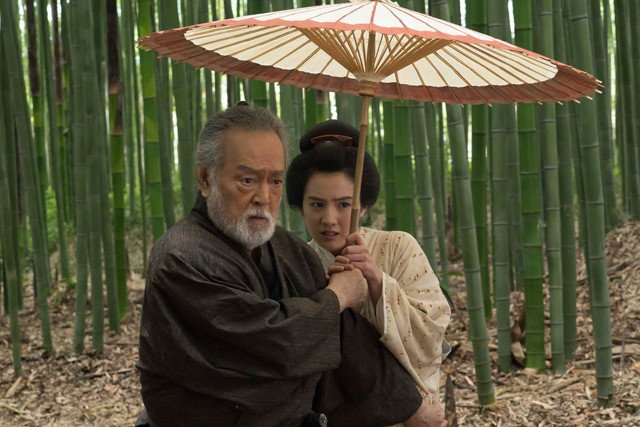
    Slow and steady, this quirky samurai film by Shigemichi Sugita moves inexorably to its bittersweet conclusion. At the center of this tale is a disabled and dependent warrior. His life has been a string of disappointments and near misses with happiness. Especially afflicted by bad luck in his relationships with women, his love for his great-niece whose happiness he places before his own, defines his actions in this film. An outstanding performance by the recently deceased icon of Japanese film, Tatsuya Nakadai, will leave a lasting impression as Sanosuke. At times gentle or sardonic, eccentric or universally humane, the characterizations always stick the landing. I remember well Tatsuya’s work in the NHK taiga drama FUURIN KAZAN, in which he played a cruel and wanton daimyo who provoked hatred even in his own children. It was another arresting performance and contrasts interestingly with this one in a career that spanned almost 70 years from 1953 to 2020. 

    Playing Sanosuke’s niece, Nanami Sakuraba is engaging as a samurai’s daughter, pretty, neither exceptionally smart nor kind, but the “girl next door,” whose social class and marriageability lands her in hot water. Her timid father and overbearing mother are no help to her navigating these hazards.

    Blessed with great performances, an intriguing script, well directed and photographed, though suffering from an inadequate and distracting musical score, A DUEL TALE should take its place alongside the dozen or so excellent low budget samurai films of the last decade and a half. Like SAMURAI ASTRONOMER, THE PASS, and SAMURAI PROMISE, it weaves its story on its own terms somehow evading the nefarious pressures that warp and mar many such films under the studio system. 

    (©ReelJapan.com November 2025 all rights reserved)