• It’s been a busy year chock full of Japanese productions dropping on Netflix, Amazon Prime, Hulu, Jme, and elsewhere. Some disappointed, many entertained, and a handful soared to heavenly heights. The following mini reviews are taken from REEL JAPAN’s current and upcoming posts: 

    ASURA 

    Score: 8/10

    Director Hirokazu Kore-eda known for his dozen feature films, painstakingly adapts this Showa era novel at a leisurely pace over 7 episodes. Beautiful cinematography and a great ensemble cast, highlighted by Ono Machiko, make it a pleasure to watch. 

    GANNIBAL (Season 2)

    Score: 6/10

    More action-packed than season 1, but not as scary, the season brings all the characters to their inevitable conclusions. 

    UNBOUND (BERABO)

    Score 10/10

    The best NHK taiga drama in years, written by Morishita Yoshiko (NAOTORA). Learn about the glorious Edo literary and artistic scene of the 18th century. Witness characters climb out of the deprivations of the red light district on their journey to fame and consequence. 

    HOTSPOT 

    Score: 9/10

    A charming ensemble workplace comedy sprinkled with hints of sci-fi and the supernatural. It will pull you in and make you fall in love with the very humdrum personalities that populate this small resort town in the mountains. 

    MISS KING

    Score: 6/10

    An ambitious production starring Non as a talented shogi player on a mission for honor and vengeance. Non’s performance carries the series. 

    HUMAN SPECIMENS 

    Score: 6/10

    Adapted from the novel by horror writer Minato Kanae and starring Nishijima Hidetoshi, Ichikawa Somegoro, and Miyazawa Rie, the story seeks to endlessly disturb while it educates about insect life and questions the role of art in human life. 

    BULLETTRAIN EXPLOSION

    Score: 7/10

    Starring Kusanagi Tsuyoshi, Non, and Ono Machiko. An exciting disaster thriller that is a followup to the 1975 BULLET TRAIN thriller which the Hollywood film SPEED is based on. 

    SCANDAL EVE 

    Score: 4/10

    A promising but ultimately disappointing series about the pitfalls of unethical talent agencies. Shibasawa Ko and Kawaguchi Haruna star. 

    1972: FIREFLIES ON THE SHORE 

    Score: 5/10

    It is fun to see a historical policework thriller set in Okinawa. Takahashi Issey, Aoki Munetaka, and Kobayashi Kaoru give it their all as actors. The plot is murky and hard to follow but at times you may feel transported to an exotic time and place. 

    LAST SAMURAI STANDING

    Score: 5/10

    This series will please the sword fighting crowds with its great stunts and visuals. Perhaps the least interesting among many samurai roles played by Okada Junichi. 

    SINCE I TOOK YOU AWAY

    Score: 4/10

    Kitagawa Keiko excels in her role as a grieving mother whose obsession leads to a new lease on motherhood. Kitagawa carries the series with her star power, but the plot amounts to mild entertainment. Curious, considering the kidnapping storyline could have driven a much darker drama. 


    © Reel Japan December 2025 all rights reserved
  • Limited Series

    Score: 4/10

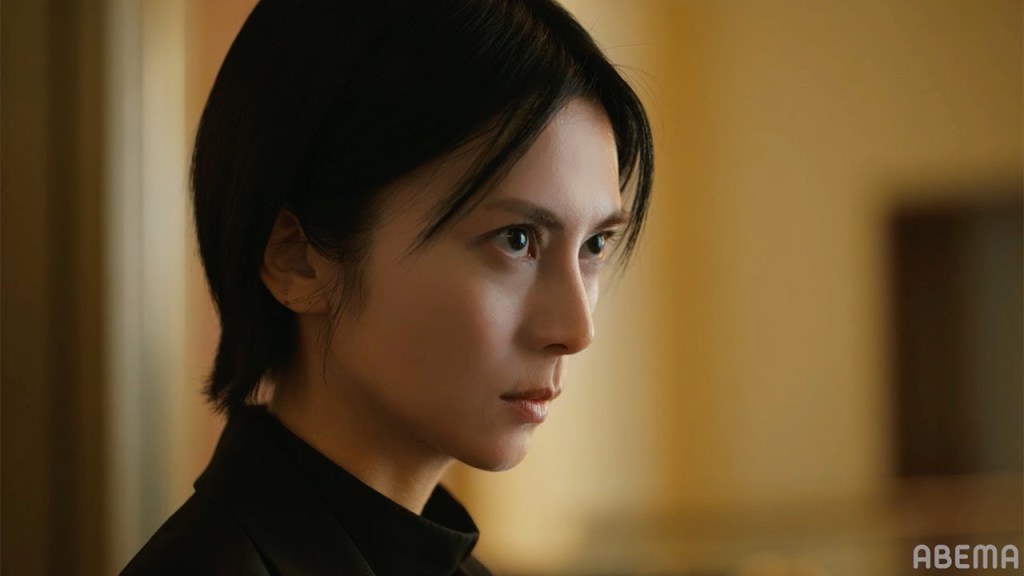
    Film star Shibasaki Ko remains a reigning queen of Japan’s television dramas. In her early days she co-starred in DR. COTO and GALILEO, as a nurse and police detective, respectively. Most recently she headlined INVISIBLE for the TBS station in 2022, memorably playing a mysterious and dangerous dealer of secrets. In director Kanai Kou’s SCANDAL EVE, glamor abounds, fittingly for a series that invites us into the world of media talent agents. Much of the budget seems to go into high fashion and posh interiors. 

    Shibasaki plays Ioka, a talent agent genuinely dedicated to providing her clients with pathways to success and stardom. Shibasaki also sings the theme song. Suzuki Honami plays Yoko, the heir to powerful agency Kodama which Ioka had the audacity to leave years ago. As these two competing agencies do battle, it pits one scandal against another. Suzuki deserves the highest praise for her scene-stealing performance as a scheming and controlling CEO which perfectly balanced menace and vulnerability. Emoto Akira, who has specialized over a forty plus year career in villains and schemers, for a change plays Yoko’s empathetic father who has a soft spot for Ioka, his former protegee. Kawaguchi Haruna plays Hirata, a journalist who finds herself caught in the middle. Her steely resolve to publish incendiary stories no matter the consequence leaves an impression. Ironically, Kawaguchi herself had assumed the role of Lady No, wife of warlord Oda Nobunaga, in the NHK taiga drama WAITING FOR KIRIN after another actress was forced to withdraw under a cloud of scandal. 

    Later episodes slow down to explore peripheral characters. This gives us a grittier and deeper dive into the harm done by the talent industry to its victims and reveals a truly misshapen industry that chews up and spits out hopeful youths. The writing does a good job of showing not telling this until the finale arrives. By the final episode, both armies square off against each other on an open field. That is to say, almost every character has chosen a side: Kodama or Rafale. In each army, agents join hands with journalists. However the finale is not just preachy, it decommissions the heros’ battle strategies and searches for grace in surrender. I lost track of how many bland soliloquies the writers lace together into a chain of transparent virtue. When I call a drama arresting, I usually mean that it stops me in my tracks, calls out to me, and moves me. Scandal Eve’s finale suffers cardiac arrest, the complete cessation of all life signs.

    I look forward to Shibasaki’s future projects; let’s hope they nail the writing next time. 

    © Reel Japan December 2025 all rights reserved
  • Limited series 

    Score: 6/10

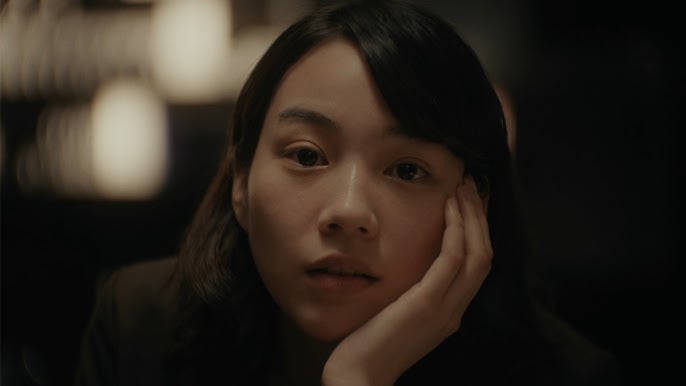
    MISS KING stars Non as Asuka, a young lady struggling to find her way alone in the world, who has carried with her since childhood an extraordinary talent for shogi. Shogi, like western chess, is a descendant of the Indian game chaturanga. Shogi shares many traits with chess but is more complicated. Pieces can be promoted to higher rank when reaching deep into enemy territory and pieces taken from the board can be returned to it by the capturer; this mimics the reality of turncoat mercenaries. Netflix’s popular 2020 film QUEEN’s GAMBIT starring Anya Taylor-Joy may have breathed new life into the chess story. Netflix returns to that well with MISS KING. The actress, singer, and model Non has been working in Japanese cinema and television since 2010 when she was known as Nonen Rena and starred in the NHK annual morning drama AMACHAN. No stranger to adversity herself, her stage name arose from a conflict with her former talent agency that claims to own the rights (!) to her birth name. It has been reported that in the wake of that conflict, she lost many roles. 2025 is the year of her comeback (Nonaisance?) She recently co-starred in the riveting BULLET TRAIN EXPLOSION for Netflix. As Asuka, she brings the same aura of intelligence and intensity that she did for that desperate shinkansen driver. Non’s acting style and feline grace reminds me of Yoshizawa Ryo (the KINGDOM series, REACH BEYOND THE BLUE SKY, KOKUHO). 

    Asuka’s nemesis in shogi and in life is the father who abandoned her and her mother. Nakamura Shido II plays Yuuki Shoichi who has ascended the mountain of competitive shogi as the reigning kishi. His path has brought him fame and wealth and a replacement family. Nakamura, a kabuki actor and frequent character actor of film and television, is always effective as villains and schemers. He was great as the shogun’s spymaster in the THIRTEEN LORDS OF THE SHOGUN, great as a disgraced and drunken samurai in YAE NO SAKURA, and an effective menacing presence in LUMBERJACK THE MONSTER. He seems typecast here as the unfeeling dad who disappoints, but the minimalist contours of his performance are perfect. Nakamura can communicate volumes with a glance. 

    In the first few episodes, we travel a crazy quilt of mismatched tones, ranging from light physical comedy and antics to loss, overwhelming grief, and brushes with suicide and homicide. Later episodes smooth out the wrinkles and the series just about sticks the landing.

    A chess story is comparable to a sports story: the underdog advances against impossible odds from match to match and ultimately triumphs over their opponents, and their own fears, demons, or baggage. Sports films are a staple of American cinema, invariably mixing tough-minded competitiveness with feel good camaraderie between teammates or between coach and athlete. Eventually all the stories come back to family values and fairplay. There is an expression in English: “For love of the game.” In contrast, MISS KING depicts the elite echelons of shogi as populated by obsessives. Those obsessions are channeled into a vengeance story more comparable to 47 Ronin than FIELD OF DREAMS or A LEAGUE OF THEIR OWN. 

    Western sports films have showcased some great coaches, like Burgess Meredith in ROCKY,  Ian Holm in CHARIOTS OF FIRE, Mickey Rooney in THE BLACK STALLION, Pat Morita in THE KARATE KID, Clint Eastwood and Morgan Freeman in MILLION DOLLAR BABY, and Paul Giamatti in CINDERELLA MAN. Quite unlike all of those mentors, Fujiki Naohito takes the role of Seigo, coach to Asuka’s shogi as well as her emotional challenges. He seems particularly unsuited for the latter job. Here we are presented with coach and apprentice as mirror images. Both resent Yuuki. Both lost a parent before a disastrous match. Both lack the skills to communicate their emotions effectively. 

    The problem with MISS KING is not so much the plot, which is intriguing enough, nor the acting, but the tone deaf script with its simplistic dialog. Characters speak more like samurai of yore than multidimensional citizens of modernity. The manner in which one family has taken over the various shogi associations and rule them with an iron fist makes MISS KING resemble a yakuza story. I suspect the real world of shogi is a much more upbeat club to join. 

    © Reel Japan December 2025 all rights reserved 
  • Limited series 

    Score: 6/10

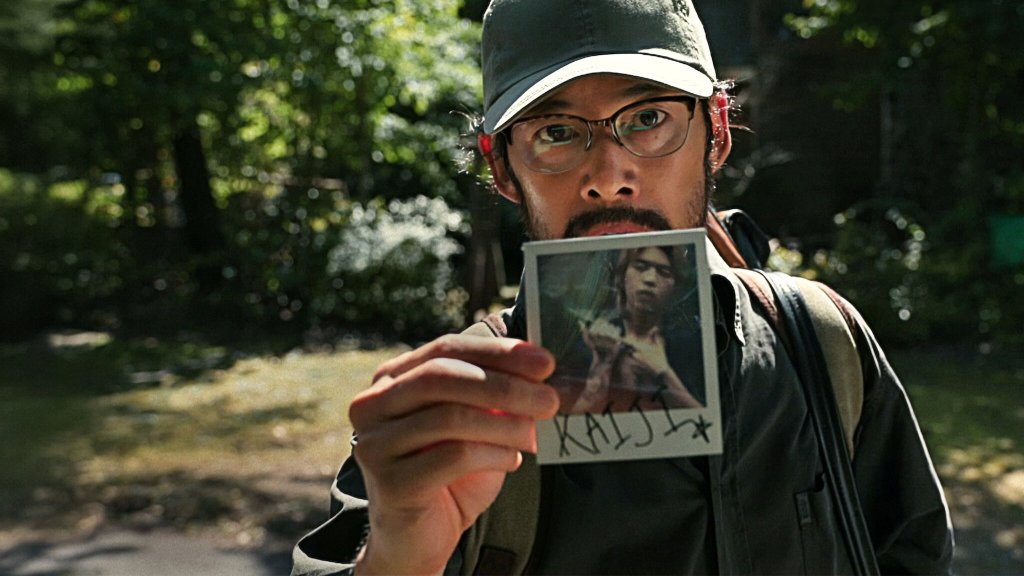
    Based on the 2009 novel by famed detective fiction author Higashino Keigo (The GALILEO series), this limited series arrives over a decade after it was adapted into a film in 2009 by Mashiko Shoichi. The novel was also adapted in 2014 into a Korean film and in 2024 into a Chinese film, making it one of the most adapted Japanese novels of this century. Katayama Shinzo helms the newer Japanese adaptation, filmed during the Covid-19 pandemic and featuring many scenes where civilians and detectives wear masks. Nagamine Shigeki (Takenouchi Yutaka) is an everyman living a normal life in Tokyo when everything he holds dear is taken from him by a gang of young murderers and rapists. The first episode especially contains many disturbing scenes which will challenge the viewer’s capacity for violence. It is reminiscent of the teenage carnage in Fukasaku Kinji’s infamous BATTLE ROYALE (2000) but worse. 

    What proceeds is a revenge story which contrasts, in many ways, from the more philosophical and scientific bent of Higashino’s other crime fiction, such as the award-winning SUSPECT X. That is not to say that this story does not pose philosophical questions about crime and punishment. It focuses specifically on the implications of the Juvenile Act which limits accountability for under age 18 offenders. 

    THE HOVERING BLADE transforms in style from the stomach-churning violence of episode one to what resembles an NHK railway travel doc in episode two. I have never seen episodes in a series deviate so much in tone. After confronting the reality of his loss, our everyman Nagamine flees the city for the mountains near Nagano in search of the ringleader. On his solo journey through a beatific landscape, his deadly resolve will be tested by Wakako, played with great subtlety by Ishida Yuriko. She is a fellow survivor of loss whose grief leads her to empathize with Nagamine. It is the chemistry between these lead actors that makes the series watchable.

    I am intrigued by how the filmmakers transform the focus of the story. After roasting our eyeballs in the hellish landscape of episode one, they pull back the lens from tormented Nagamine to Wakoko. She functions independently, choosing of her own volition to be Nagamine-san’s would-be-savior. She tries to convince him of the value of staying alive and moving on from his loss. The emotional heart of the narrative is transplanted into the question: Will she or won’t she succeed? Meanwhile the major questions raised by the story remain fixated on the future of the villain. That he will never face true justice because of his age is a given. His fate becomes a choice between extrajudicial justice or a short stay in juvie. These conflicting focal points reveal a weakness in the narrative. Another weakness in the narrative is our own omniscience. We the audience know that Kaiji (an effective Ichikawa Riku) is a monster who deserves at least decades behind prison because we know how cruelly he treats strangers and even those who help him. We have the 20/20 vision to see his irredeemable nature but prosecutors, judges, and juries never will. The Juvenile act which will spare Kaiji adult punishment is referenced disparagingly by law enforcement. Nagamine on the trail for vengeance offers a way to circumvent the law and execute the villain. That the audience will cheer him on is built into the bones of the story. 

    Voyeurism becomes a recurring theme. In addition to the audience, three characters will find themselves watching the harrowing footage of the crimes. What does watching violence do to “normal people” who live humdrum lives? In THE HOVERING BLADE, witnessing violence changes most, but not all, of them. Although reminiscent of the Charles Bronson (DEATH WISH) and Clint Eastwood (DIRTY HARRY) vengeance thrillers of fifty years ago, the film is not steeped in them. It reinvents the wheel and tries to keep us guessing as to Nagamine-san’s fate. 

    Filmmakers in the West have produced several monumental films challenging the humanity of the death penalty: DEAD MAN WALKING, PIERREPOINT, SHEPHERDS AND BUTCHERS. Is THE HOVERING BLADE the antithesis of these works? If not the antithesis, it is without a doubt  the antipode–the furthest pole away, because we are looking at these questions from nearly the opposite perspective. 

    © ReelJapan December 2025 all rights reserved

  • Score: 7/10

    Based on a novel by Kakuta Mitsuyo, and thoroughly grounded in her novel’s visionary exploration of female and maternal identity, REBIRTH will take you to unexpected places. Bringing to mind several Japanese films and series about kidnapping (MISSING, MY FAMILY, SINCE I TOOK YOU), in director Narushima Izuru’s REBIRTH the emotions are the most raw and revealed as generations are caught up in repercussions of cruelties and crimes. 

    Nagasaku Hiromi anchors the many fine performances as Kiwako, a woman on the run whose actions upend many lives. The actress’ ability to embody love and desperation and her chemistry with her child Kauru (Watanabe Konomi) make the film watchable. Less emotive, but believable, Inoue Mao plays the grown Kauru on a search for truth and meaning. Koike Eiko (TOKYO SWINDLER, NHK taiga drama THIRTEEN LORDS OF THE SHOGUN) turns in one of her finest performances as Chigusa. Yo Kimiko (SHIN GODZILLA, NHK taiga drama ATSUHIME) as Angel and Moriguchi Yoko (WHISPER OF THE HEART, THE SHOPLIFTERS) as Etsuko are effective in supporting roles. 

    As the film opens to courtroom drama and various confessions erupt, I am led to wonder if we the audience will be escorted on a tour of human sufferings, to question who is responsible. In fact, deeper questions will arise and unexpected characters will emerge from the frozen ground. Both the English title and the original Japanese title are appropriate to headline this story, each in their own way. Characters ruminate over the curious life cycle of cicadas, which hatch onto the earth’s surface for only seven days. Is it a mercy they will die together? What if a lone survivor outlasts his kind? What then will the world have to offer?

    The film’s narrative, grounded in its literary source, keeps its focus laser-like on the questions in its characters’ hearts. REBIRTH does not have any kind words for the male of the species, though its assorted cruelties come from all directions. The film does offer a unique perspective on female resilience. 

    (© ReelJapan.com December 2025 all rights reserved)

  • Score: 8/10

    Wakamatsu Setsuro’s SNOW ON THE BLADE concerns the fallout from one of the most dramatic incidents in 19th century Japanese history–the assasination of Lord Ii Naosuke by a gang of revolutionaries. A powerful minister from a family who served the Tokugawa shoguns for generations, Lord Ii angered anti-westerners by agreeing to open ports to American trade and by cracking down brutally on the pro-Imperial factions who wanted power returned from the Tokugawa shoguns to the Imperial court. Lord Ii turns up in many films and television shows and is often depicted as a cultured gentleman whose personal charm and sincere dedication to his job belies the torture and executions his regime pursued. We meet the character of Shimura Kingo (Nakai Kiichi), a rather simple lowly samurai with impressive sword skills who is so taken by Lord Ii’s graceful demeanor that he instantly pledges his loyalty. Employed as senior bodyguard, he will live with shame from his ineffectual role as on that fateful day. Nakai Kiichi was excellent as the Mito lord in SAMURAI ASTRONOMER and the father of Kiyomori in the NHK taiga drama, KIYOMORI. He also starred in the NHK drama SHINGEN in 1988. 

    The entire Ii-Hikone clan is scandalized by the event. The Shimura family is treated brutally and Kingo enters into a state between life and death where he is judged too guilty to be allowed to die until he tracks down the remaining killers. History throws a major wrench into his mission when, in a few years time, Japan endures a brutal civil war, the shogun abdicates, and the Emperor regains total authority over the nation. Emperor Meiji’s council of ministers (mostly former revolutionaries) did away with the feudal system, banning swords in public, westernizing industry and the military and even discouraging citizens from wearing traditional robes. Kingo becomes a walking anachronism as he obsessively wanders Tokyo with his swords intact. The film skips over the even worse fates which the other failed bodyguards suffered. 

    Abe Hiroshi plays kingo’s quarry, Sahashi Jubei, in a moving performance. The two characters share the experience of living in limbo and waiting for death each day. For decades, Abe has been one of Japan’s busiest actors known for his many fine lead performances in productions such as IN THE WAKE, the TRICK series, CLOUD UPON THE HILL, and BEFORE WE FORGET EVERYTHING. Nakamura Kichiemon is great as Lord Ii. Hirosue Ryoko (DEPARTURES, NHK taiga drama RYOMADEN) plays Kingo’s suffering wife and channels through her haggard demeanor the frailty contrasting with her youth. Veteran actor Takeshime Masahiro charms as Kingo’s old friend Shinnosoke. There is a great child actor in the role of Jubei’s neighbor. 

    The film features an unusually subdued score by Hisaishi Joe of Studio Ghibli fame. Nighttime cinematography, something so many films fail at, shines in SNOW ON THE BLADE. 

    After a strong prologue with clarity of purpose, SNOW yields to chaotic montages while Kingo wanders. There are rather abrupt time shifts so it is hard to tell if we are in Edo Japan or Meiji Japan. Time stamps are inconsistent. Better editing could have fixed this problem. 

    Revenge films depend on setting up the backstory of the wronged party and SNOW succeeds in grounding that story in the main character. Because of the thorny moral issues and because of the abrupt shift in government and national priorities, the audience will never be certain whose side we are on. Nakai factors this into his performance and it is a key feature of the storytelling that unfolds. 

    The theme of clinging to the past comes up over and over. There is a great scene when numerous former samurai come together to reinforce their bushido values. The film poses a question about inner values vs outer appearance. Yet Kingo’s quest for honor is a quest for killing. This is not lost on some characters or on the audience. Early on his friend Shinnosuke tells Kingo there is “not a political bone in you.” He is a simple man, but he does have years to ponder the worth of his quest. 

    (©ReelJapan.com December 2025 all rights reserved)

  • SCORE: 8/10

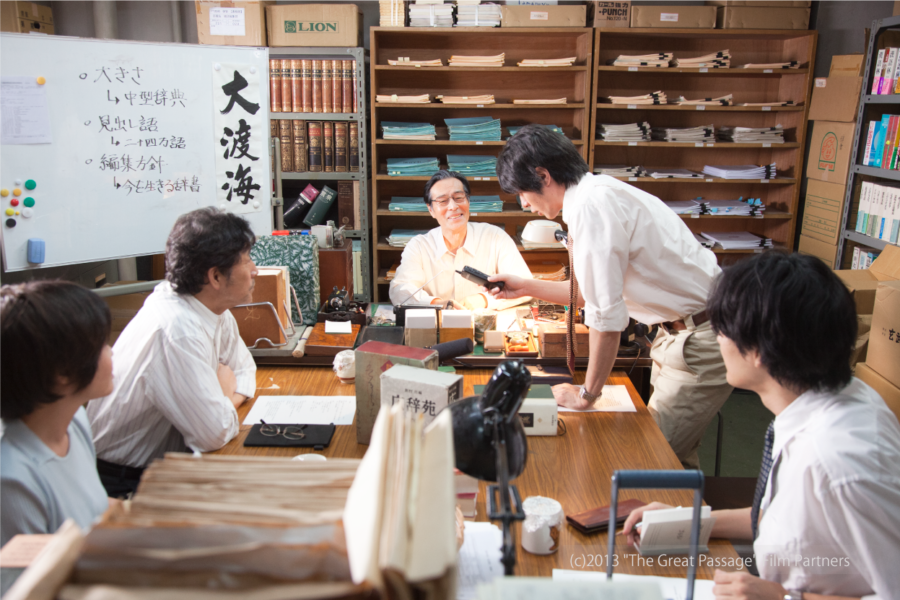
    “Flipping through books so much your fingerprints wear off is a joy.” These words are spoken by a senior editor at the small Tokyo publisher at the center of this story. Based on the novel by Miura Shion, THE GREAT PASSAGE is an inspirational story about men and women who made their life’s work the creation of a new kind of dictionary. The film flows along as mellow as its color palette. Set in the 1990s and filmed in Kodakesque hues, the film slowly beckons you into its quirky environments and relationships. Cinematographer Fujisawa Junichi really knows how to photograph books: big books, small books, coffee table books, walls of books, piles of books. It would have been fun to see the design department build up each set from book-cluttered bedrooms to the labyrinthine dictionary office. 

    Matsuda Ryuhei stars as Majime, a maladjusted word nerd perfect for his new job in the dictionary department. He immediately catches the infectious enthusiasm of his superiors. There will likely be many viewers for whom the prospect of this kind of inspired workplace offers the same wish fulfillment Diagon Alley might for Harry Potter fans. Matsuda was excellent in QUARTET, ASURA, and THE MAGNIFICENT NINE. Miyazaki Aoi (ATSUHIME, TENCHI: SAMURAI ASTRONOMER) is excellent as Hayashi, a young chef starting her life over in Tokyo, whose nighttime ritual of sharpening knives is not so much menacing as obsessive. Odagiri Joe is great as Majime’s sarcastic colleague Nishioka, who is worldly in all the ways Majime is not, including being experienced with women. Kobayashi Kaoru (MIDNIGHT DINER, 1972, and the NHK taiga drama NAOTORA) and Kato Go (DEATH OF A TEA MASTER, CLOUDS OVER A HILL), both veterans of the big and small screens are great as the seasoned editors. 

    Watanabe Takashi provides an intriguing score, here somewhat jazzy on piano and vibraphone, with minimalist but impertinent brass, always eclectic. 

    The filmmakers methodical process mirrors that seen on screen. For a dictionary that was projected to take years to complete, unsurprisingly time will lapse and move on. The film takes a sudden turn into new territory with the addition of Kuroki Haru (excellent in the NHK taiga dramas SEGODON and SANADA MARU) as a young female addition to the dictionary staff. Her character feels a little shortchanged in the narrative. Just as soon as she arrives, we are steeped in an editorial crisis that serves as a tense climax for the film as publishing deadlines loom. Overall, THE GREAT PASSAGE is a slow character study in a genre that we might define as workplace drama. Extra points for some wonderful cat actors. 

    (©ReelJapan.com December 2025 all rights reserved)

  • SCORE: 10/10

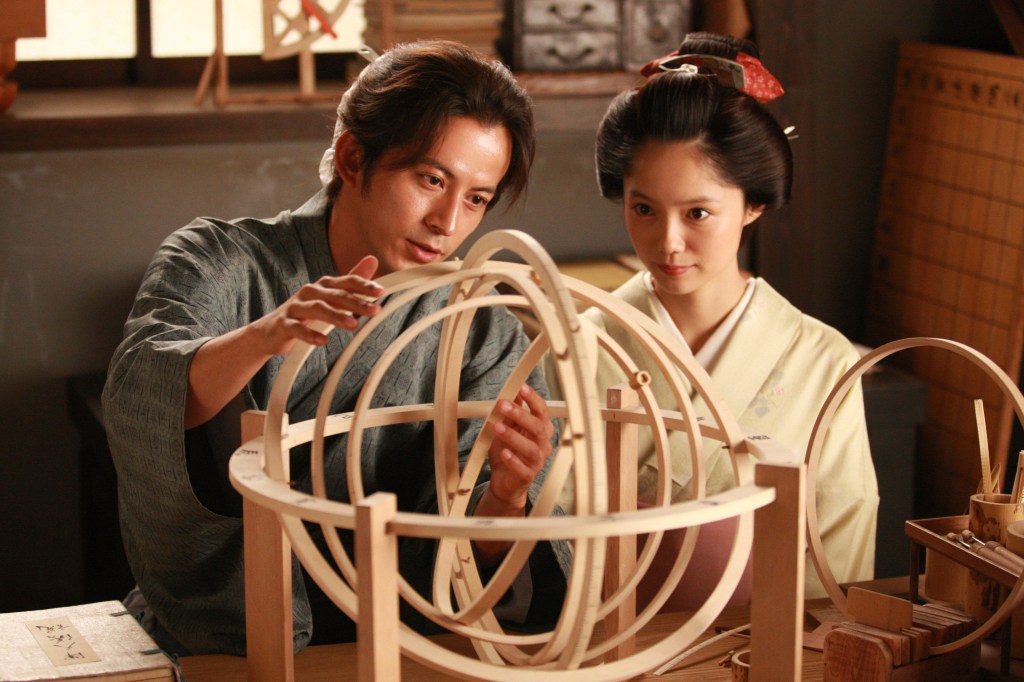
    Based on a true story, director Takita Yojiro (DEPARTURES, WHEN THE LAST SWORD IS DRAWN) brings us an absorbing biopic about human perseverance and the struggle for science against ignorance and superstition. Okada Junichi turns in one of his finest performances as Santetsu Yasui, a young man living in the late Edo period whose left-brained skill at board games, puzzles, and mathematics impresses everyone around him. In the first part, Okada acts young, pitching his voice higher, swaddled in ill-fitting clothes that make him look undersized. Gradually, the character matures into the kind of heroic samurai who is willing to stake his life on his mission. His passion and impatience for learning offsets his dry nerdy demeanor perfectly.

    Tense games of Igo (an ancient East Asian strategy game consisting of black and white stones on a grid) presage more dangerous combats to come. Will TENCHI deliver the usual swordplay that samurai films all promise? We shall see, but we must also keep an open mind about what constitutes combat: martial, political, and cultural. 

    From the start, much is made of the celestial inspiration, indeed the heavenly shape that mathematics and especially geometry impart to puzzles. If we look closely at the narrative we may detect ever-widening circles of relevance: from puzzles to Igo matches to marching across Japan in order to measure the realm. Finally we must solve with Santetsu the grandest problem: tracing Japan’s progress through the cosmos with an accurate calendar. Santetsu must do in a short time what the West has accomplished over centuries (a theme found in many Japanese stories set in the later Meiji era). He will abandon the eight century old Chinese calendar. Appropriately this journey unfolds across all seasons, all weather. Alpine summits and beautiful shrines enchant the eyes. Makeshift observation decks pop up across Japan shielded by the kind of heraldic cloth fencing associated with war camps. 

    No less than HisaishiJoe, famous for his many Studio Ghibli films, scores TENCHI. One theme stands out the most, a metronomic march that perfectly matches the precision movements of these samurai scientists as they ambulate across the landscape counting their steps like a primitive sports watch.  

    Miyazaki Aoi plays En, the eligible sister of one of Santetsu’s learned friends. Miyazaki and Okada have great chemistry, not surprising considering that they went on to marry in real life. It will have been a huge challenge for the filmmakers to fit this epic journey into the frame of a love story. Did they succeed? 

    The always-excellent Sometani Shota shows up as shogun Tokugawa Ietsuna. Controversial actor Ennosuke Ichikawa turns in a fine performance as antisocial math genius Takakazu Seki. Yokoyama You shines as Dosaku, a monk considered the greatest Igo player in Japanese history. Oddly enough, the great Yoshioka Riho appears in her first filmed role as an extra. If you look very closely you might spot her in the crowd waiting for an eclipse of the sun. 

    Like all scientists, Santetsu has to slay sacred cows. His fight is not without risk. Born into the peaceful Edo period when the Tokugawa shoguns exercised complete control over regional lords and commoners, Santetsu comes to believe that fresh ideas have been wiped out. Interestingly, it is not the shogunate standing against progress, but the nobles of the Imperial court. Decades later, Japanese reformers would harness imperial power to overthrow the shogunate, but that is a different story. 

    Gorgeous cinematography by Hamada Takeshi (DEPARTURES, KUBI) transports us into the era. Ominous eclipses, crows taking flight: the filmmakers transfigure these disturbing tropes to presage not moments of horror but breakthroughs of scientific advancement. 

    TENCHI: SAMURAI ASTRONOMER is the most important in a new breed of quirky samurai film. Although long, detailed, and requiring an investment of attention from the audience, it is a superlative film. Like samurai scientist Yasui Santetsu, the filmmakers proved they had “perfect insight” and “perfect vision.”

    (© ReelJapan.com December 2025 all rights reserved)

  • Limited series

    Score: 6/10

    Strange Instruments of Mercy:

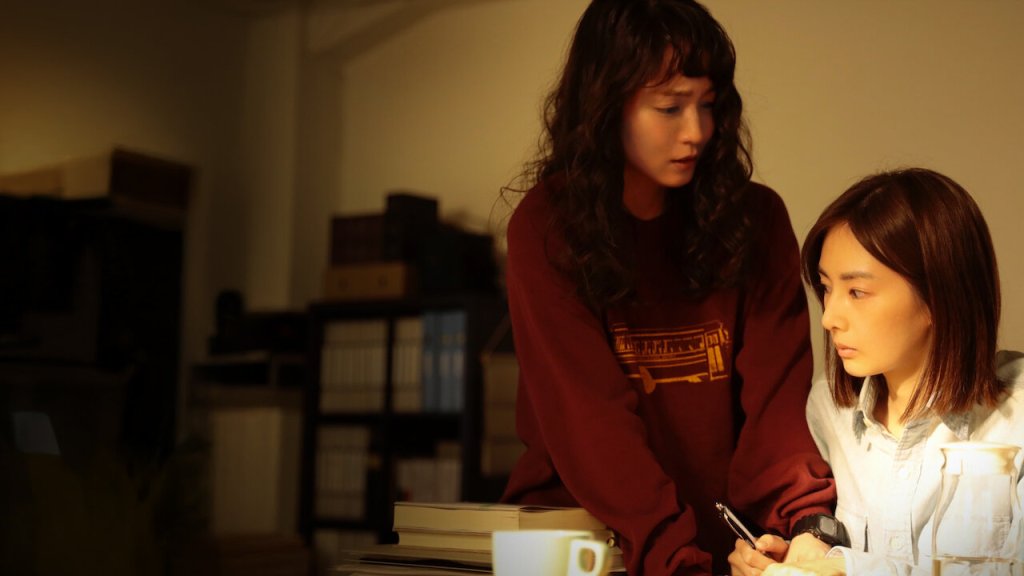
    A recent mystery series showcasing two young stars of Japanese cinema and television. Like an onion, peeling back its layers will make you cry. Tears of disappointment? Or tears in solidarity to these grieving and resilient characters? I have been looking forward to seeing the female leads, Riho Yoshioka and Keiko Kitagawa, among the greatest in their generation of Japanese actors, work together. Like many WOWOW productions, the higher budget and studio guidance makes for a slicker, better photographed, moodier look, but with fewer episodes. The story does plumb the depths of human suffering, not afraid to examine the complex motivations behind destructive human behavior. The story inevitably serves as a just critique of Japan’s death penalty system, though it avoids offering that critique in a political way. 

    There is a meta distance between the main characters, who are filmmakers without a finished script,  and the history of the past which they explore as content creators and almost like us, the audience, as viewers. This can slow down the immediacy of the story. With apologies to the source novel which I have not read, this script comes close to making the filmmaker protagonists as interesting as the crimes they investigate, but falls short. 

    Yoshioka, as always, is able to do more with less, able to turn emotional repression into a slow simmering boil. Unfortunately, Kitagawa’s considerable talents lie elsewhere. Take, for example, her turn as a grief stricken and half crazed mother in SINCE I TOOK YOU AWAY. The producers of the recent NHK Taiga Sengoku biopic: WHAT WILL YOU DO, IEYASU wisely cast her as the infamous Lady Chacha, and she delivered one of the best versions in years (Chacha, Lady Yodo was the niece of Odo Nobunaga and mother of Toyatomi Hideyoshi’s heir, whose influence over both may have soured an already turbulent era. Kitagawa always has an elfin and diminutive appearance. Yet when she performs wide-eyed characters of Shakespearean scope, she can really pull it off, even when chewing the scenery. Yet here the production calls for her absolute austerity. Opposite her, Yoshioka has been turned into the plainest Jane they can make of her, under a mop of curly hair and bereft of a shred of glamor. At times I could not help but imagine their casting reversed. I have no doubt that version would also have been watchable. It may have been an imposition upon the viewer to follow two leads who were equally stunted in their emotional availability. 

    Obviously when adapting novels to the screen, screenwriters always face the pitfall of ending up with cinema that talks more than shows. This is undeniably a talky production. That may have been unavoidable here. In most mysteries, the resolution is KING. Here the journey is held up as just as important as the resolution. In other words, the way the struggling director and struggling screenwriter, both women experiencing painful loss, come together and change each other is the heart of the story. 

    Perhaps the star of this production is the town itself. SUNSET presents a slowly unfolding mystery where each person we meet turns out to know someone who knows someone who is at the center of the crimes. If you live in that town, you must have been the murderer’s hairdresser’s cousin’s math teacher. Is it because the town was so small, or because the script was small? You will have to decide. 

    (© ReelJapan.com November 2025 all rights reserved)


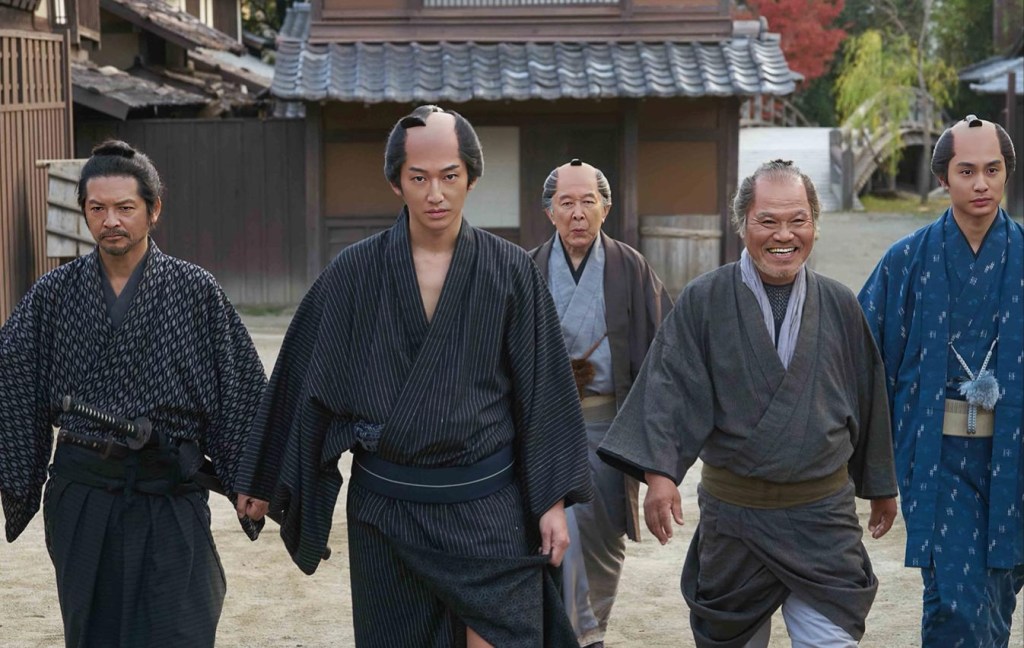
  • Score: 3/10

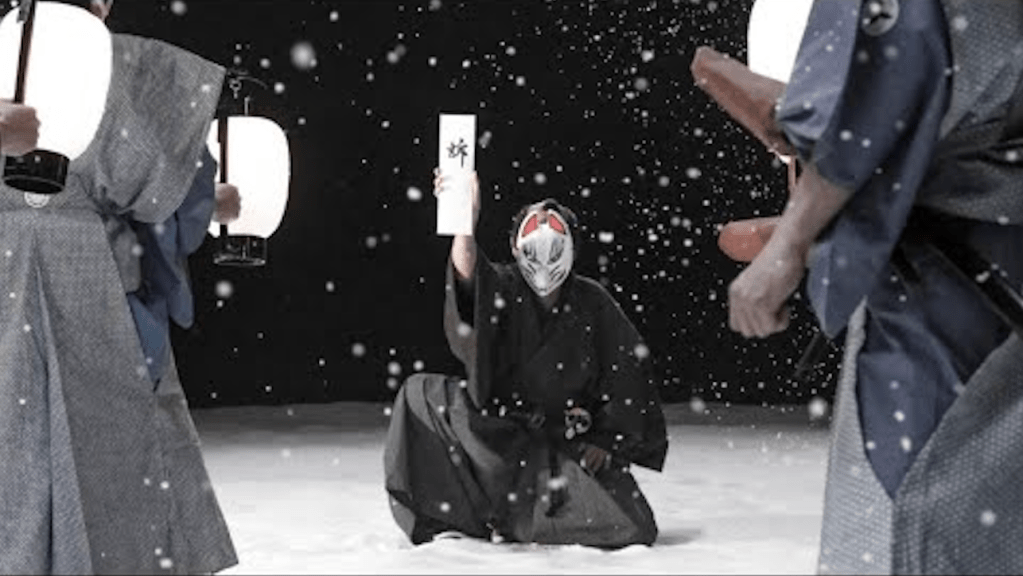
    Director Yamashita Tomohiko helms an Edo-era heist story that is, at best, an exploration of how poor men under strain of debt turn to thuggery. At worst, it lacks enough substance, stakes, and twists, to justify its passage into cinema. In the hands of a brilliant filmmaking crew, it could have succeeded. However, good performances and good cinematography by Hamana Akira cannot save this film from bad editing and a muddled first act which will leave the viewers scratching their heads wondering what is going on and struggling to keep track of all the characters who inhabit this warren tenements. Koji Endo provides a decent musical score, albeit one which veers distractingly into Irish melody.  Featuring limited swordplay, this film is more a study of an historic underworld and its thugs, comparable to a modern yakuza film. 

    Lead Nagayama Eita gives a performance typical for him where he leans into the misery and imbues his street smart Sanosuke with pessimistic strength. However he tends to take this to extremes; there are times, as in other Nagayama Eita films, where you will wonder if he has lost interest in the script. The “fox” is a wily old man played by Hashizume Isao in a performance that deftly juggles friendliness and hostility. He recently embodied a similar role as the shinto priest in GANNIBAL. THE FOX DANCING IN THE DUSK was created to celebrate the 20th anniversary of the “Samurai Drama Channel.” If a director’s cut is ever released with all the missing scenes I would have needed, I’d be happy to watch it. 

    (© ReelJapan.com November 2025 all rights reserved)