Score: 8/10
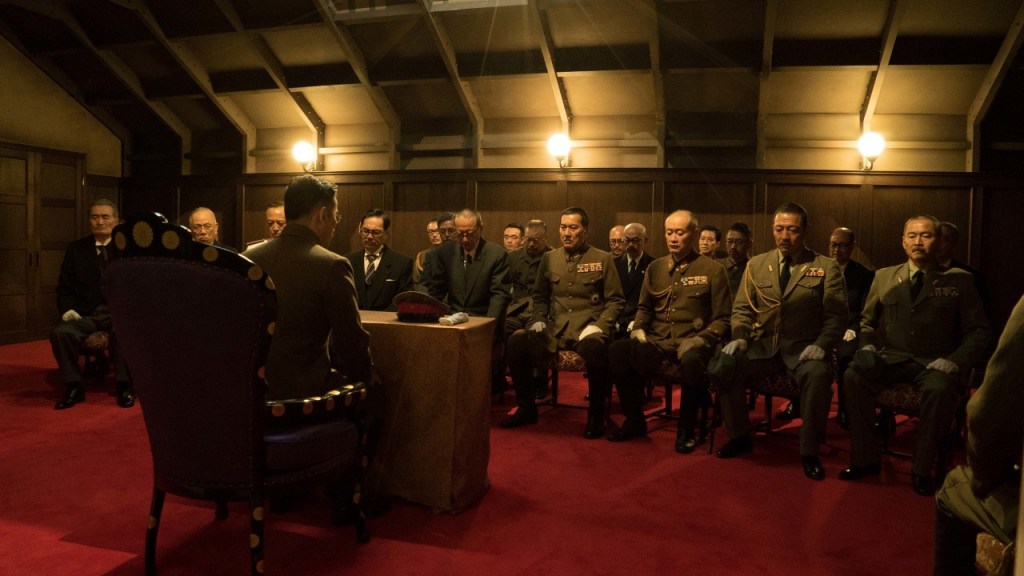
Film director (and occasional actor) Harada Masato recently passed away, leaving behind an impressive body of work. He may be best known to western audiences as the villain in THE LAST SAMURAI, but he directed 26 feature films. His 2015 film, THE EMPEROR OF AUGUST is a remake of the 1967 film JAPAN’S LONGEST DAY. Harada’s more recent account aims to depict Emperor Hirohito realistically. Motoki Masahira won a Japanese Academy award for best supporting actor in his regal role as the wartime figurehead of the crumbling constitutional monarchy of a nation losing history’s most destructive war. Like SHIN GODZILLA (2016), this film depicts an elite clique attempting to impose order over things which cannot be controlled. What unfolds is a detailed parade of chaos.
The cast is excellent: Japanese film icon Yakusho Koji carries most of the film as General Anami. Matsuzaka Tori gives one of his greatest performances as Major Hatanaka, a fanatic who won’t accept defeat. Veteran actor Yamazaki Tsutomu plays Prime Minister Suzuki as an aged statesman from a bygone age and hard of hearing when convenient.
One of the film’s greatest strengths is its relentless pacing, lacing together days of inaction with one night of chaos. Of course those days of inaction brought about tragedy too. The atomic bombing of Hiroshima is depicted and the bombing of Nagasaki is referenced. Characters, true to their mid-20th century context, fail to comprehend the magnitude of the west’s new weaponry.
The other strength is the filmmakers’ anthropological lens: characters are duly treated as relics of their time and culture. The camera brings them to book for their hypocrisies and for their disloyalties as debate leads to argument leads to coup. But it does not judge them from modern standards, nor should it. An act of seppuku may be portrayed as ridiculous in its timing, but the aims of the one committing are taken into account. The callous and selfindulgent folly of the age is exposed in all its ugly veins and sinews, but each man and woman, like a cog in a machine of doom, is treated realistically. Japan’s longwinded and faltering surrender was a debacle that prolonged suffering for both sides. Whether or not the filmmakers’ take on each man’s culpability is accurate in the judgement of history, Japan’s longest days are depicted accurately as a bitter struggle to find common purpose and faith in a meaningful life after war.
© Reel Japan January 2026 all rights reserved
 REEL JAPAN
Leave a comment