Limited series
Score: 6/10
Based on the 2009 novel by famed detective fiction author Higashino Keigo (The GALILEO series), this limited series arrives over a decade after it was adapted into a film in 2009 by Mashiko Shoichi. The novel was also adapted in 2014 into a Korean film and in 2024 into a Chinese film, making it one of the most adapted Japanese novels of this century. Katayama Shinzo helms the newer Japanese adaptation, filmed during the Covid-19 pandemic and featuring many scenes where civilians and detectives wear masks. Nagamine Shigeki (Takenouchi Yutaka) is an everyman living a normal life in Tokyo when everything he holds dear is taken from him by a gang of young murderers and rapists. The first episode especially contains many disturbing scenes which will challenge the viewer’s capacity for violence. It is reminiscent of the teenage carnage in Fukasaku Kinji’s infamous BATTLE ROYALE (2000) but worse.
What proceeds is a revenge story which contrasts, in many ways, from the more philosophical and scientific bent of Higashino’s other crime fiction, such as the award-winning SUSPECT X. That is not to say that this story does not pose philosophical questions about crime and punishment. It focuses specifically on the implications of the Juvenile Act which limits accountability for under age 18 offenders.
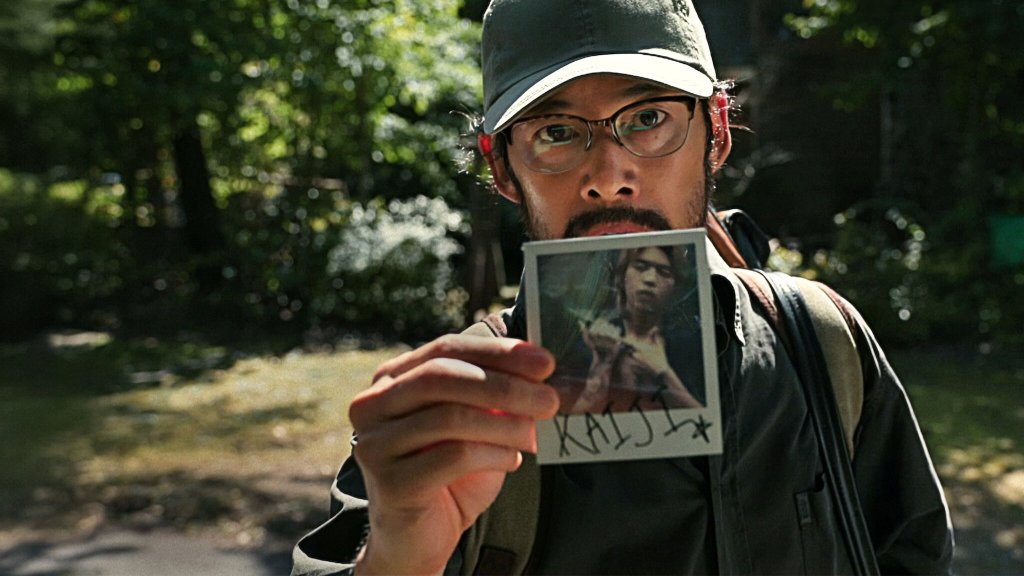
THE HOVERING BLADE transforms in style from the stomach-churning violence of episode one to what resembles an NHK railway travel doc in episode two. I have never seen episodes in a series deviate so much in tone. After confronting the reality of his loss, our everyman Nagamine flees the city for the mountains near Nagano in search of the ringleader. On his solo journey through a beatific landscape, his deadly resolve will be tested by Wakako, played with great subtlety by Ishida Yuriko. She is a fellow survivor of loss whose grief leads her to empathize with Nagamine. It is the chemistry between these lead actors that makes the series watchable.
I am intrigued by how the filmmakers transform the focus of the story. After roasting our eyeballs in the hellish landscape of episode one, they pull back the lens from tormented Nagamine to Wakoko. She functions independently, choosing of her own volition to be Nagamine-san’s would-be-savior. She tries to convince him of the value of staying alive and moving on from his loss. The emotional heart of the narrative is transplanted into the question: Will she or won’t she succeed? Meanwhile the major questions raised by the story remain fixated on the future of the villain. That he will never face true justice because of his age is a given. His fate becomes a choice between extrajudicial justice or a short stay in juvie. These conflicting focal points reveal a weakness in the narrative. Another weakness in the narrative is our own omniscience. We the audience know that Kaiji (an effective Ichikawa Riku) is a monster who deserves at least decades behind prison because we know how cruelly he treats strangers and even those who help him. We have the 20/20 vision to see his irredeemable nature but prosecutors, judges, and juries never will. The Juvenile act which will spare Kaiji adult punishment is referenced disparagingly by law enforcement. Nagamine on the trail for vengeance offers a way to circumvent the law and execute the villain. That the audience will cheer him on is built into the bones of the story.
Voyeurism becomes a recurring theme. In addition to the audience, three characters will find themselves watching the harrowing footage of the crimes. What does watching violence do to “normal people” who live humdrum lives? In THE HOVERING BLADE, witnessing violence changes most, but not all, of them. Although reminiscent of the Charles Bronson (DEATH WISH) and Clint Eastwood (DIRTY HARRY) vengeance thrillers of fifty years ago, the film is not steeped in them. It reinvents the wheel and tries to keep us guessing as to Nagamine-san’s fate.
Filmmakers in the West have produced several monumental films challenging the humanity of the death penalty: DEAD MAN WALKING, PIERREPOINT, SHEPHERDS AND BUTCHERS. Is THE HOVERING BLADE the antithesis of these works? If not the antithesis, it is without a doubt the antipode–the furthest pole away, because we are looking at these questions from nearly the opposite perspective.
© ReelJapan December 2025 all rights reserved
 REEL JAPAN
Leave a comment