Limited series
Score: 6/10
Strange Instruments of Mercy:
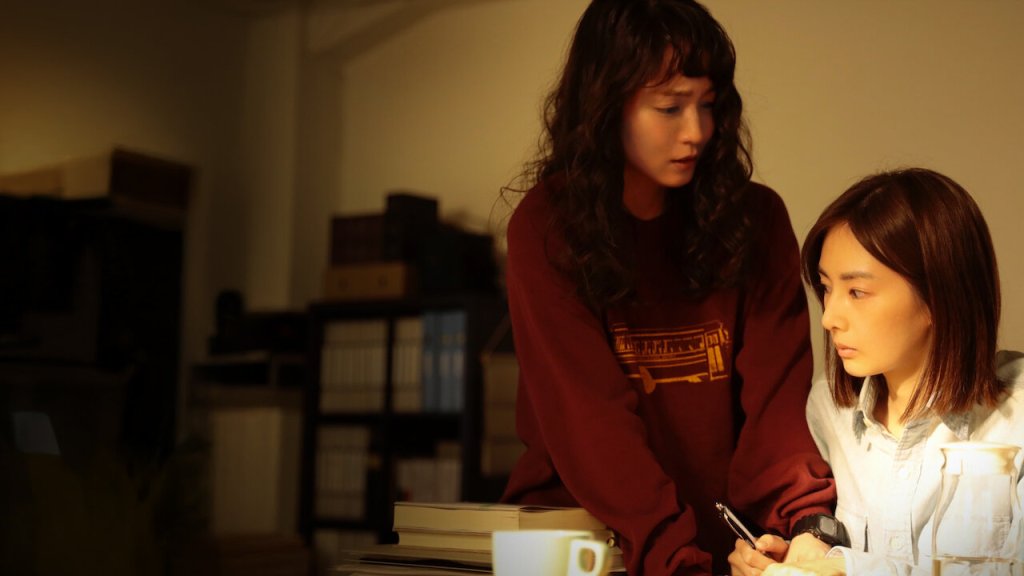
A recent mystery series showcasing two young stars of Japanese cinema and television. Like an onion, peeling back its layers will make you cry. Tears of disappointment? Or tears in solidarity to these grieving and resilient characters? I have been looking forward to seeing the female leads, Riho Yoshioka and Keiko Kitagawa, among the greatest in their generation of Japanese actors, work together. Like many WOWOW productions, the higher budget and studio guidance makes for a slicker, better photographed, moodier look, but with fewer episodes. The story does plumb the depths of human suffering, not afraid to examine the complex motivations behind destructive human behavior. The story inevitably serves as a just critique of Japan’s death penalty system, though it avoids offering that critique in a political way.
There is a meta distance between the main characters, who are filmmakers without a finished script, and the history of the past which they explore as content creators and almost like us, the audience, as viewers. This can slow down the immediacy of the story. With apologies to the source novel which I have not read, this script comes close to making the filmmaker protagonists as interesting as the crimes they investigate, but falls short.
Yoshioka, as always, is able to do more with less, able to turn emotional repression into a slow simmering boil. Unfortunately, Kitagawa’s considerable talents lie elsewhere. Take, for example, her turn as a grief stricken and half crazed mother in SINCE I TOOK YOU AWAY. The producers of the recent NHK Taiga Sengoku biopic: WHAT WILL YOU DO, IEYASU wisely cast her as the infamous Lady Chacha, and she delivered one of the best versions in years (Chacha, Lady Yodo was the niece of Odo Nobunaga and mother of Toyatomi Hideyoshi’s heir, whose influence over both may have soured an already turbulent era. Kitagawa always has an elfin and diminutive appearance. Yet when she performs wide-eyed characters of Shakespearean scope, she can really pull it off, even when chewing the scenery. Yet here the production calls for her absolute austerity. Opposite her, Yoshioka has been turned into the plainest Jane they can make of her, under a mop of curly hair and bereft of a shred of glamor. At times I could not help but imagine their casting reversed. I have no doubt that version would also have been watchable. It may have been an imposition upon the viewer to follow two leads who were equally stunted in their emotional availability.
Obviously when adapting novels to the screen, screenwriters always face the pitfall of ending up with cinema that talks more than shows. This is undeniably a talky production. That may have been unavoidable here. In most mysteries, the resolution is KING. Here the journey is held up as just as important as the resolution. In other words, the way the struggling director and struggling screenwriter, both women experiencing painful loss, come together and change each other is the heart of the story.
Perhaps the star of this production is the town itself. SUNSET presents a slowly unfolding mystery where each person we meet turns out to know someone who knows someone who is at the center of the crimes. If you live in that town, you must have been the murderer’s hairdresser’s cousin’s math teacher. Is it because the town was so small, or because the script was small? You will have to decide.
(© ReelJapan.com November 2025 all rights reserved)
 REEL JAPAN
Leave a comment