Score: 8/10
A War Film of Quiet Introspection:
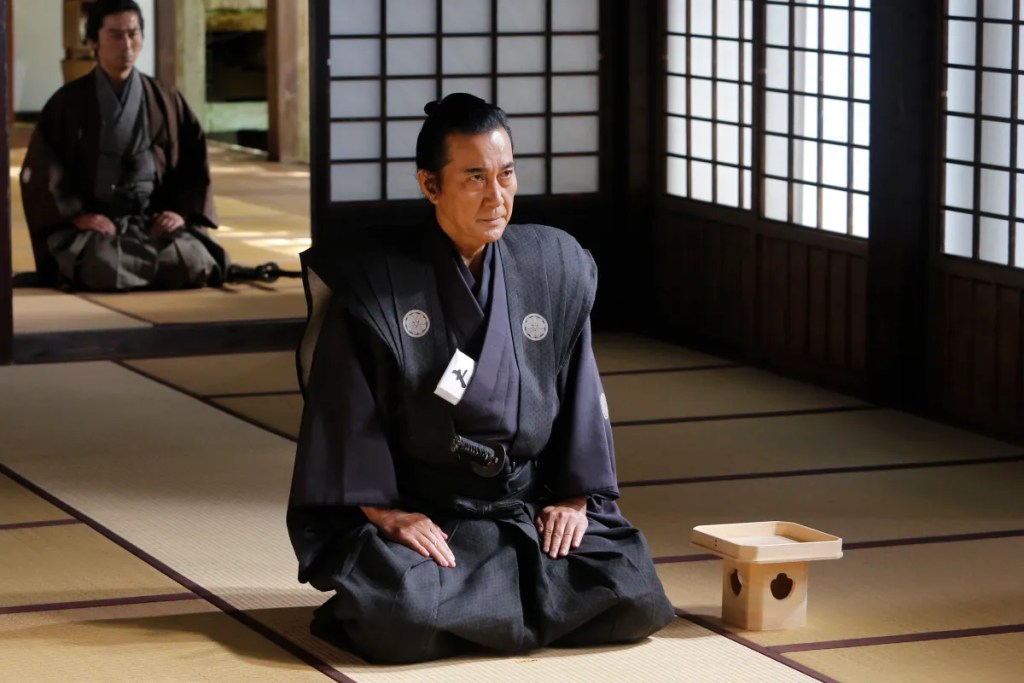
Two scenes stand out for their metaphorical poetry: Near the beginning, our protagonist, an elder samurai, explains to an inquisitive young lady that he admires crows because they always fly towards the sun. Worried, she admonishes him that he will go blind if he also gazes at the sun. Holding up a candle between their faces, he looks straight into the flame and invites her to do so. At the end of the film, the director shifts this perspective to the audience’s gaze as the warrior contemplates his own fate.
The setting is eastern Japan, at the outbreak of the Boshin War that ended the Edo Shogunate’s rule and transformed Japan. Lord Kawai Tsugunosuke is the chief vassal of the lord of Nagaoka, one of the stalwart supporters of the Tokugawa Shogunate. Our elder samurai is torn between his loyalty to his lord and his desire to keep his small and fragile domain out of this destructive conflagration.
Yakusho Koji, (The Days), one of Japan’s most beloved actors, manages to keep his character relatable despite seeming to be an utterly stoic superhuman leader spouting endless axioms of bushido or confucian literature. He and the script accomplish this by showcasing his inner disappointment in his fellow humanity as well as the many failures he experiences in making peace AND war, despite making all the right efforts stubbornly.
Much is made of the loyalty of his male underlings and servants but the film mostly focuses on two females. His wife, played by Matsu Takako, gives an intriguing performance showcasing both her vulnerability and resilience. The actress, who gave terrific turns in QUARTET and THEIR MARRIAGE, amongst many others, almost steals the film from its capable lead.
THE PASS, with its frequent allusions to Aizu and other Shogunate loyalists, inevitably reminds me of the NHK taiga drama YAE NO SAKURA, which illustrates the tragic downfall of these clans during the brutal Boshin War. It was a fine taiga, but would have been even better under this director’s deft guidance. Takashi Koizumi, who has directed seven films and previously spent years as Kurosawa Akira’s assistant director, has previously directed and written other excellent small-budget samurai epics where the story is told in no hurry with competent but never excessive battle scenes. In each case the viewer will be rewarded by a narrative that concentrates on clarity and characterization.
© ReelJapan.com November 2025 all rights reserved
 REEL JAPAN
Leave a comment